Skoolie Electrical Renovation
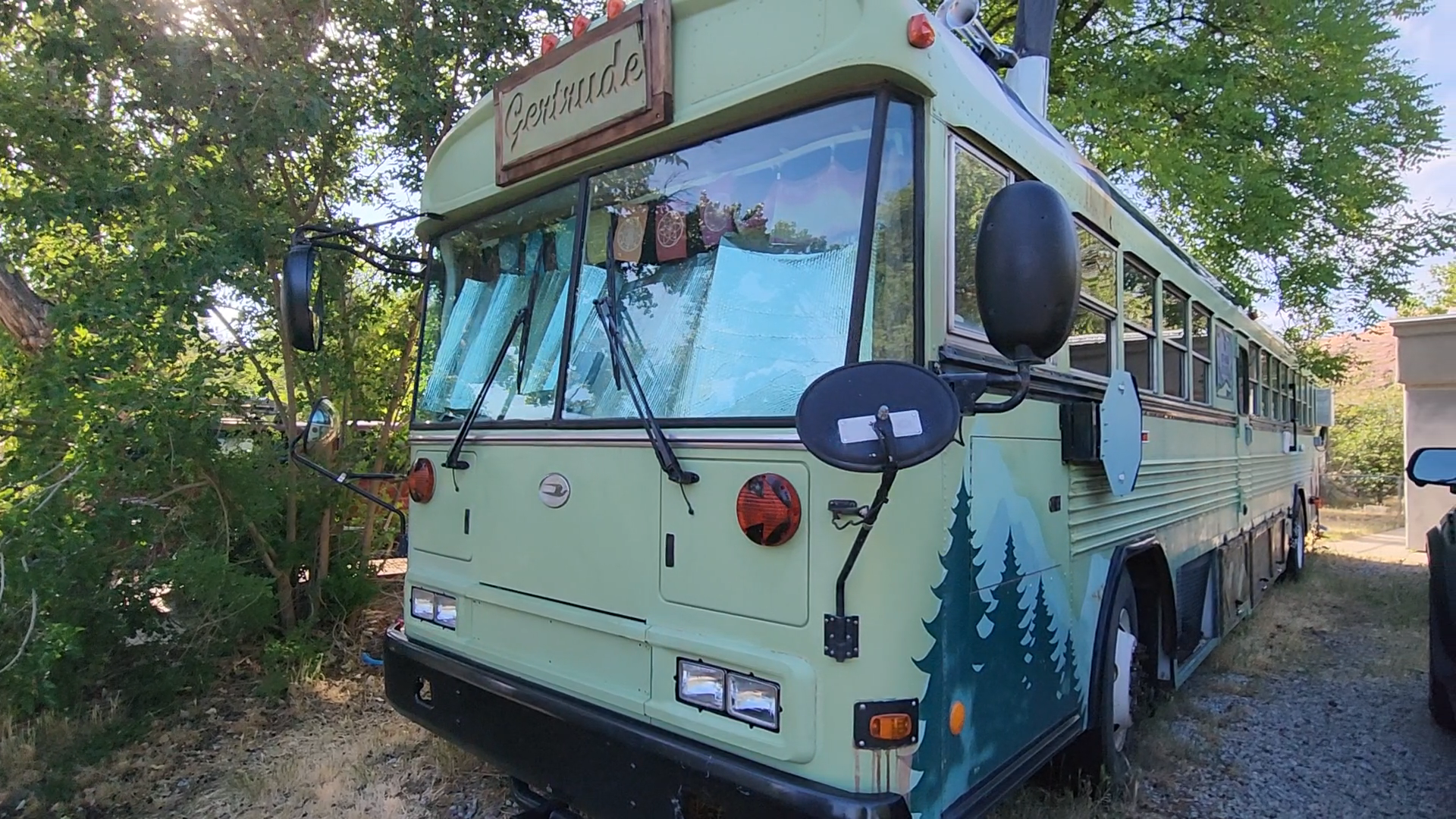
Many of us are used to camping in motorhomes, campers, vans and tents. But some nomads are more creative, transforming school buses and ambulances into homes on wheels. This client’s bus (aka ‘skoolie’) had been used as a home for several years, having been built and frequently modified by its owners. But after a year or so of sitting in a parking lot, they hired me to get the electrical system fixed up and ready for the next driver.
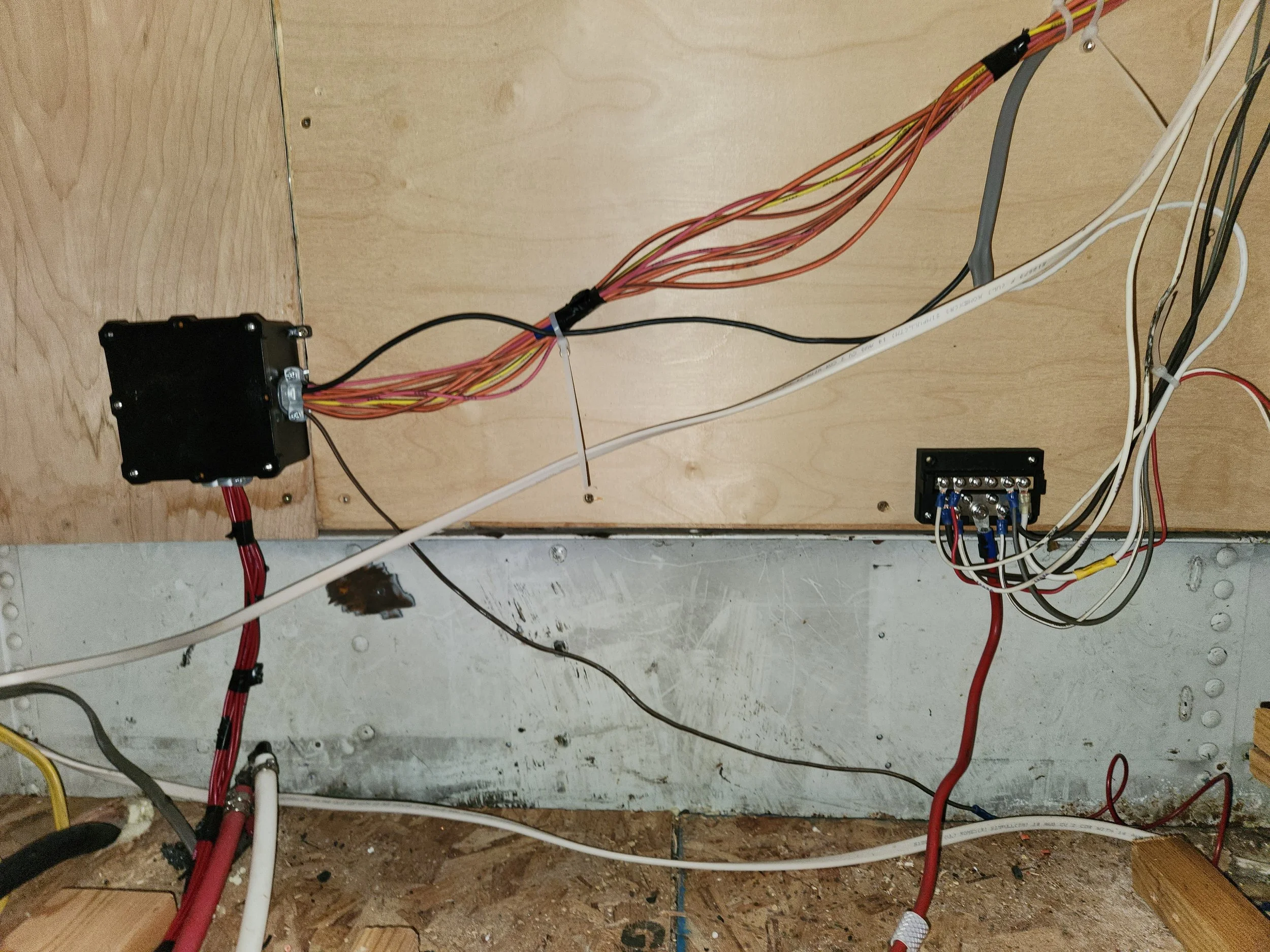
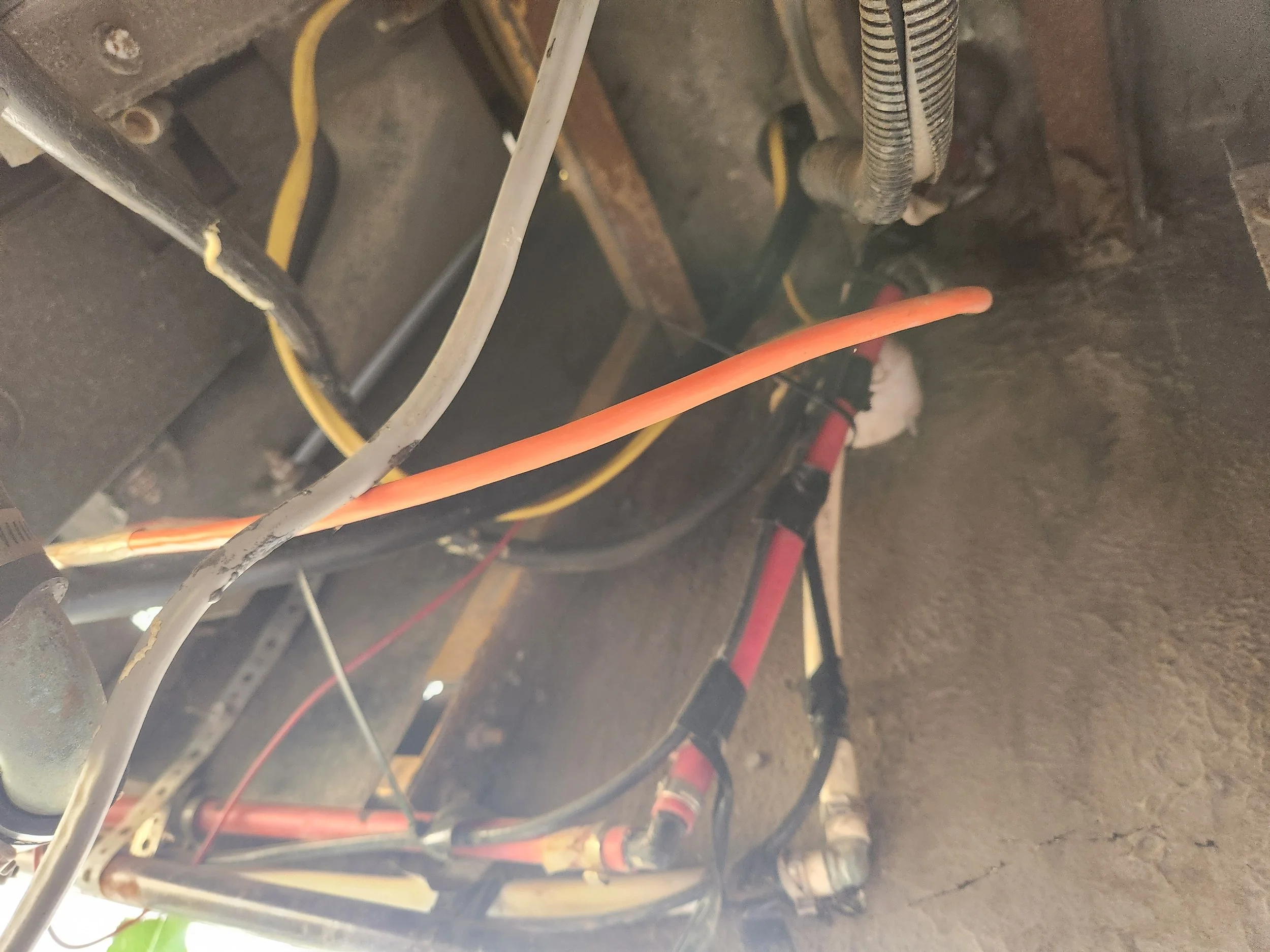
While much of my work involves upgrading an existing system, this one was in desperate need of a complete revamp. The previous electrical guy tried to move the power system from under the bed into a side compartment, but butchered the execution. So, we came up with a plan and fixed it. The difference is like night and day,
Gallery: What Was Already There (Before)
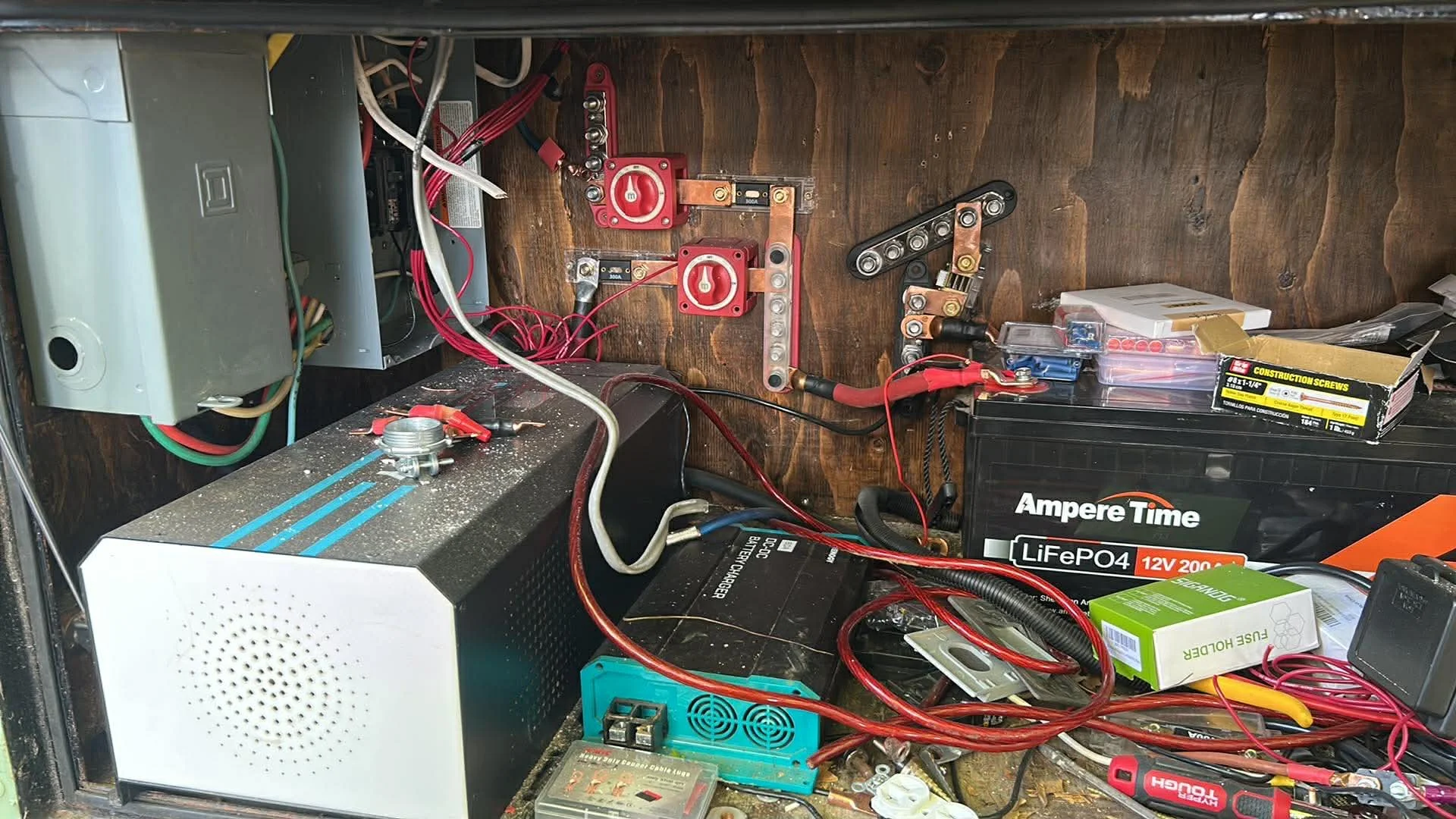
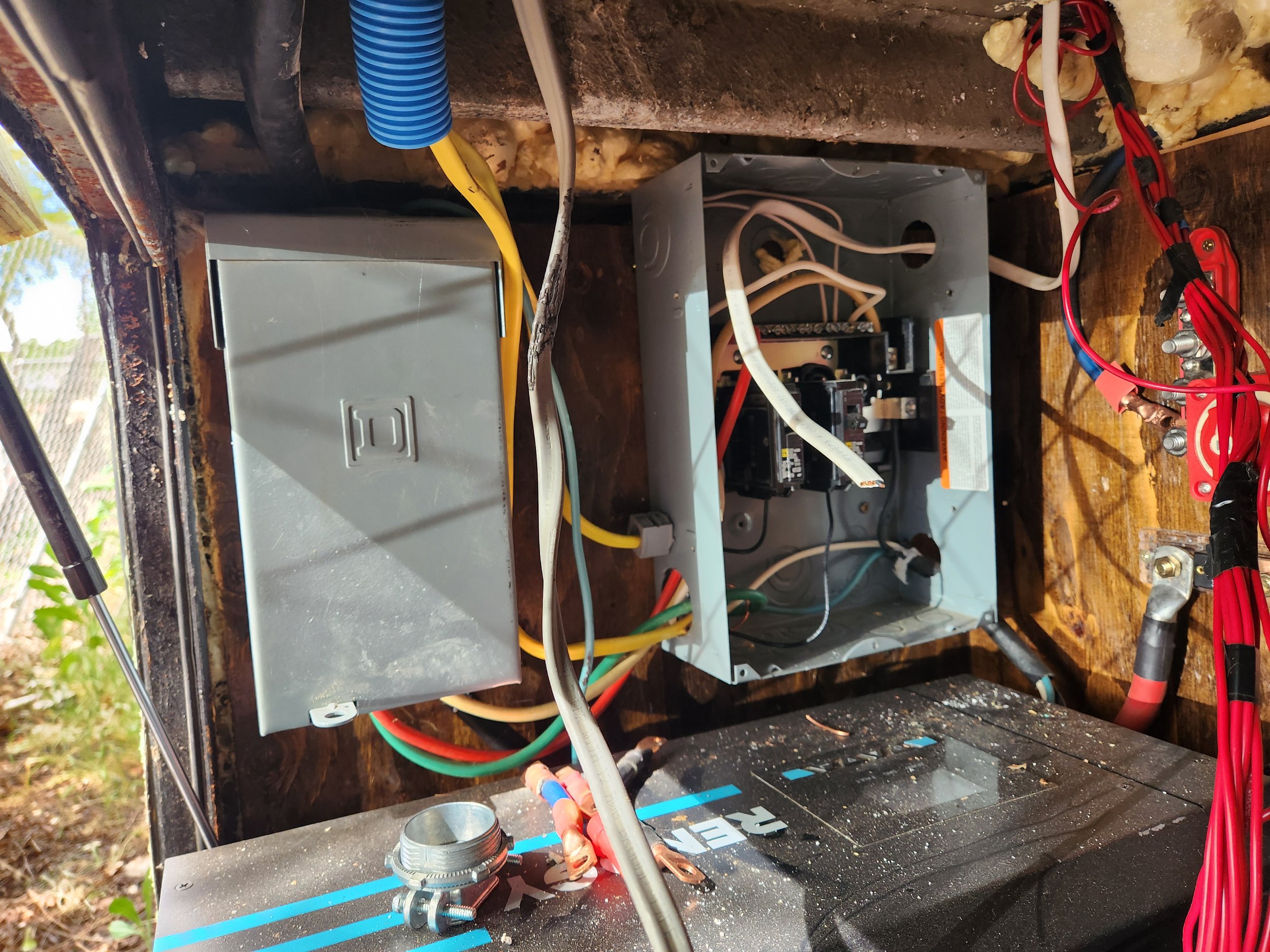
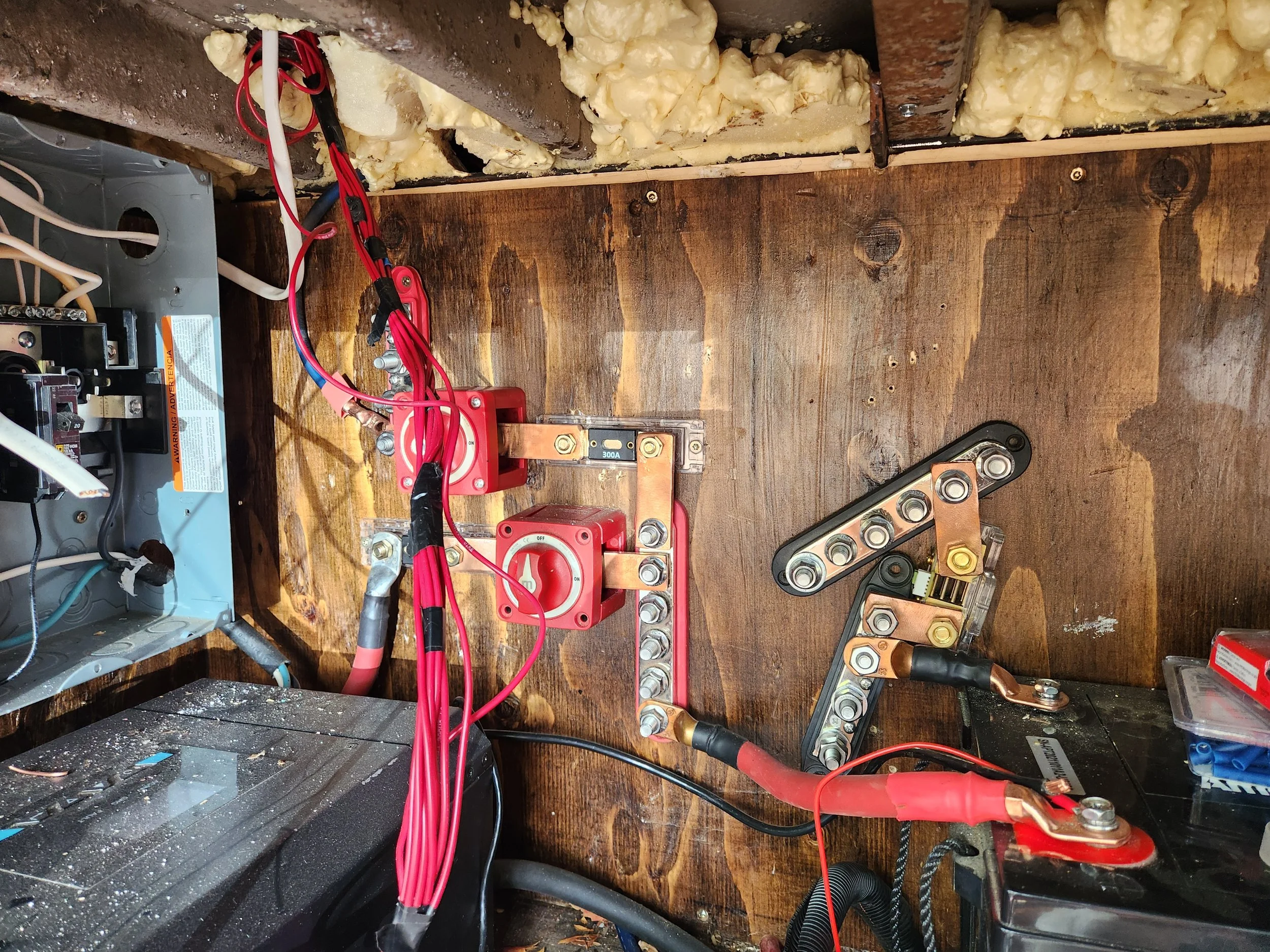
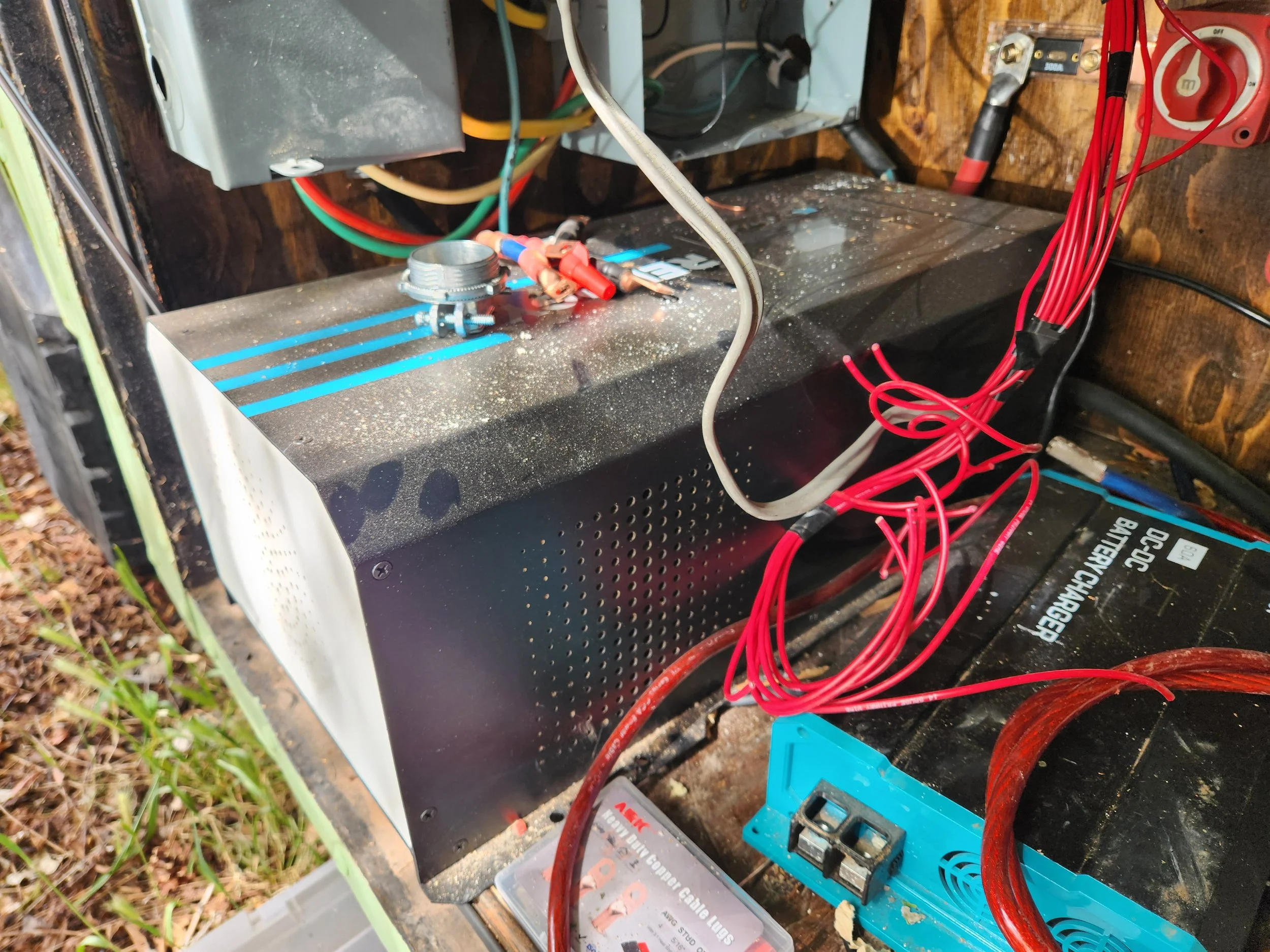
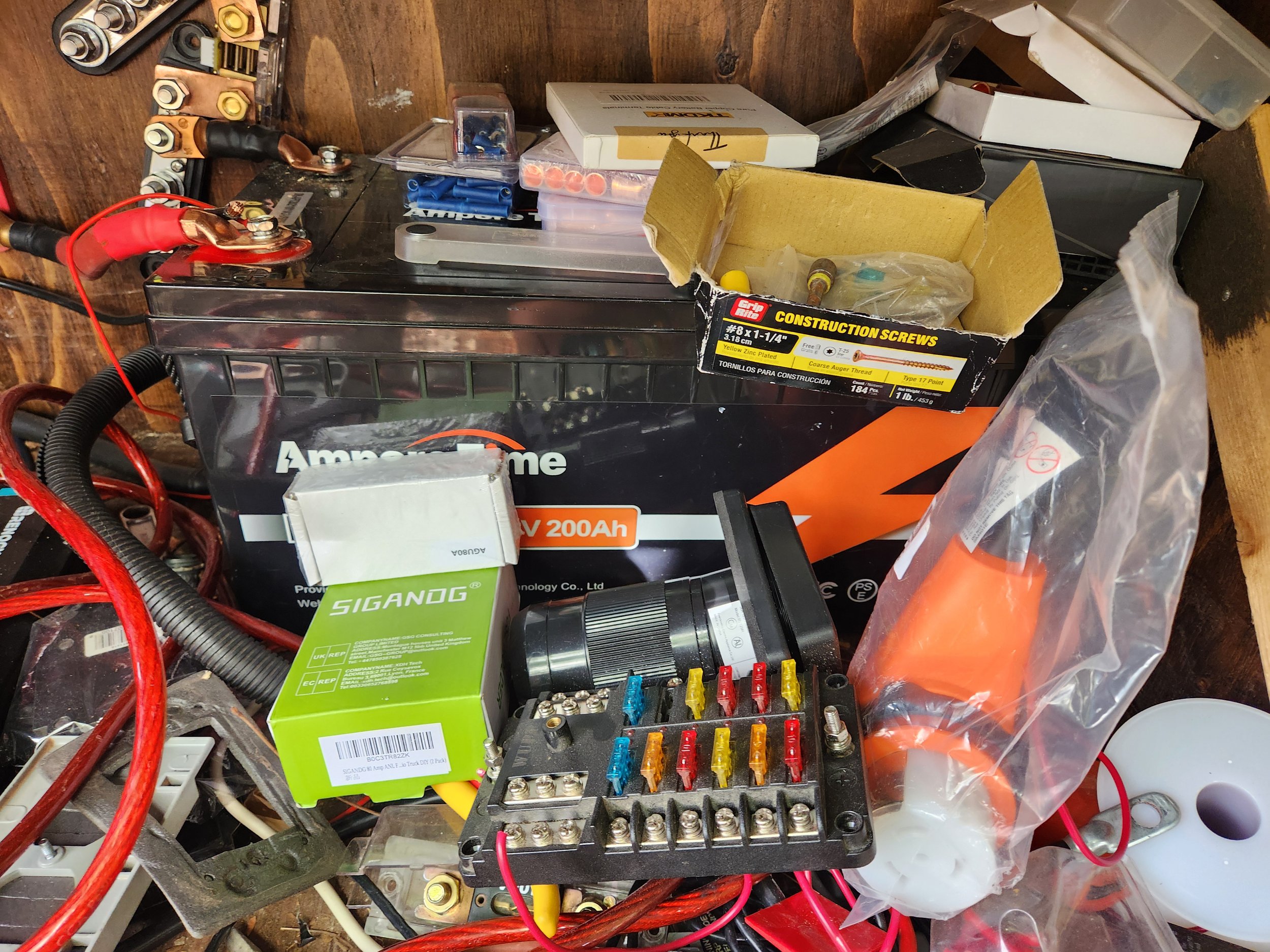
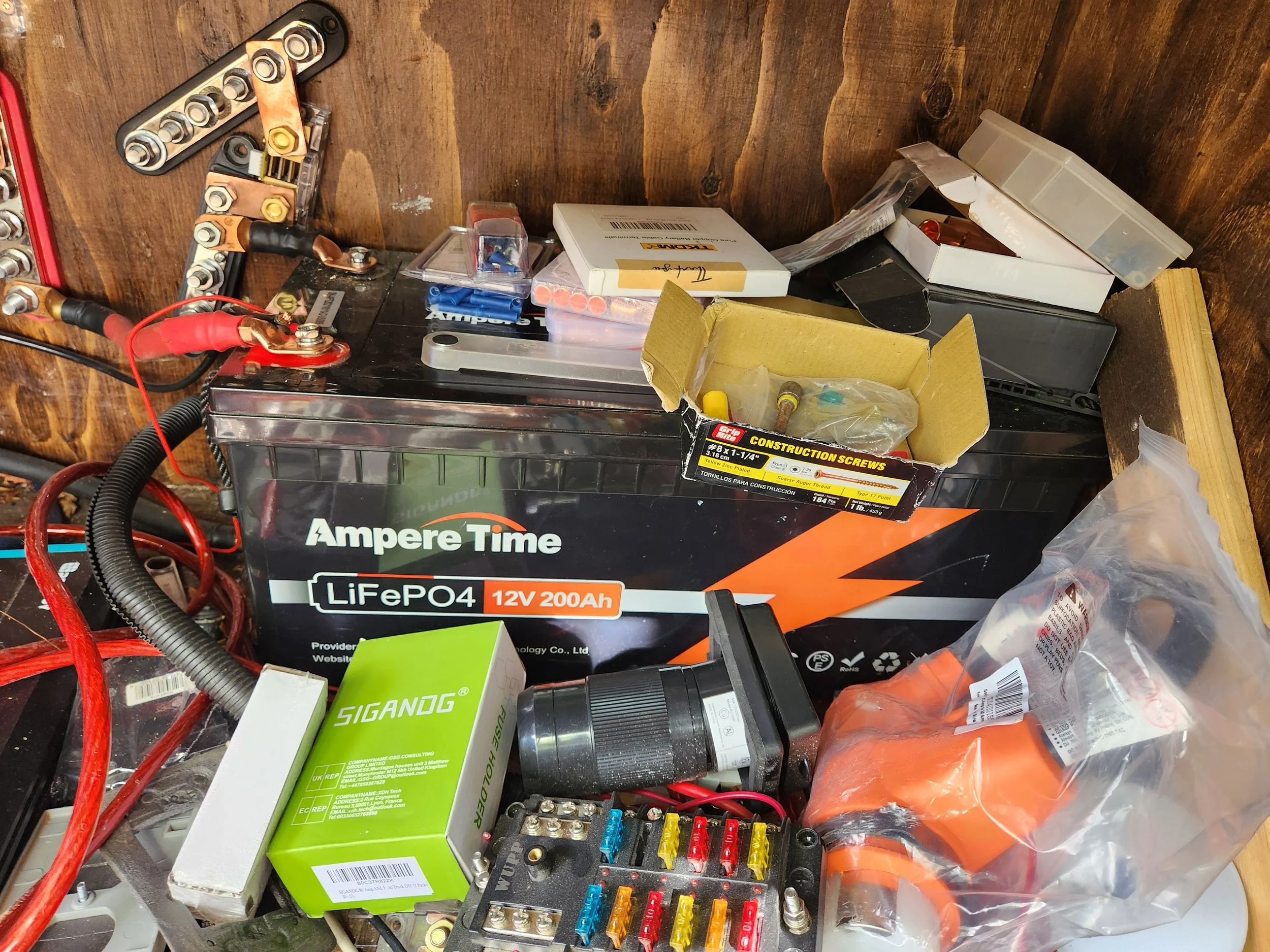
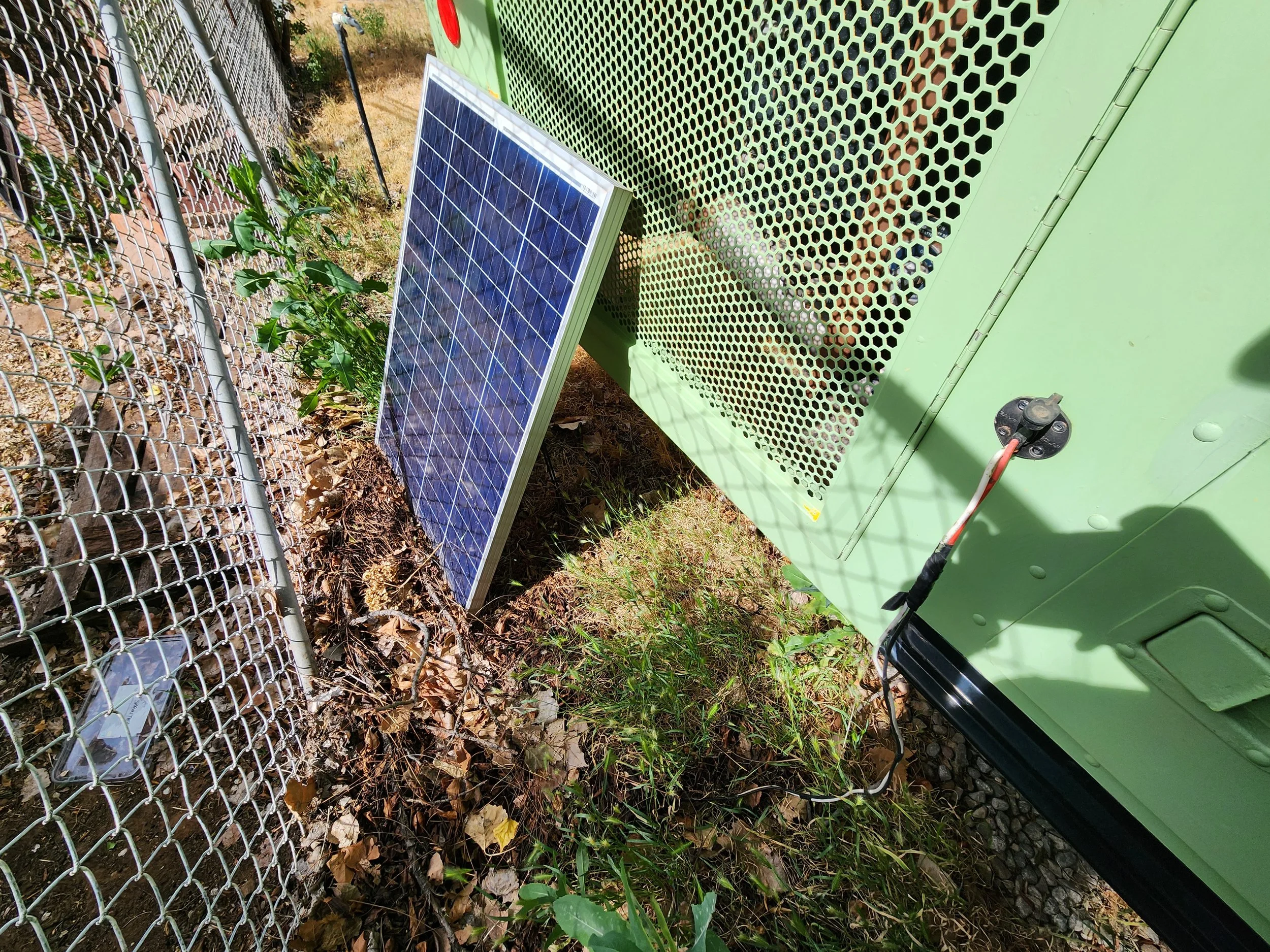
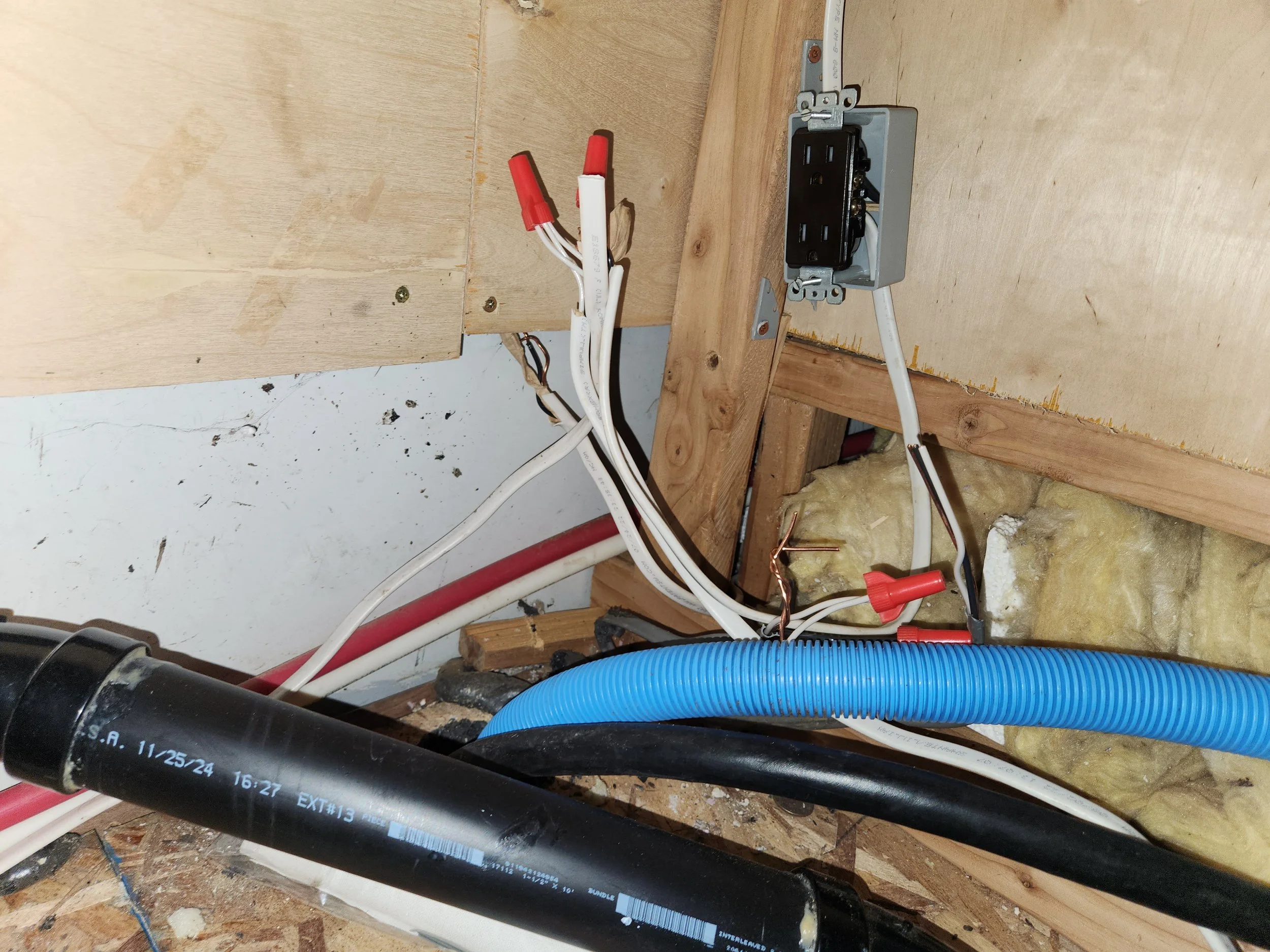
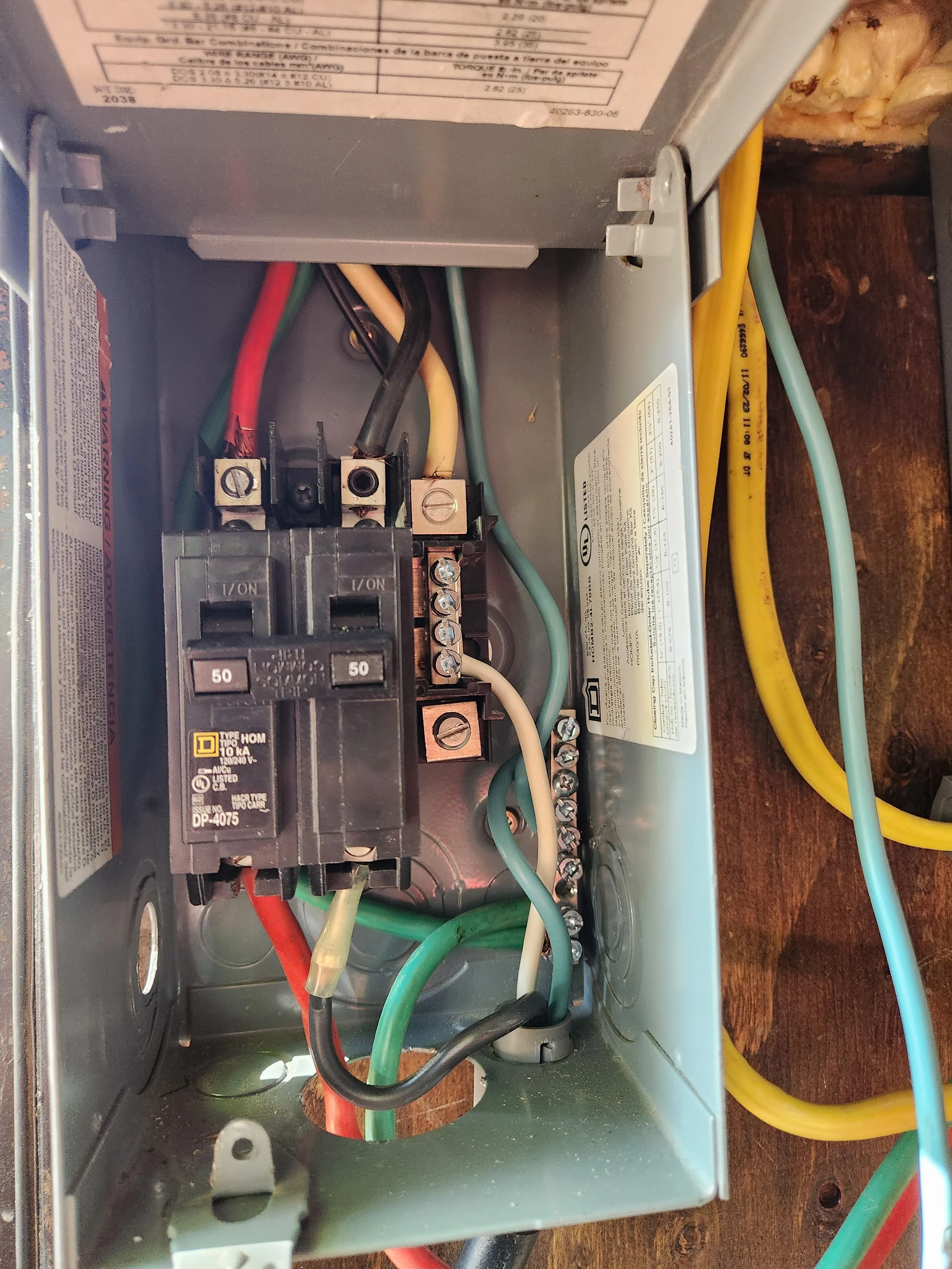
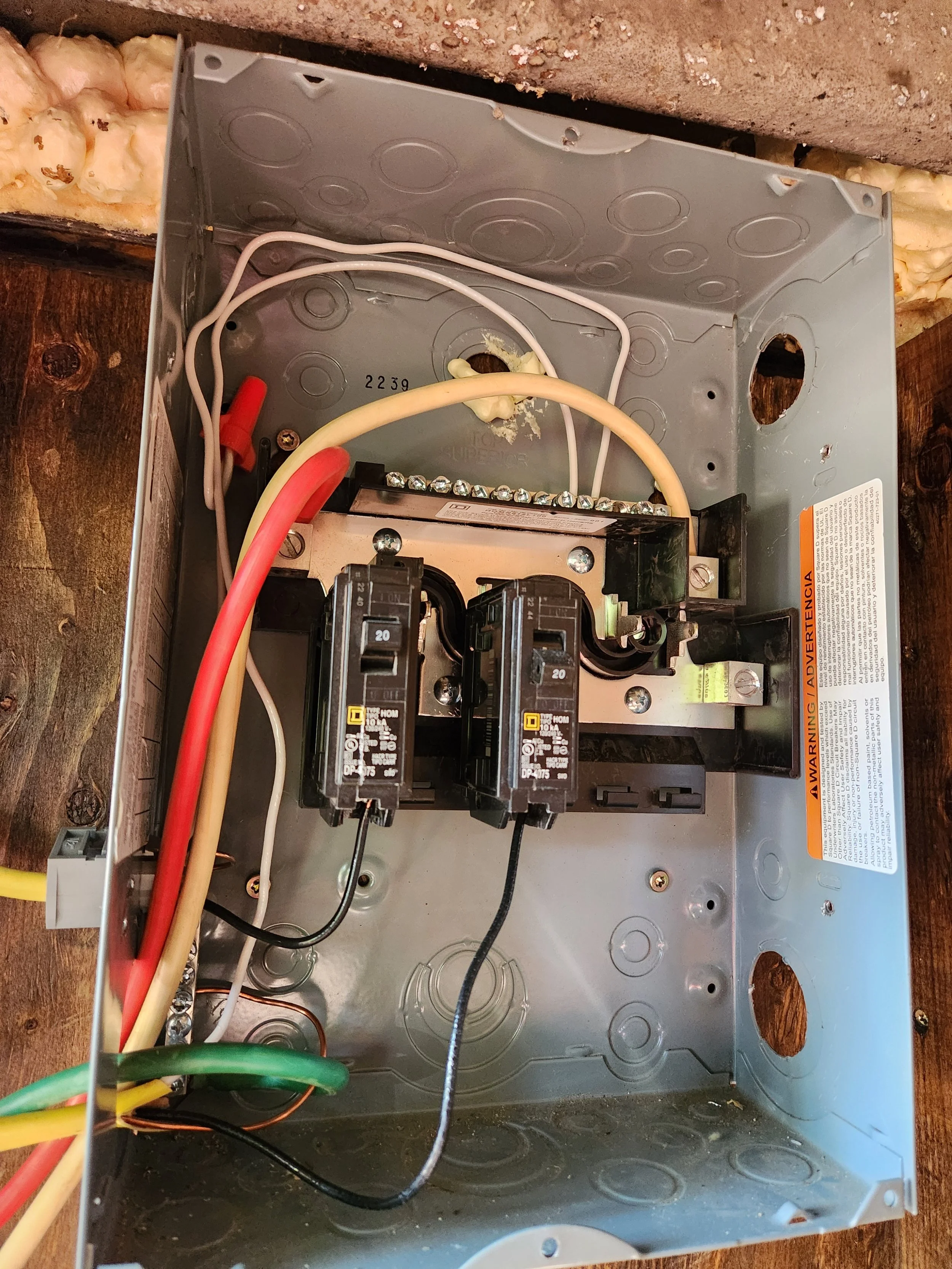
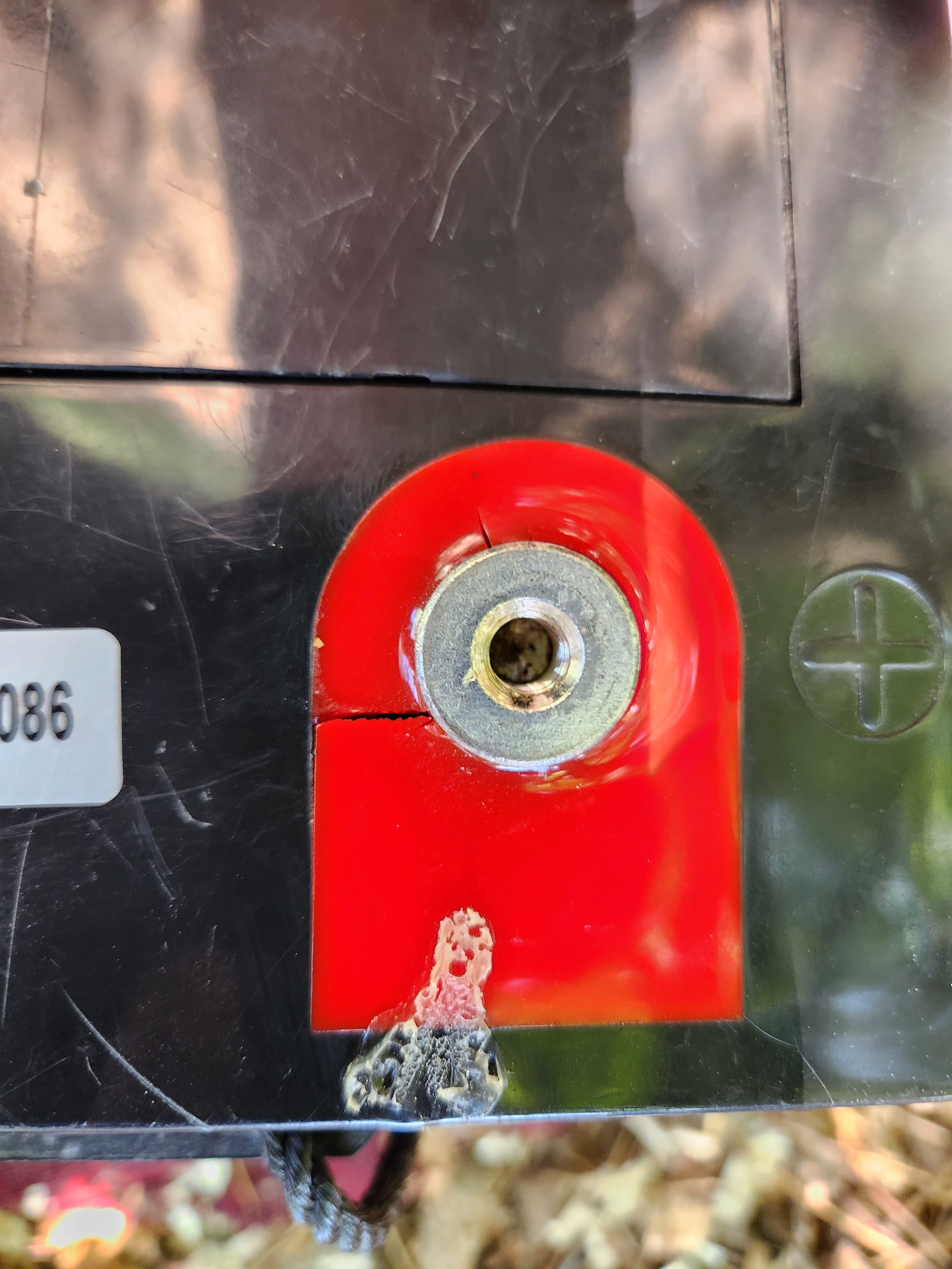
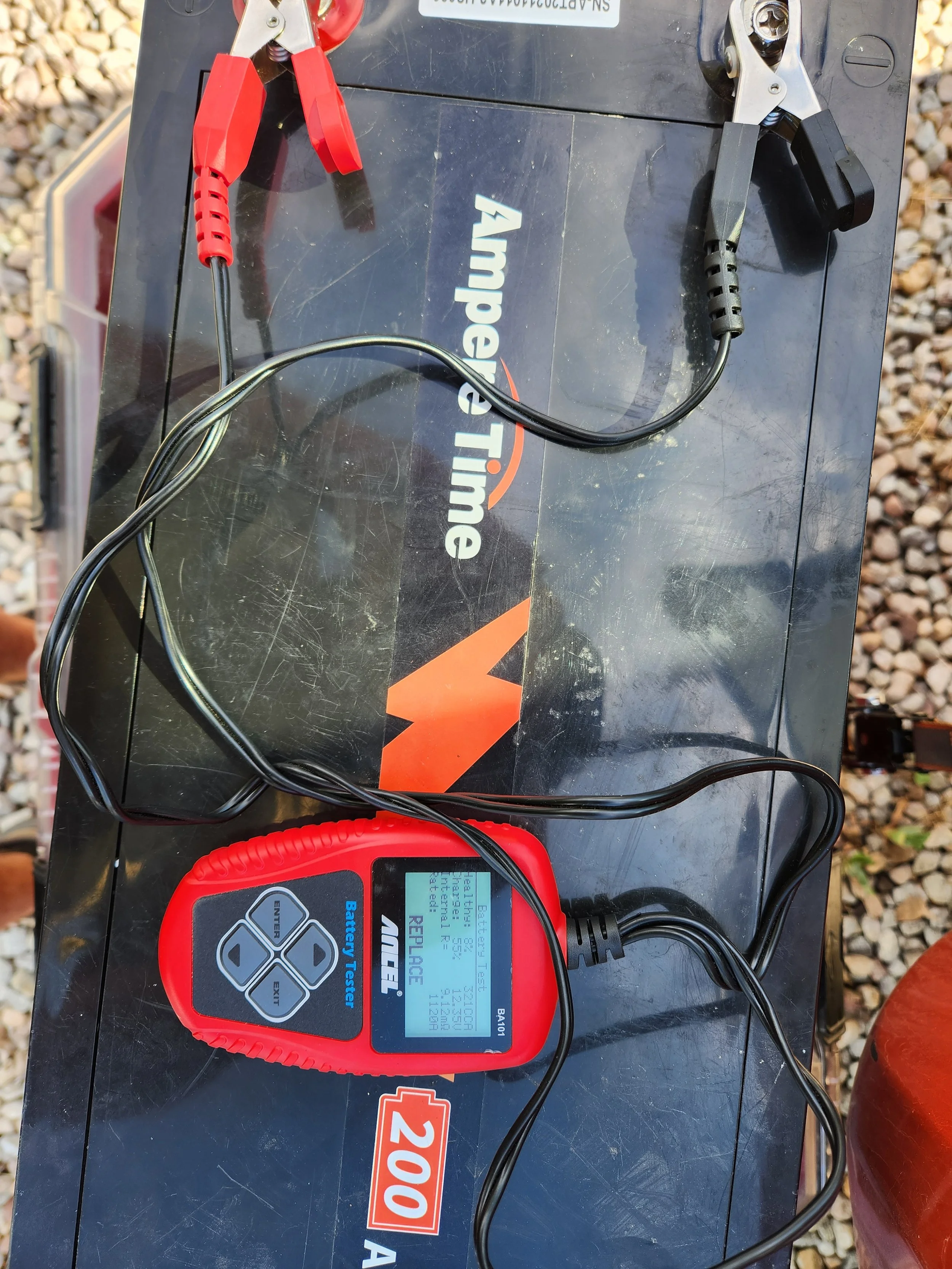
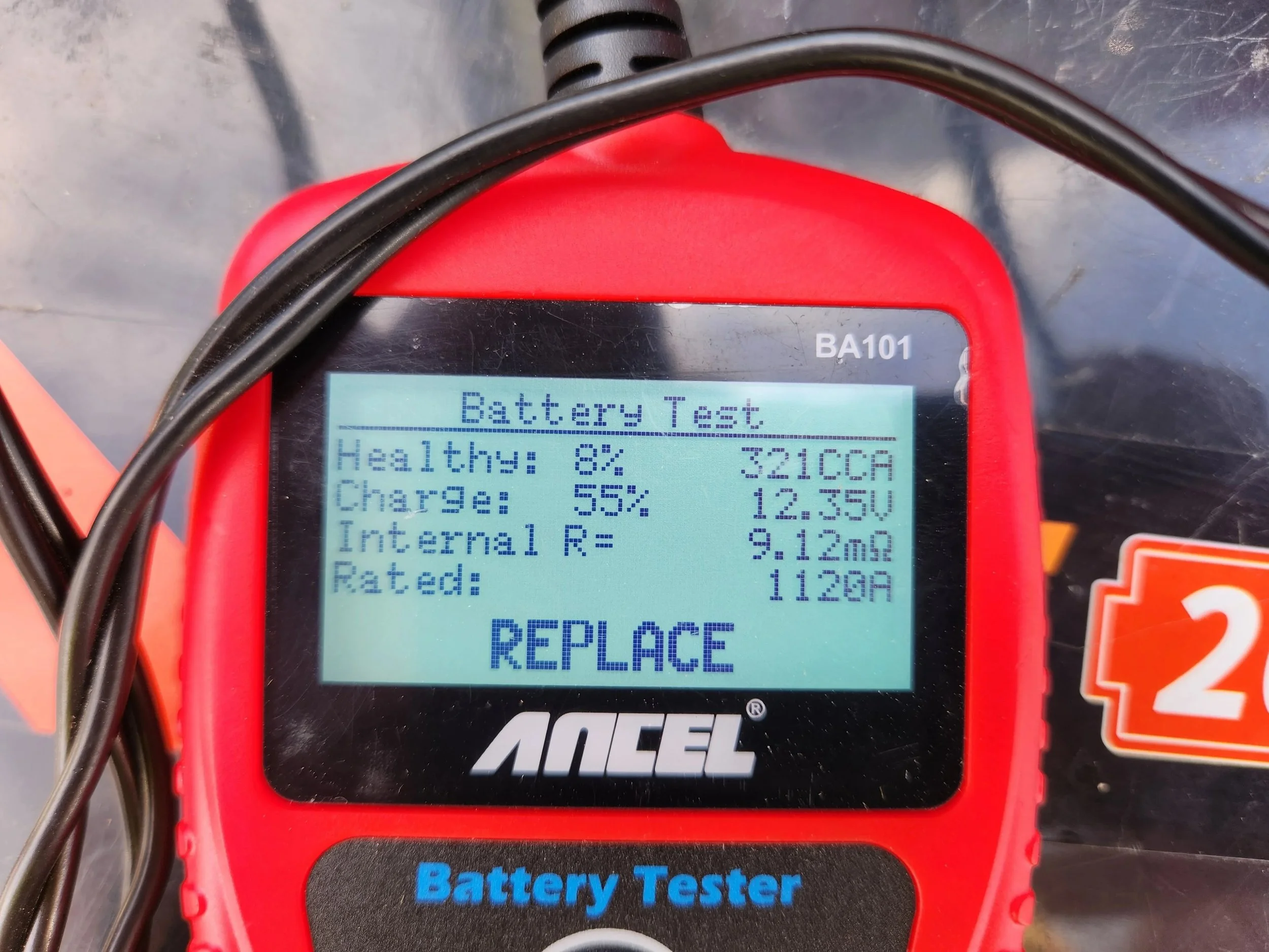
Shortly after starting the renovation, I had realized the existing battery positive terminal had been damaged. Some quick tests revealed that the battery was in less-than-ideal shape but was still functional. With an internal resistance of 9.12 milliohms, we recommended the client replace the battery when possible.
On top of this issue, both the DC-DC charger and inverter were filled with heavy dust from being in storage for so long. The cases of these devices were temporarily removed, and after a lengthy air-blasting session, they were cleaned up and ready for operation.
The existing starter batteries needed new terminal posts in order to implement the DC-DC charger. Additionally, we needed to put a fuse block in place to clean up and protect all of the low-voltage circuits. It took a lot of thought and intention to transform this mess into a safe and fully-functional power system with shore power hookup and DC-DC charging.
Gallery: What We Installed (After)
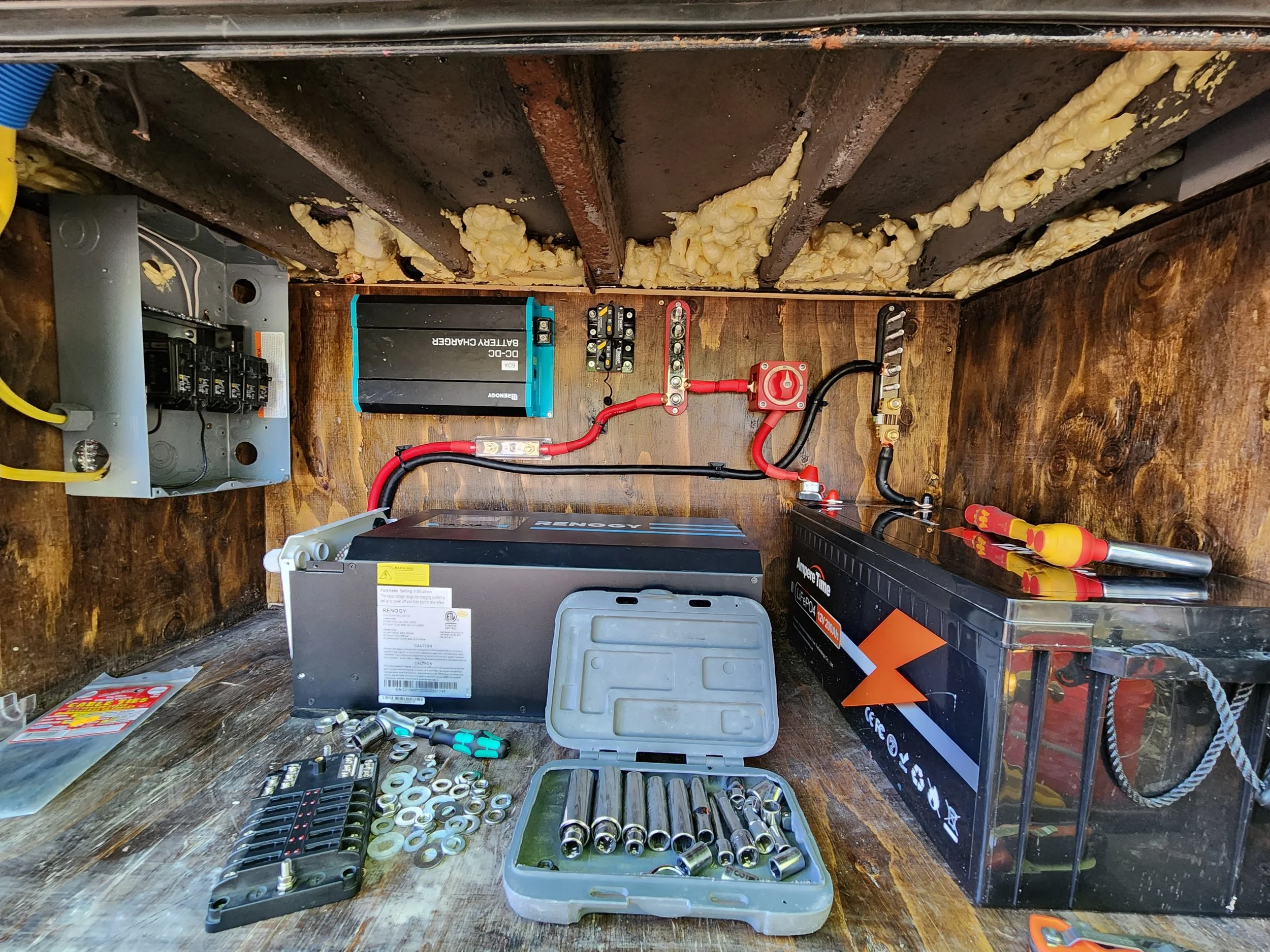
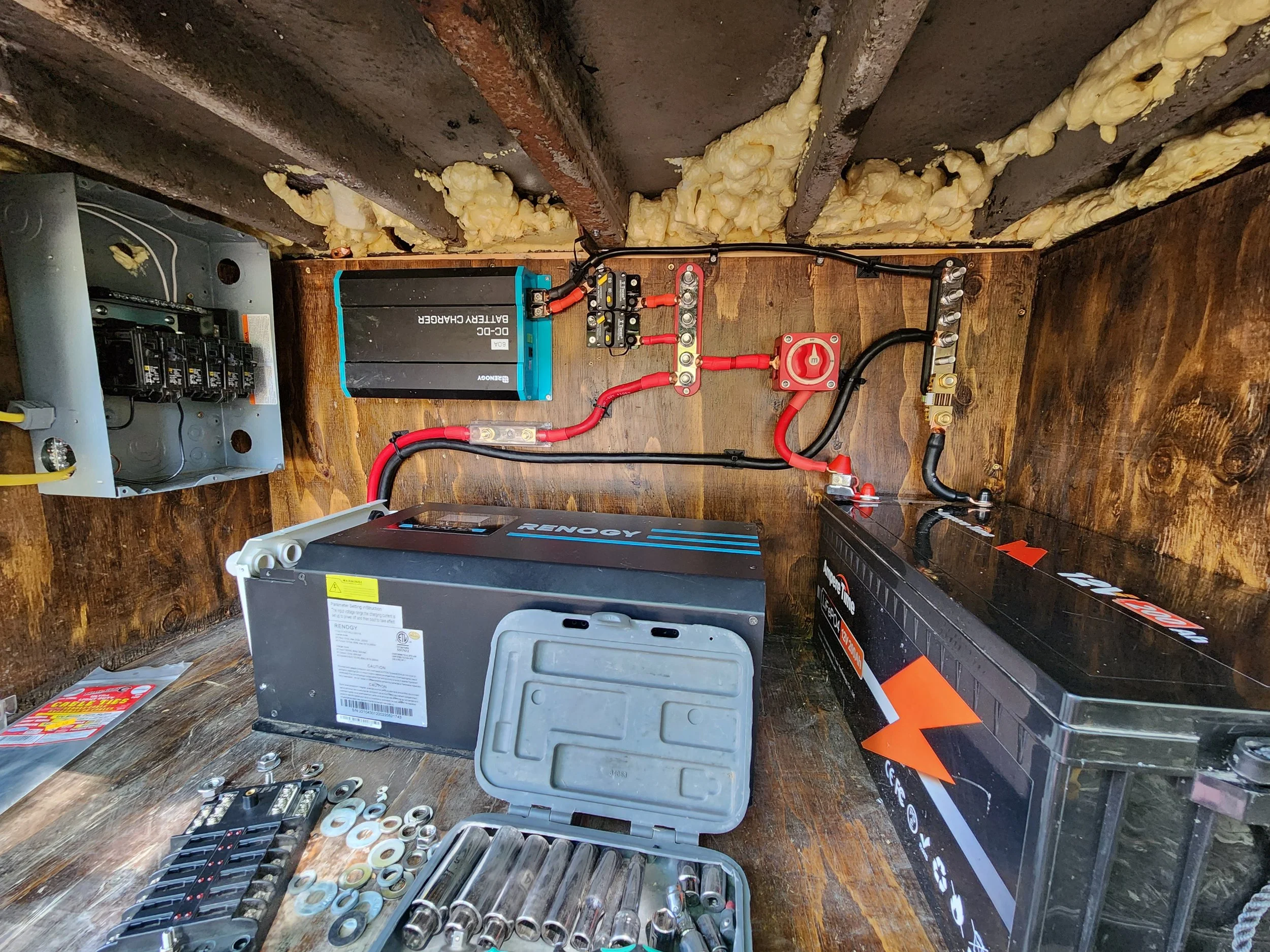
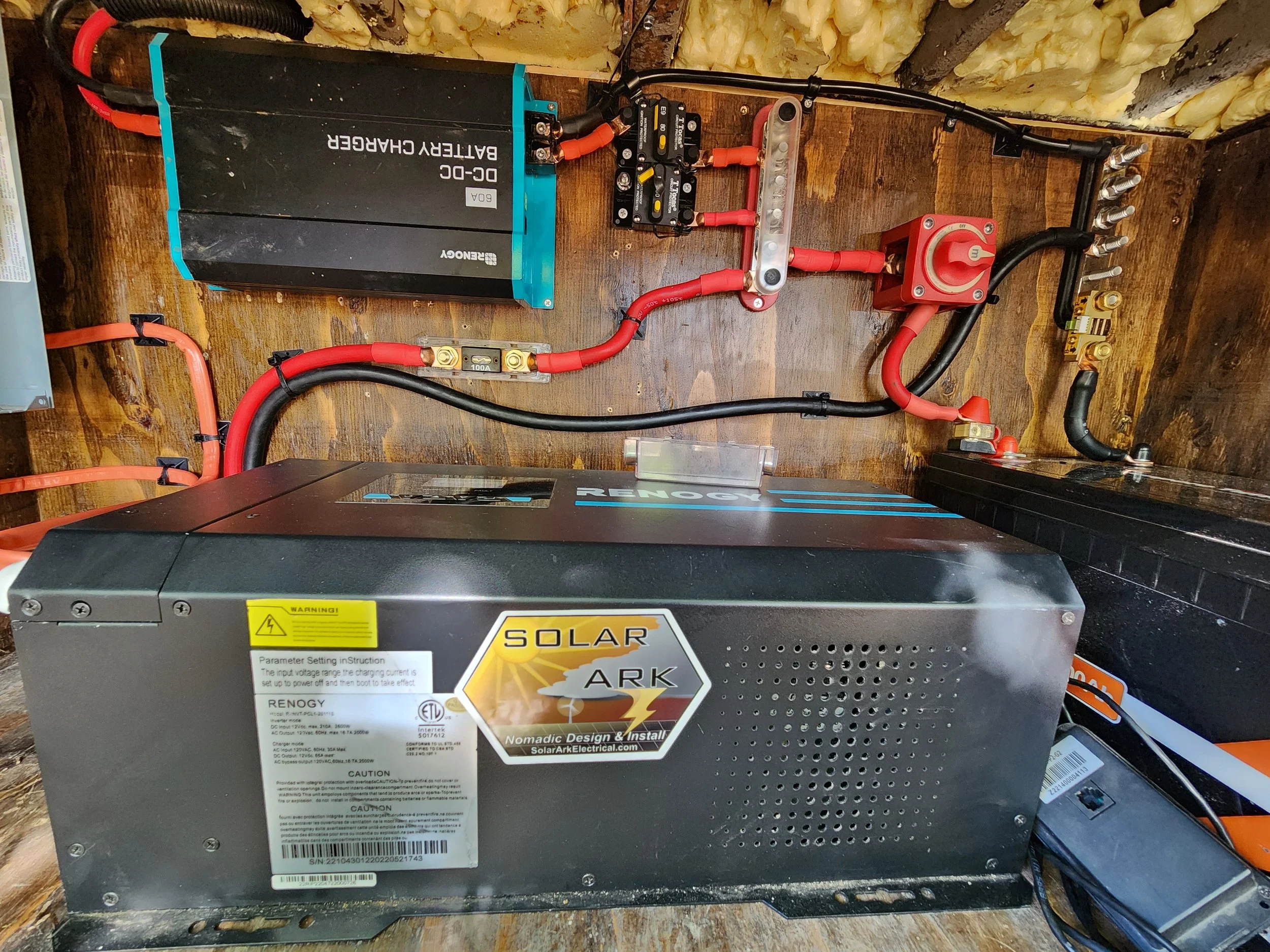
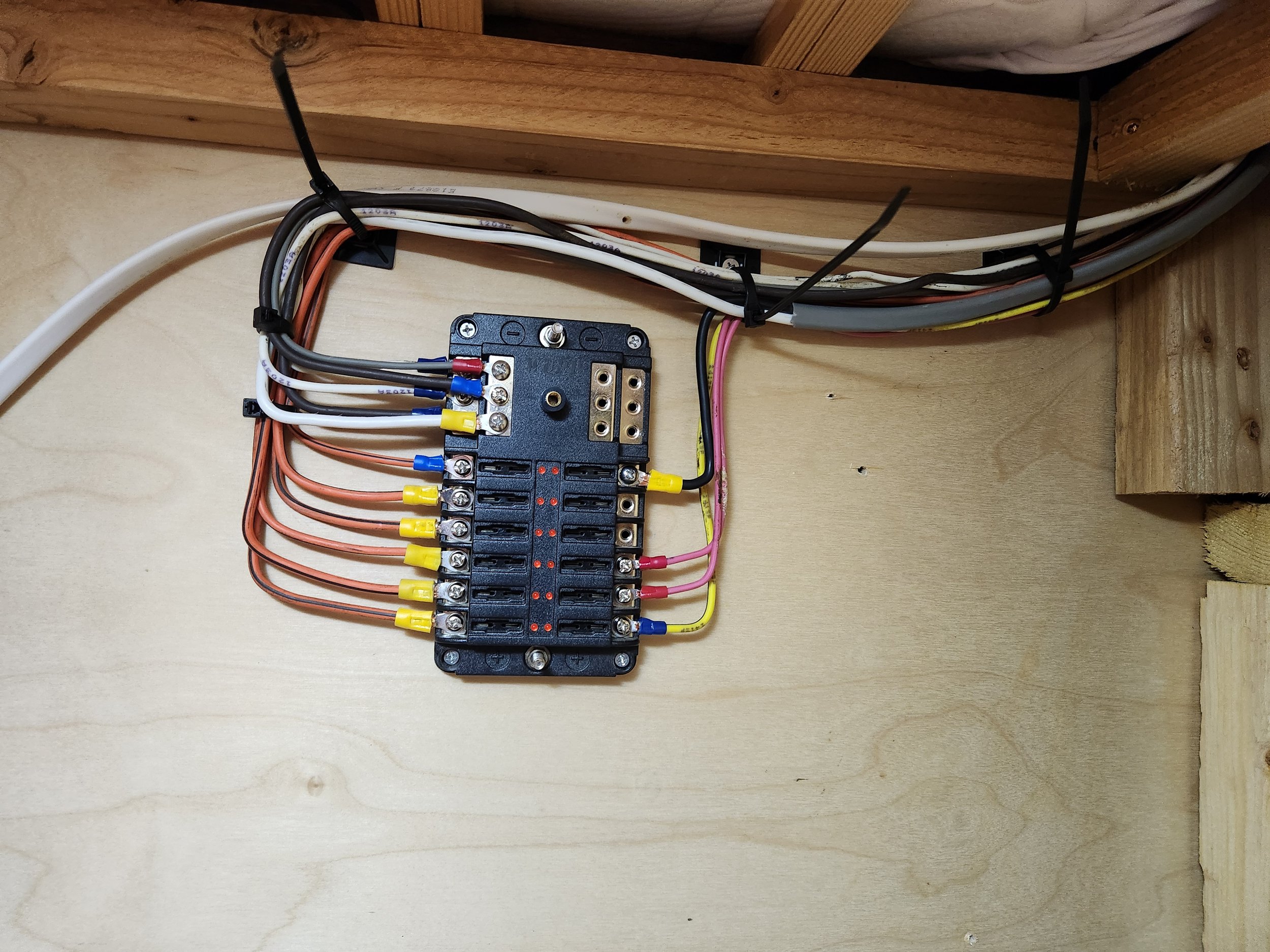
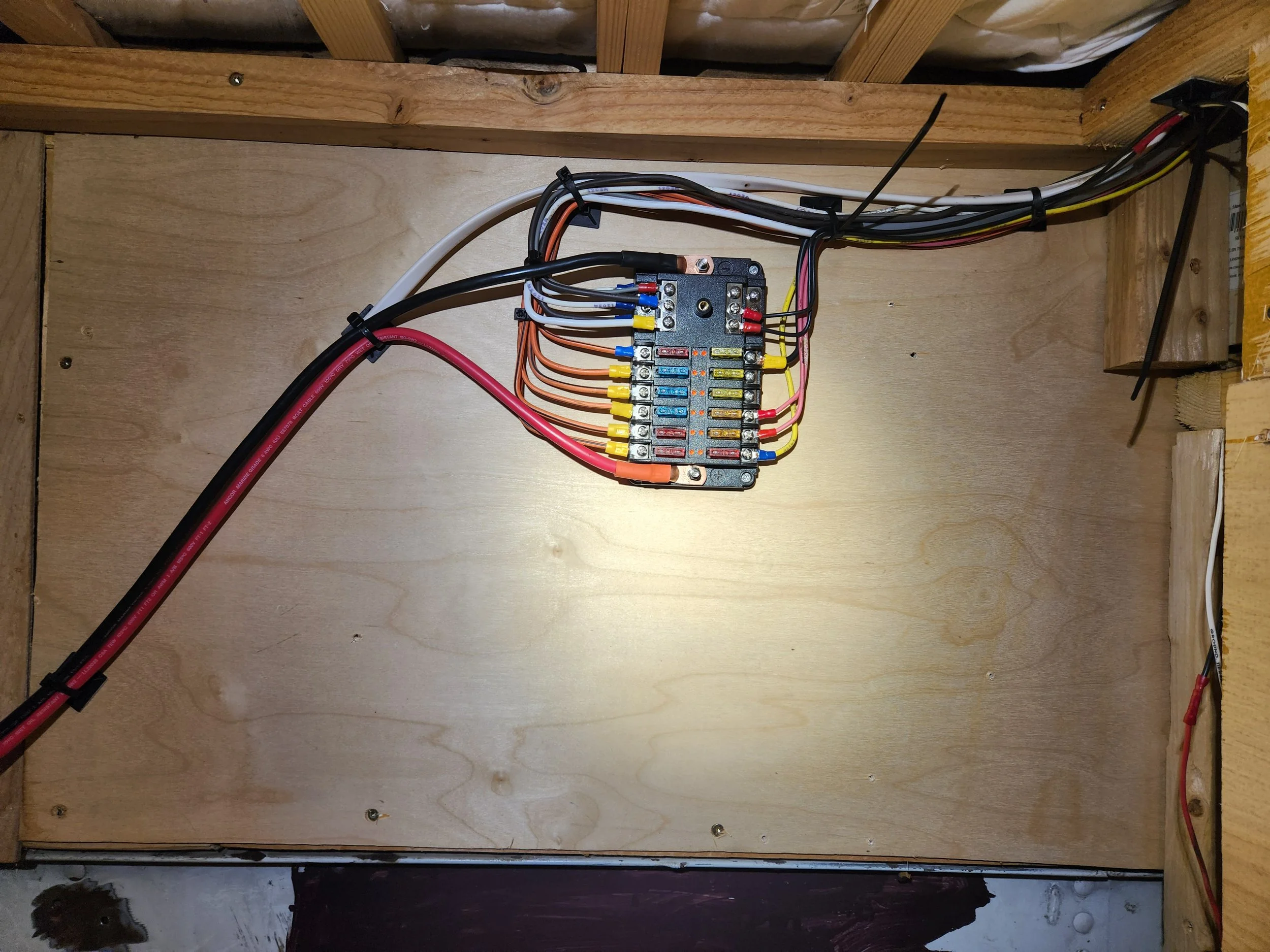
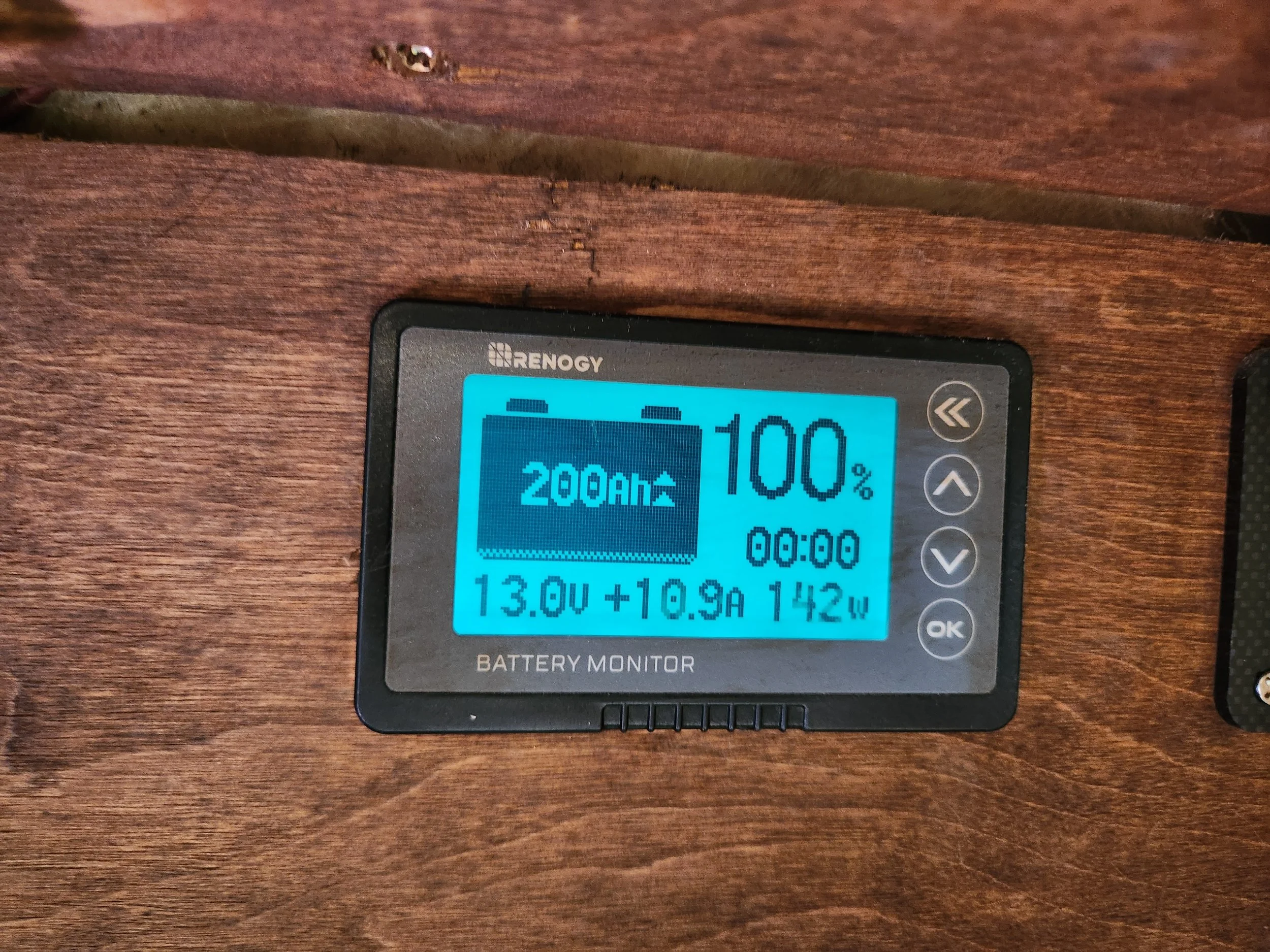
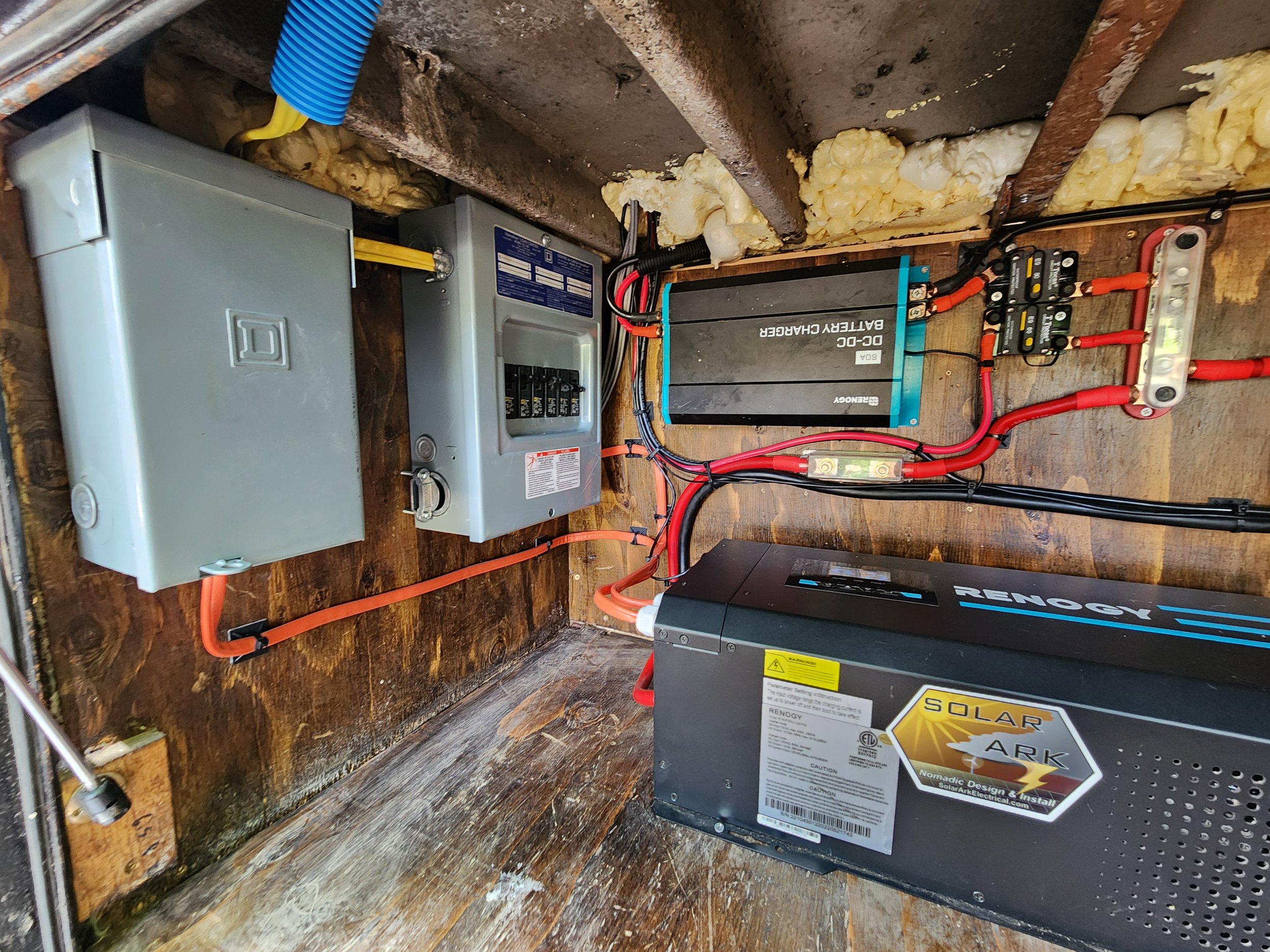
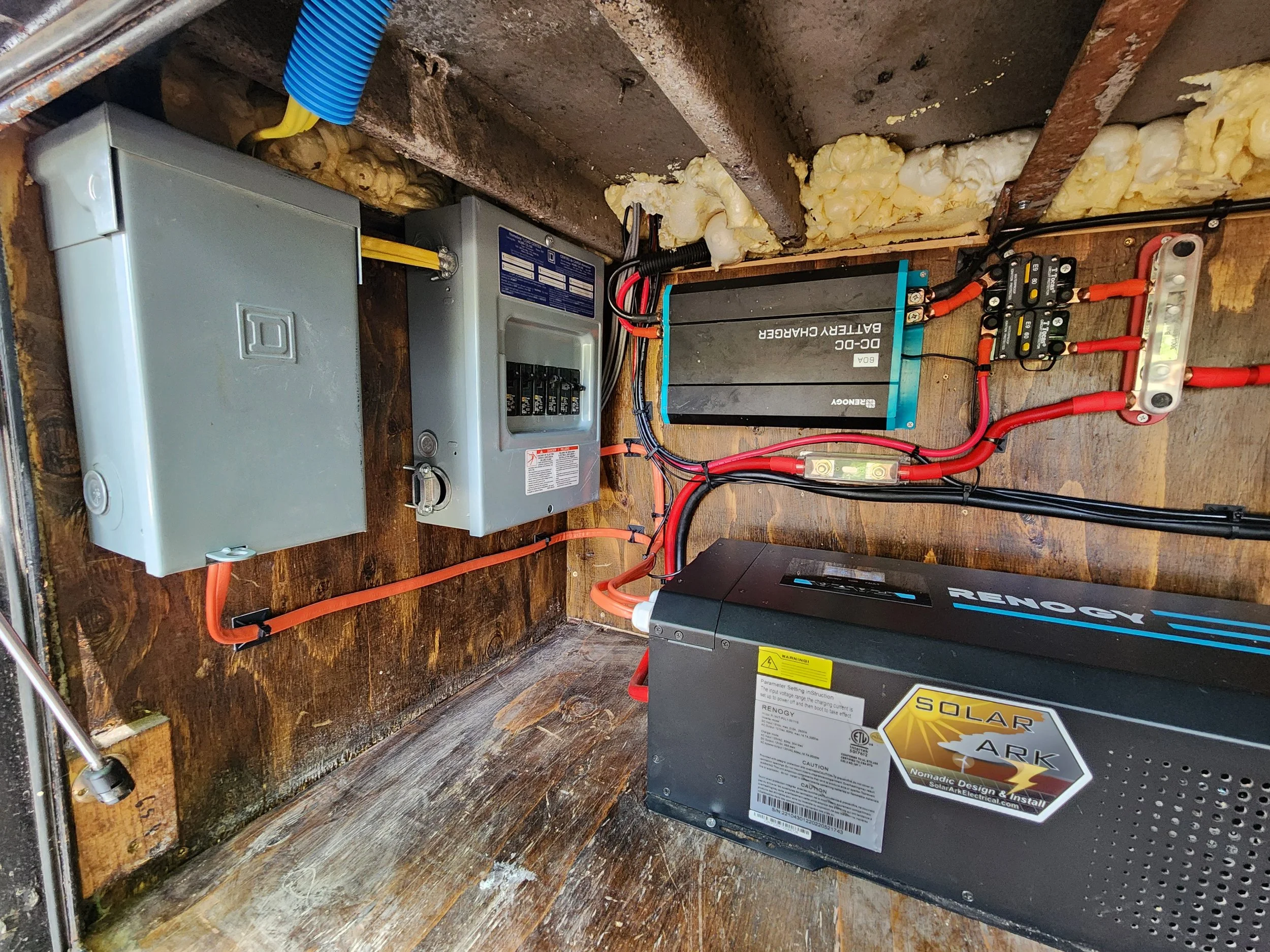
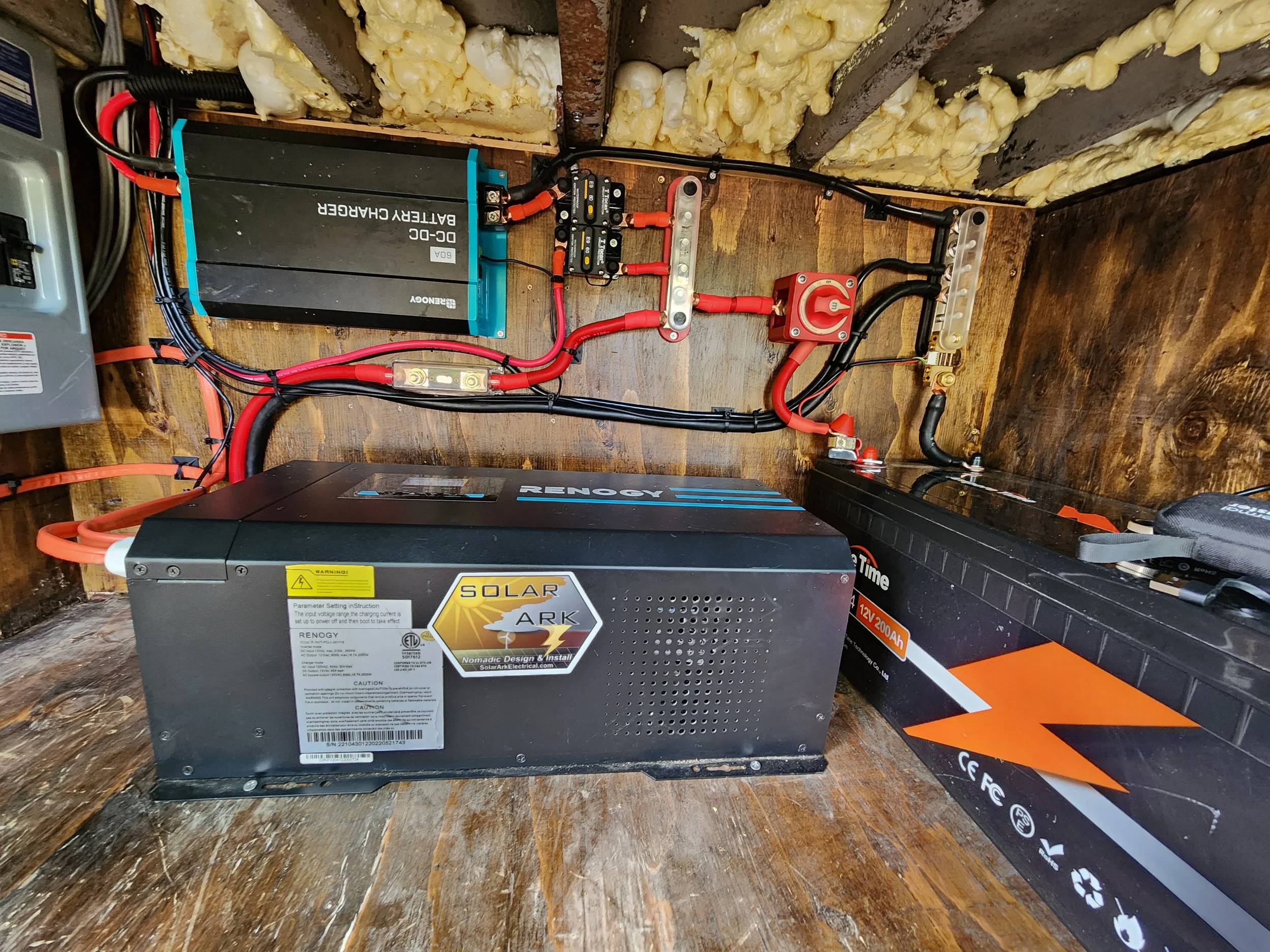
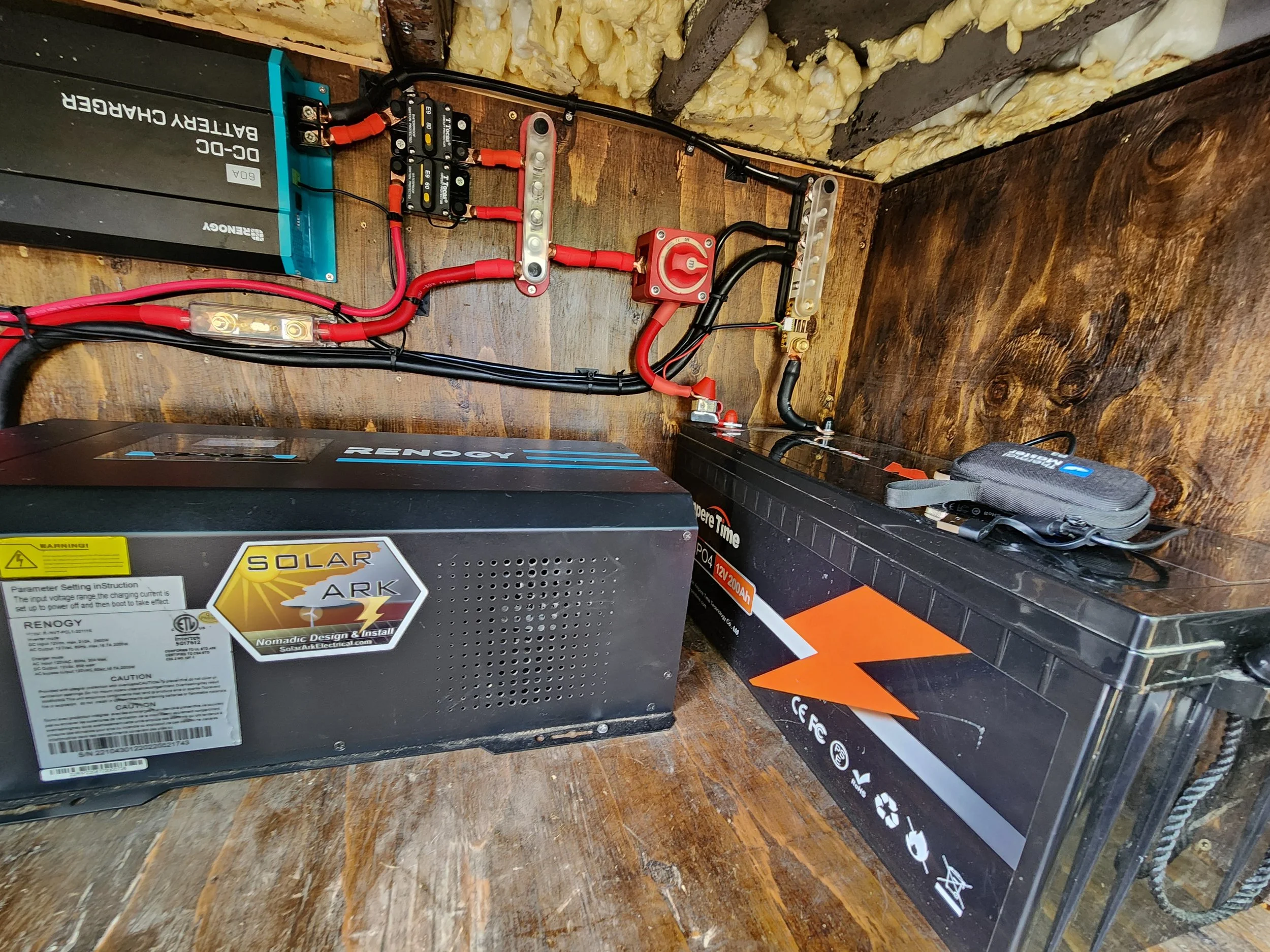
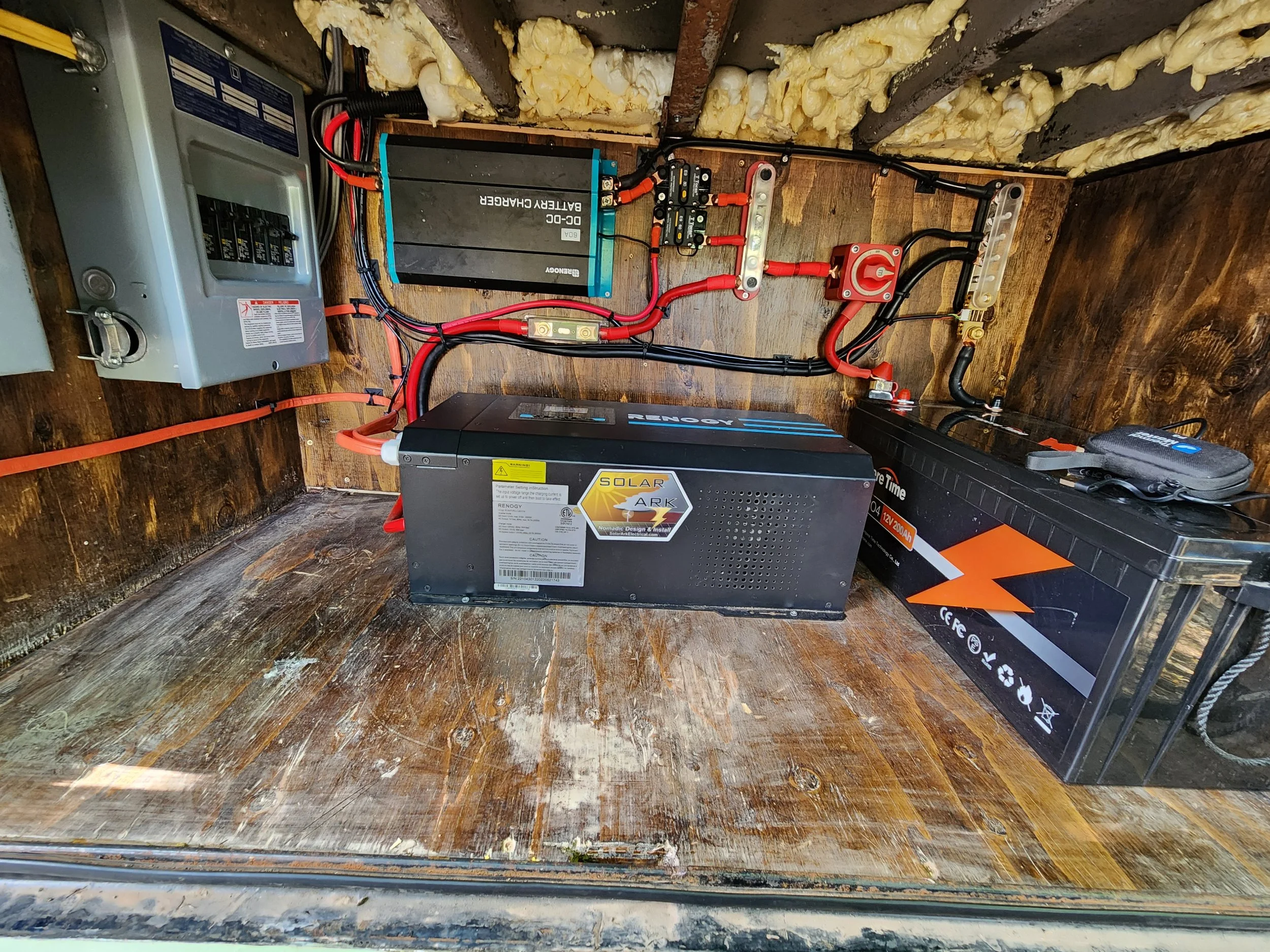
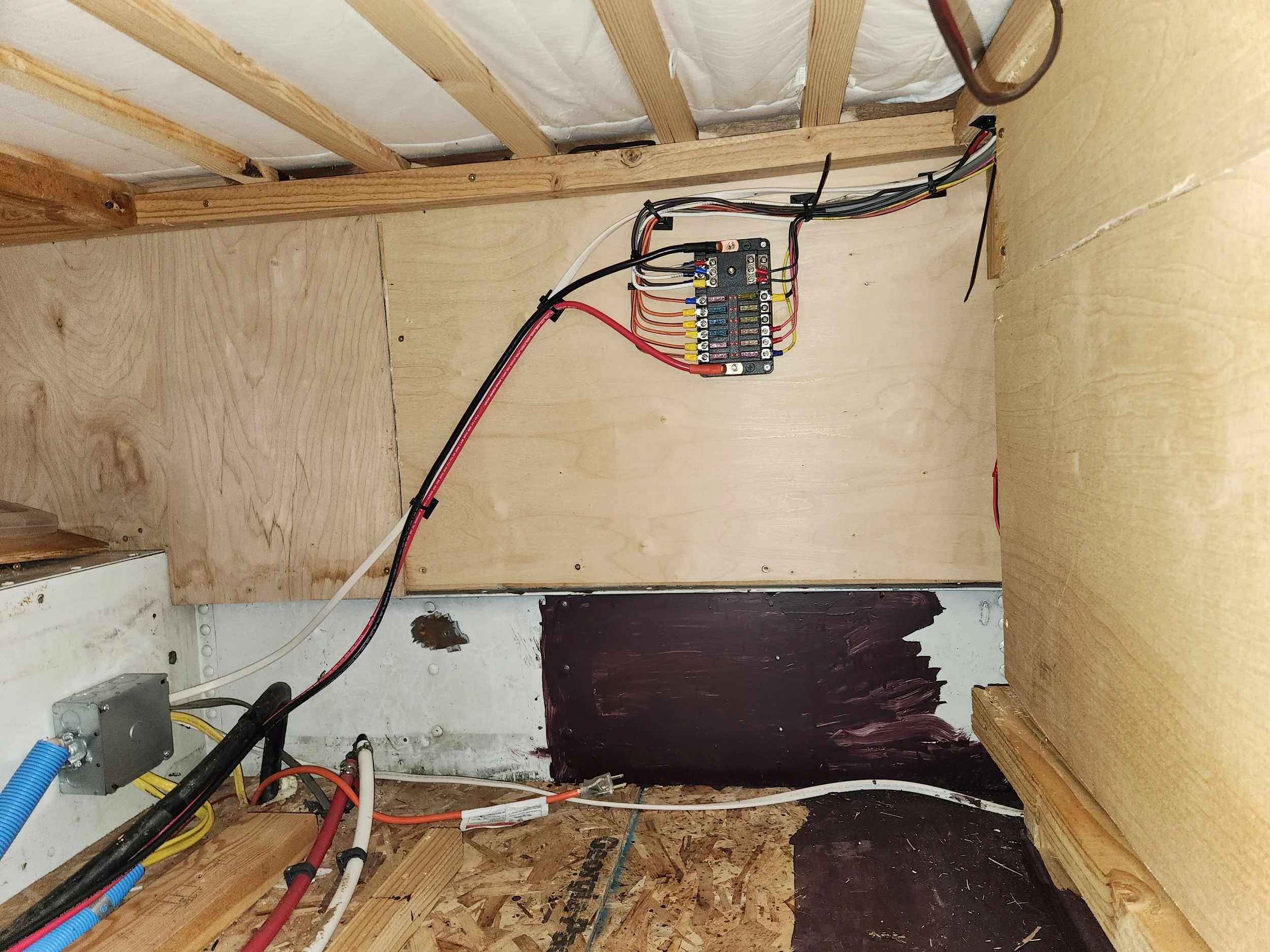
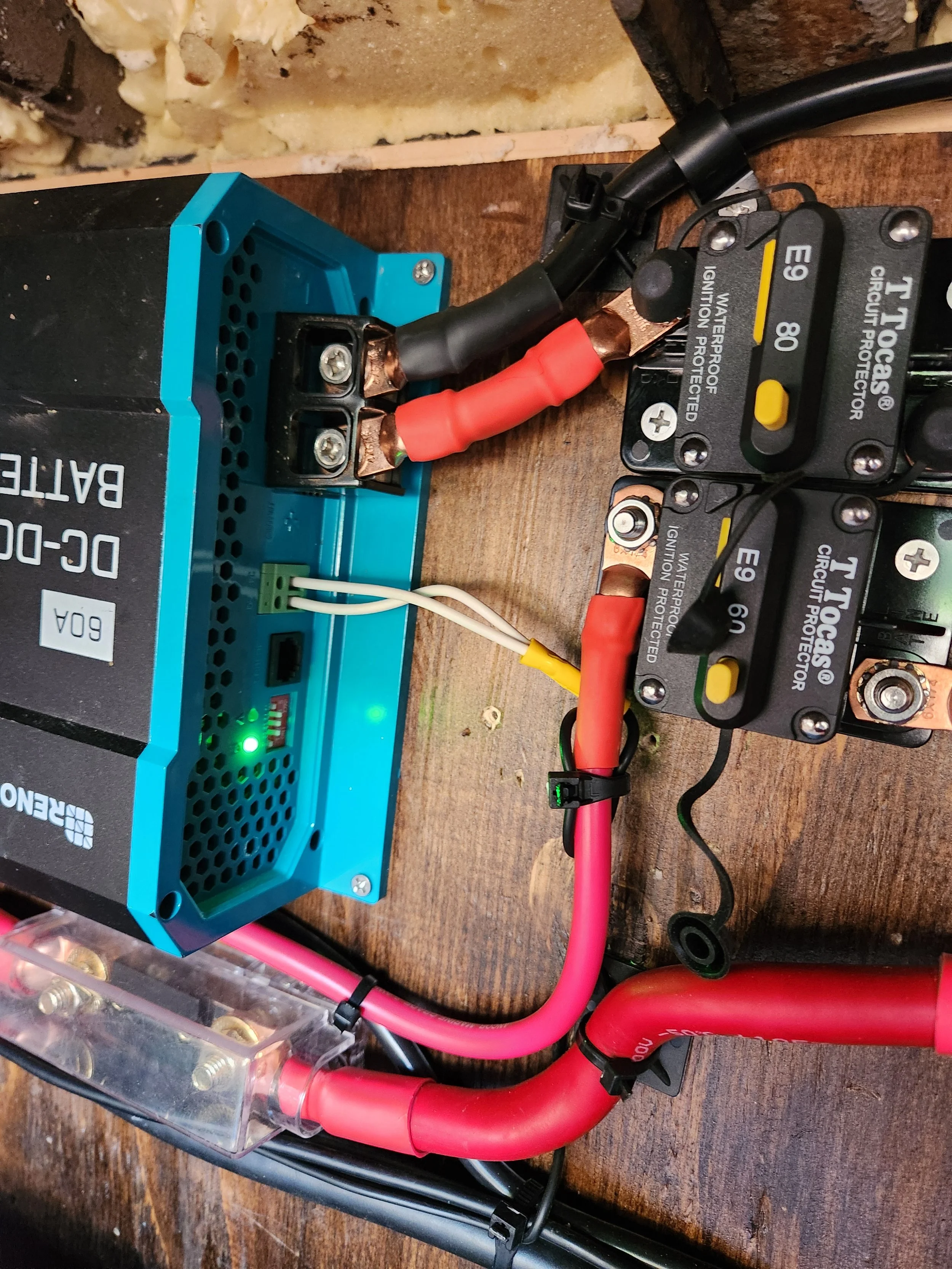
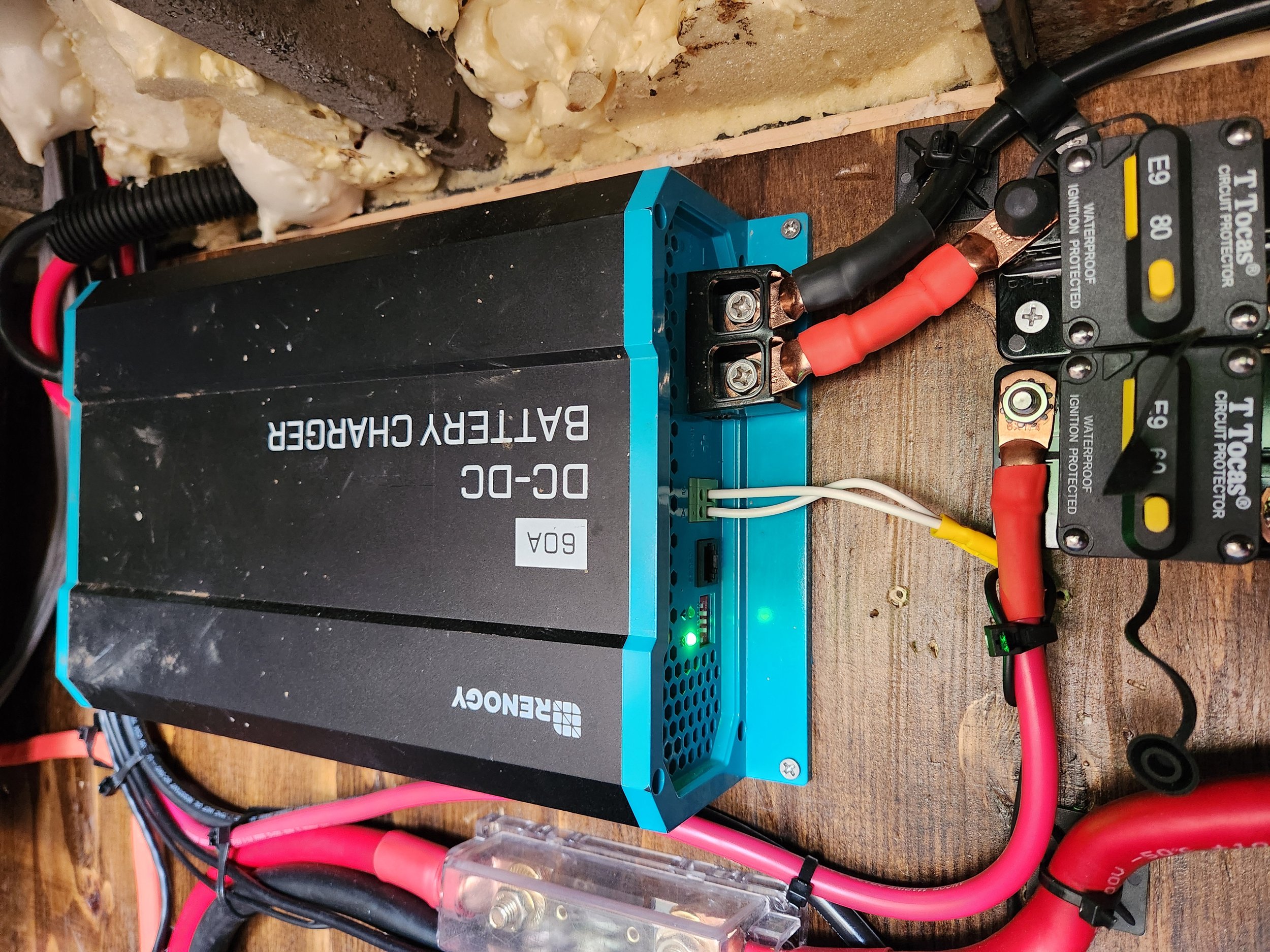
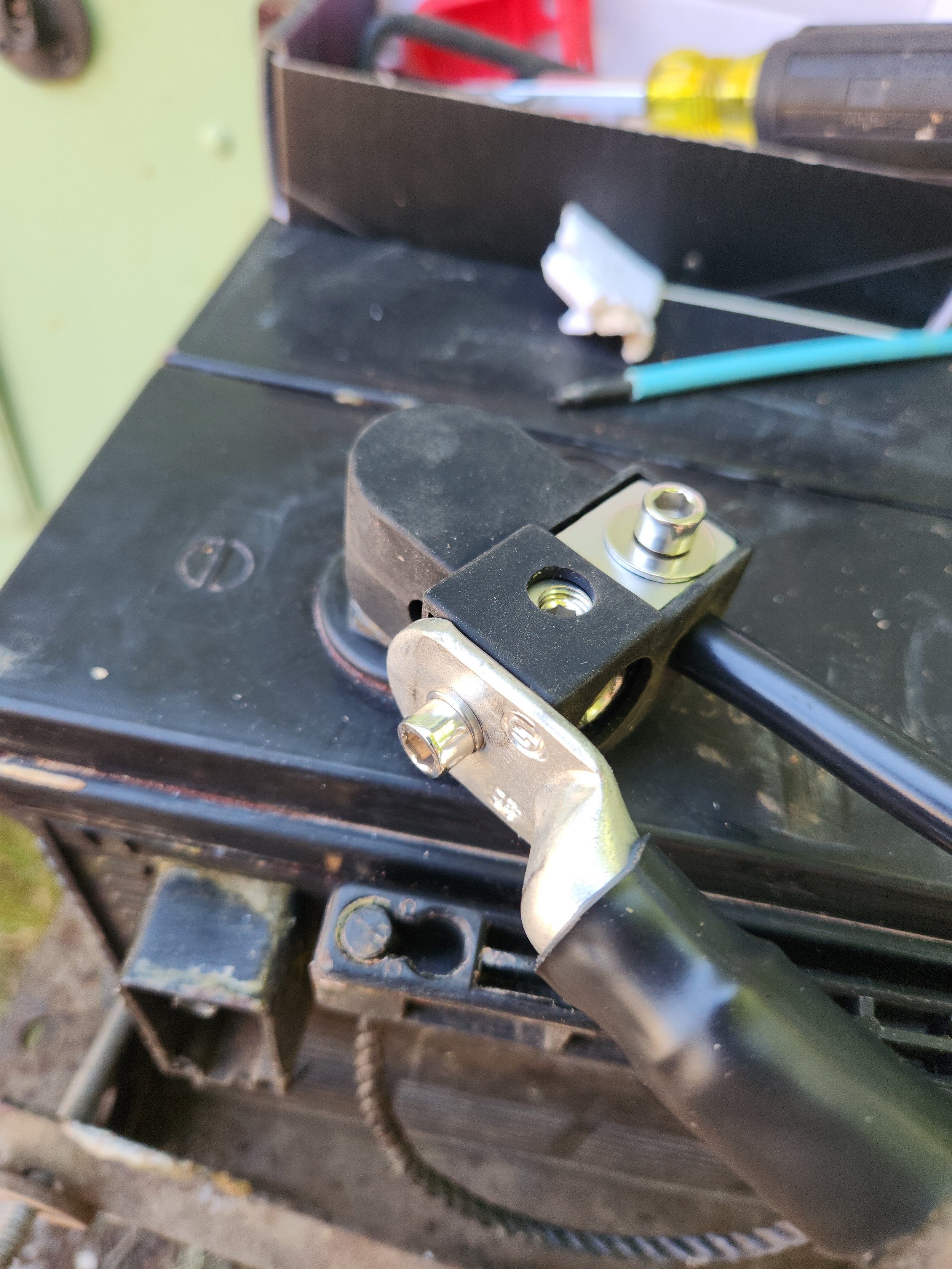
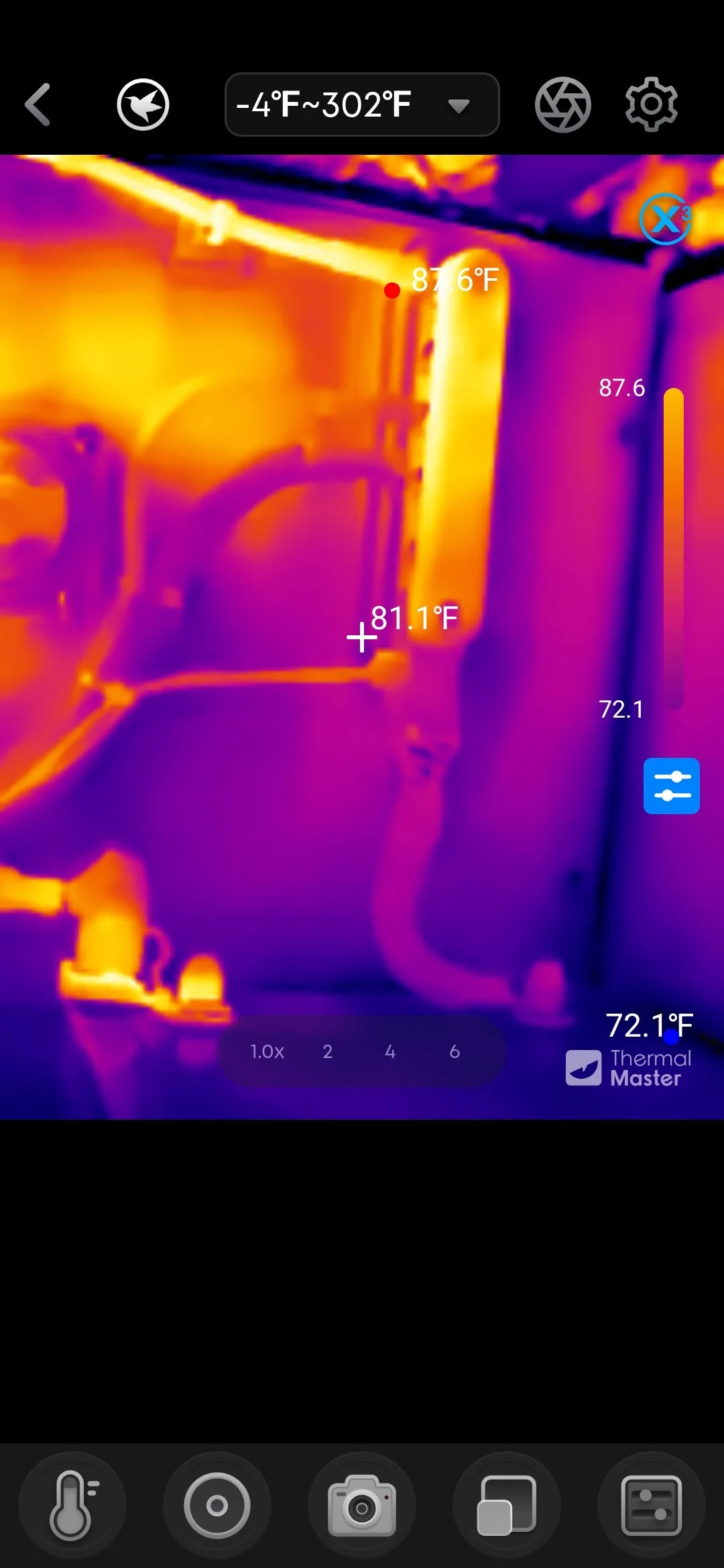
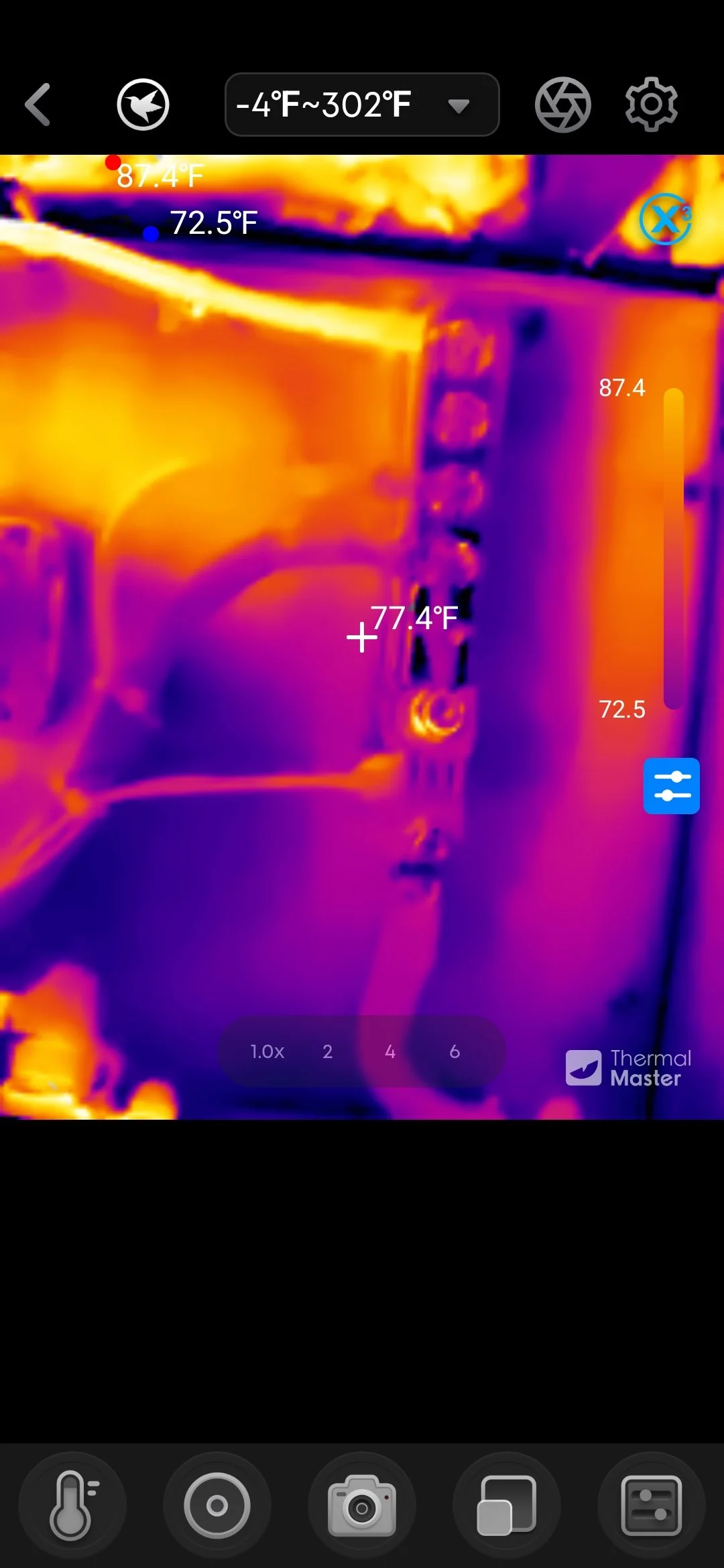
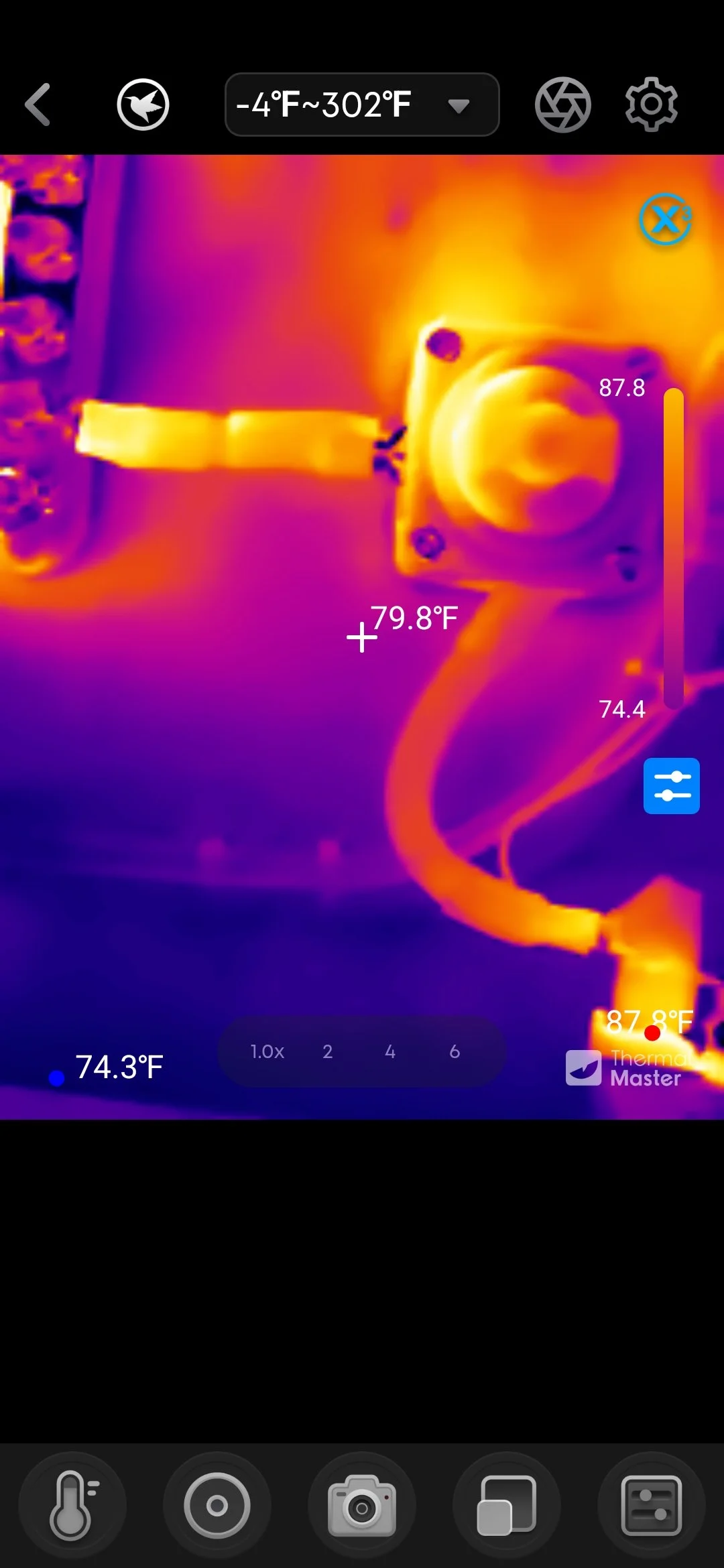
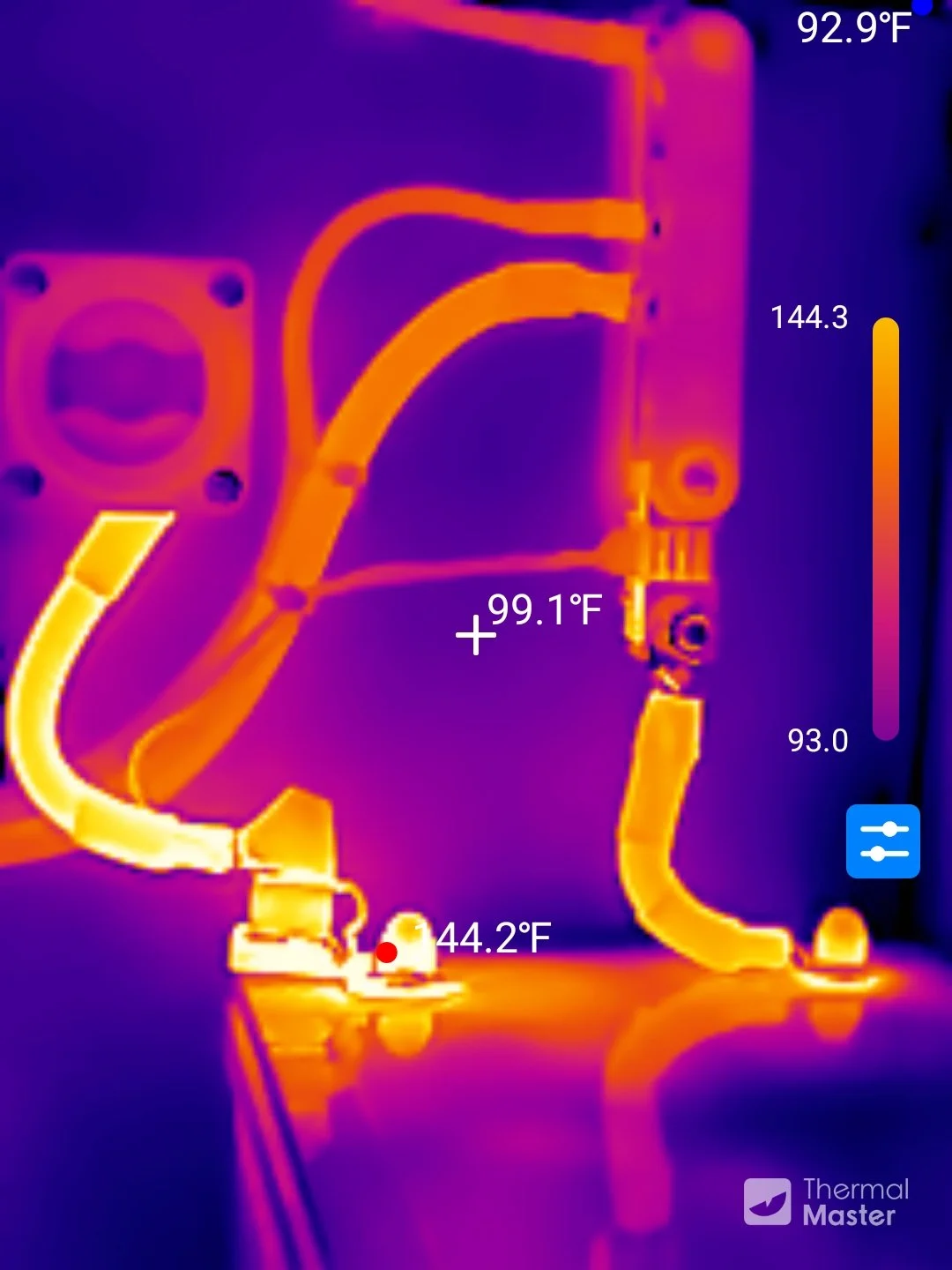
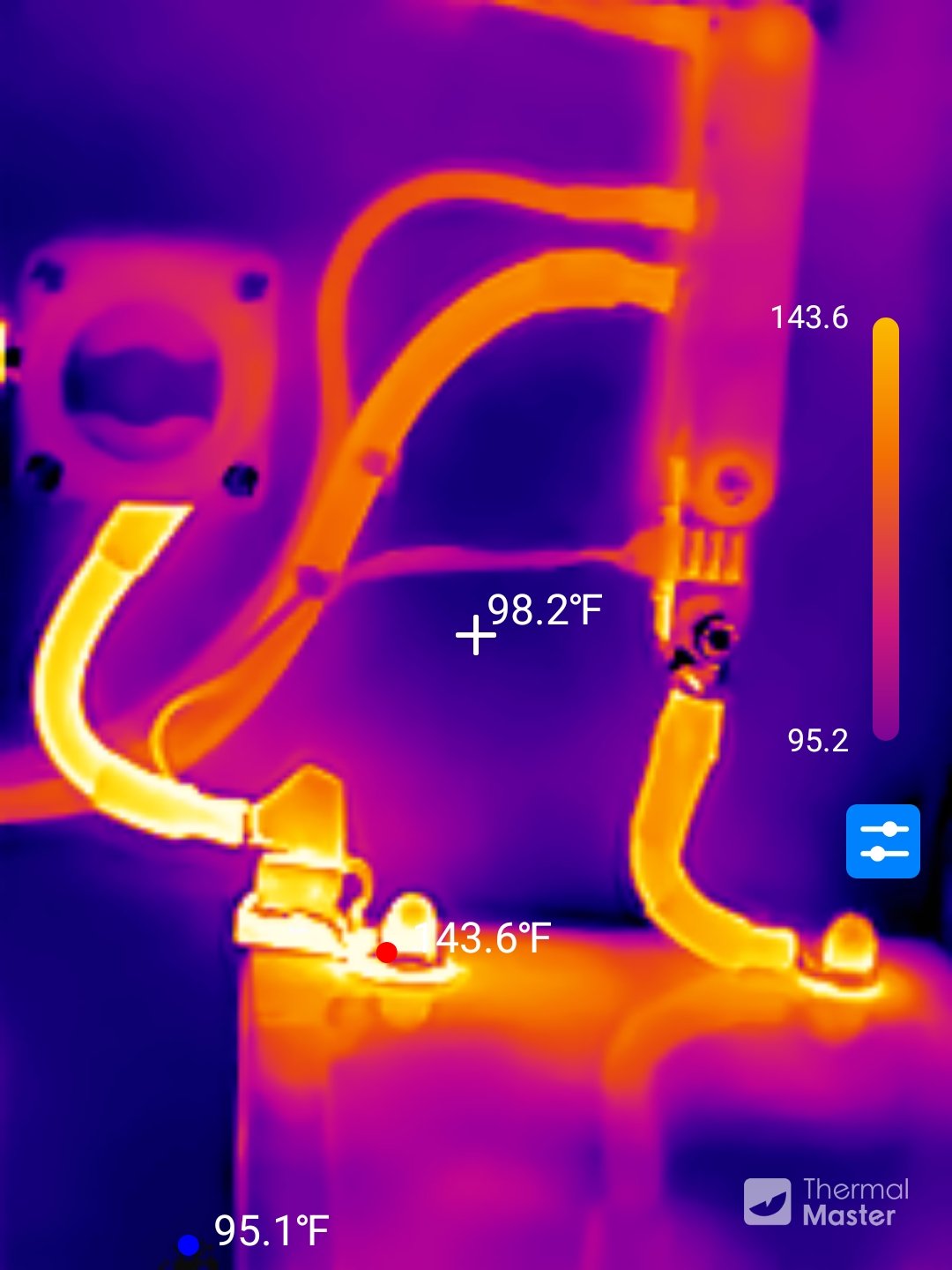
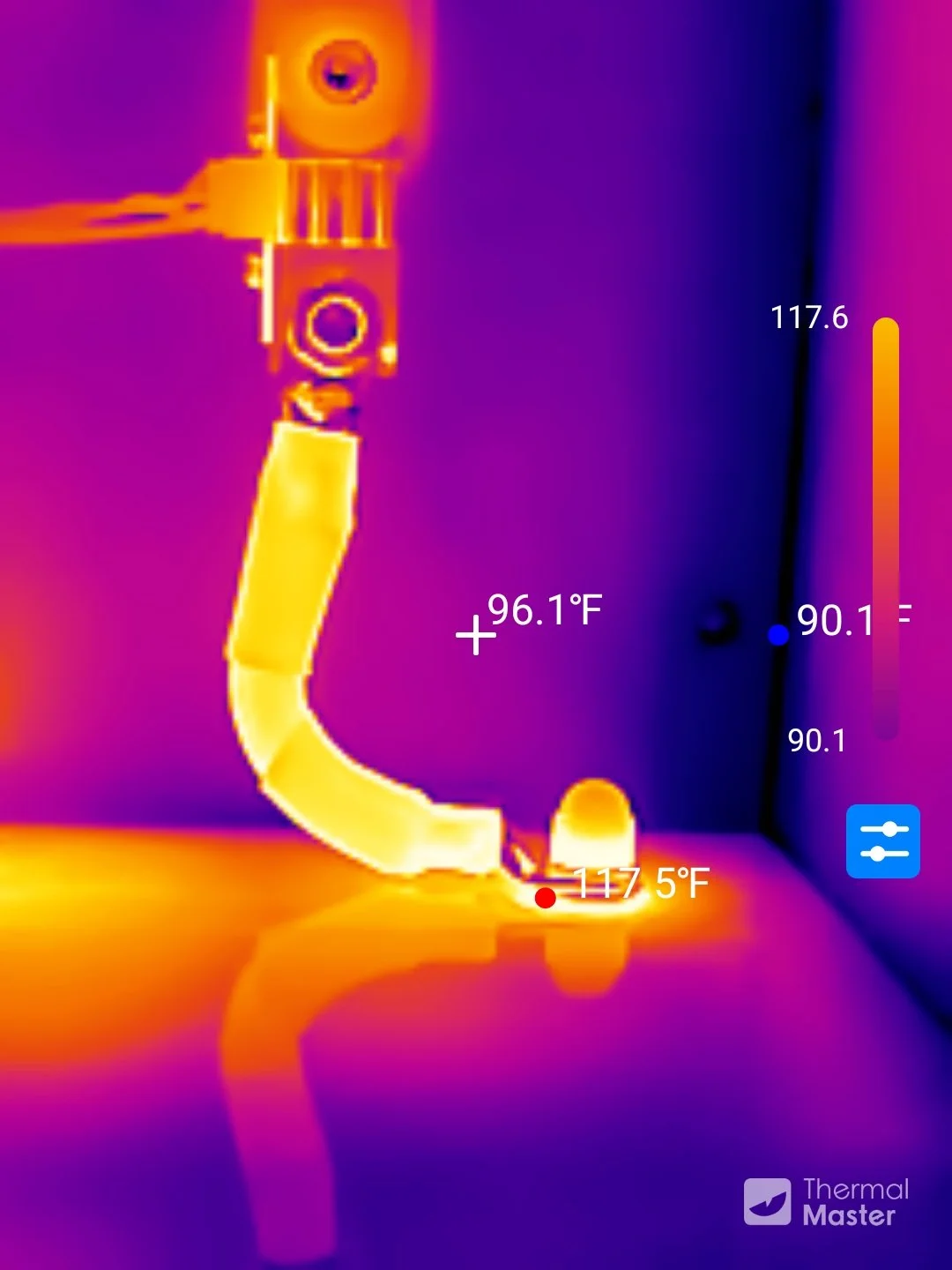
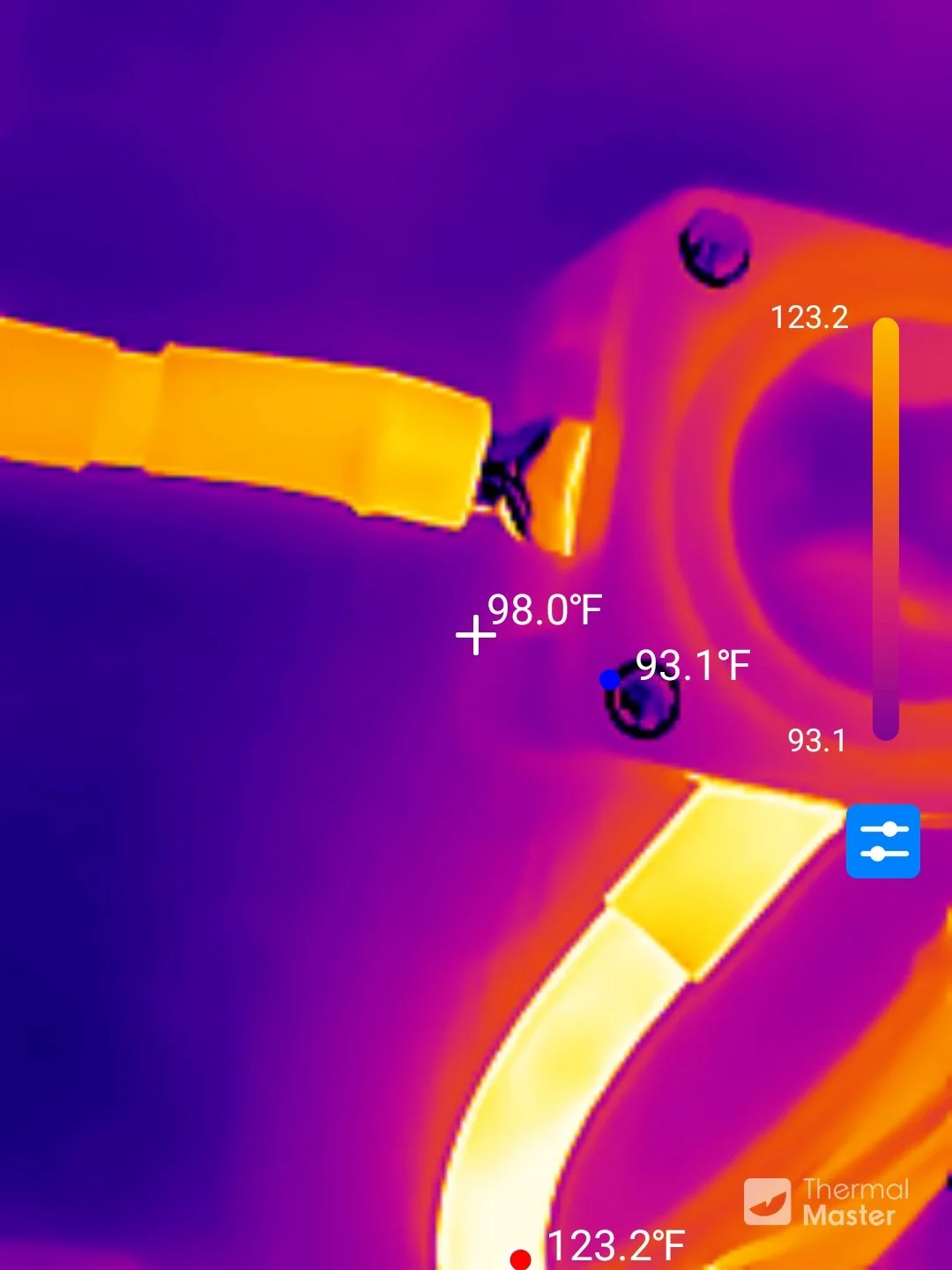
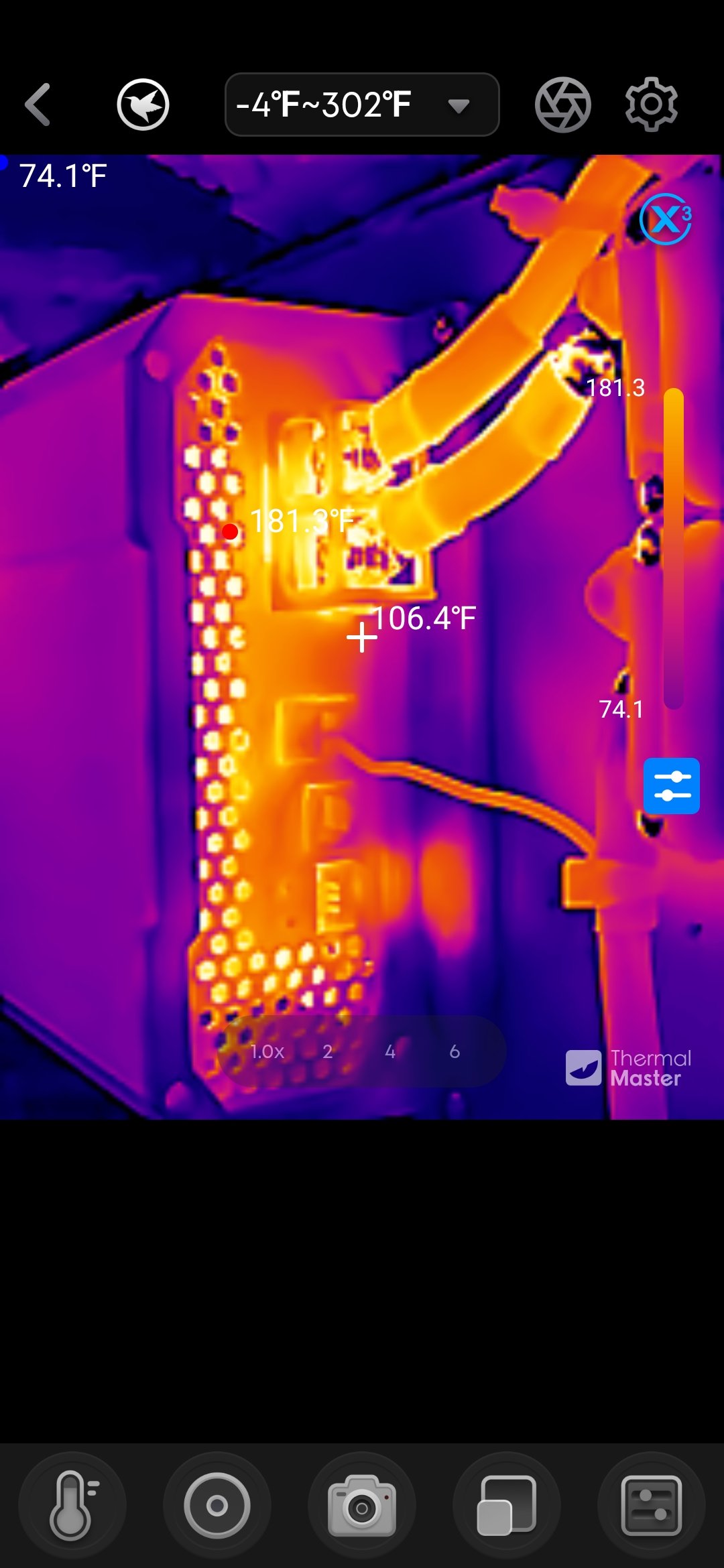
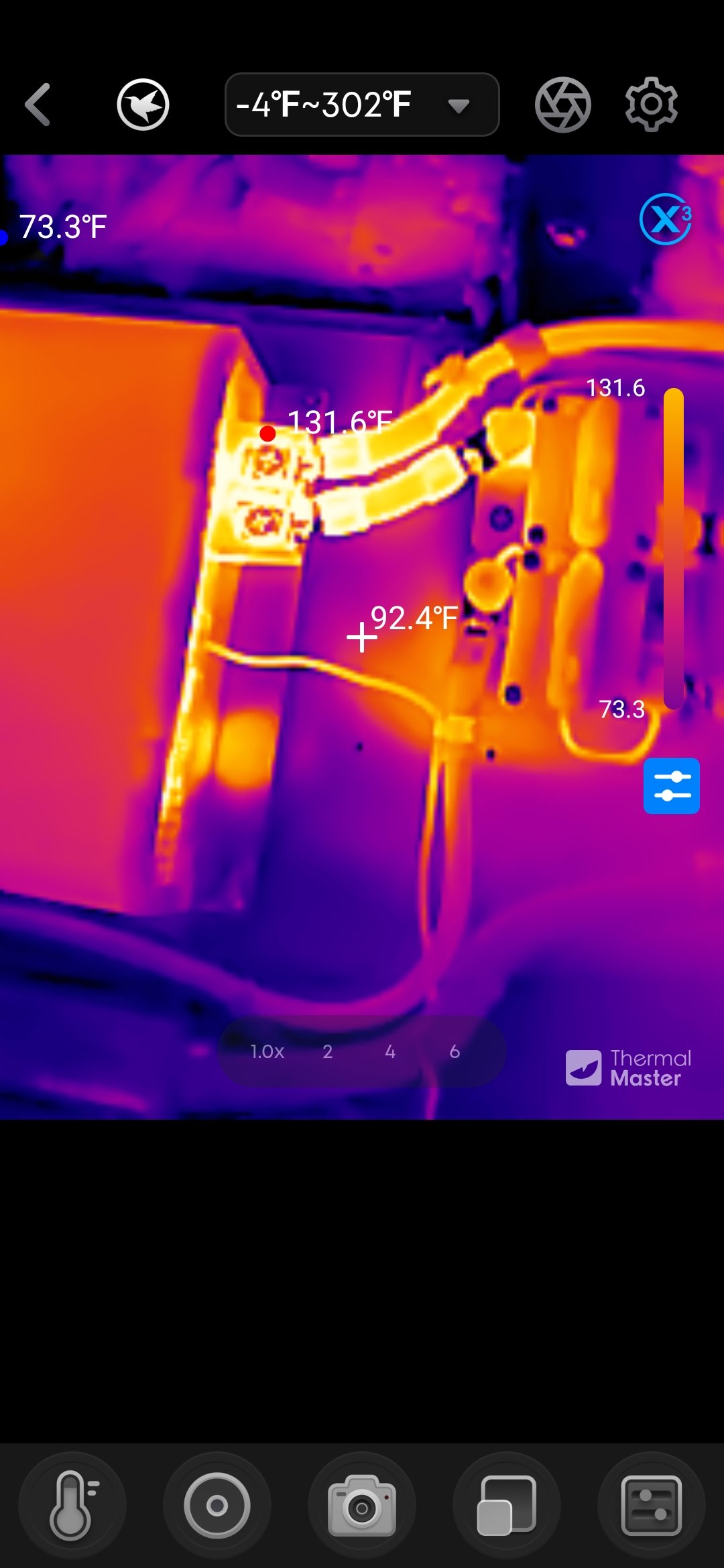
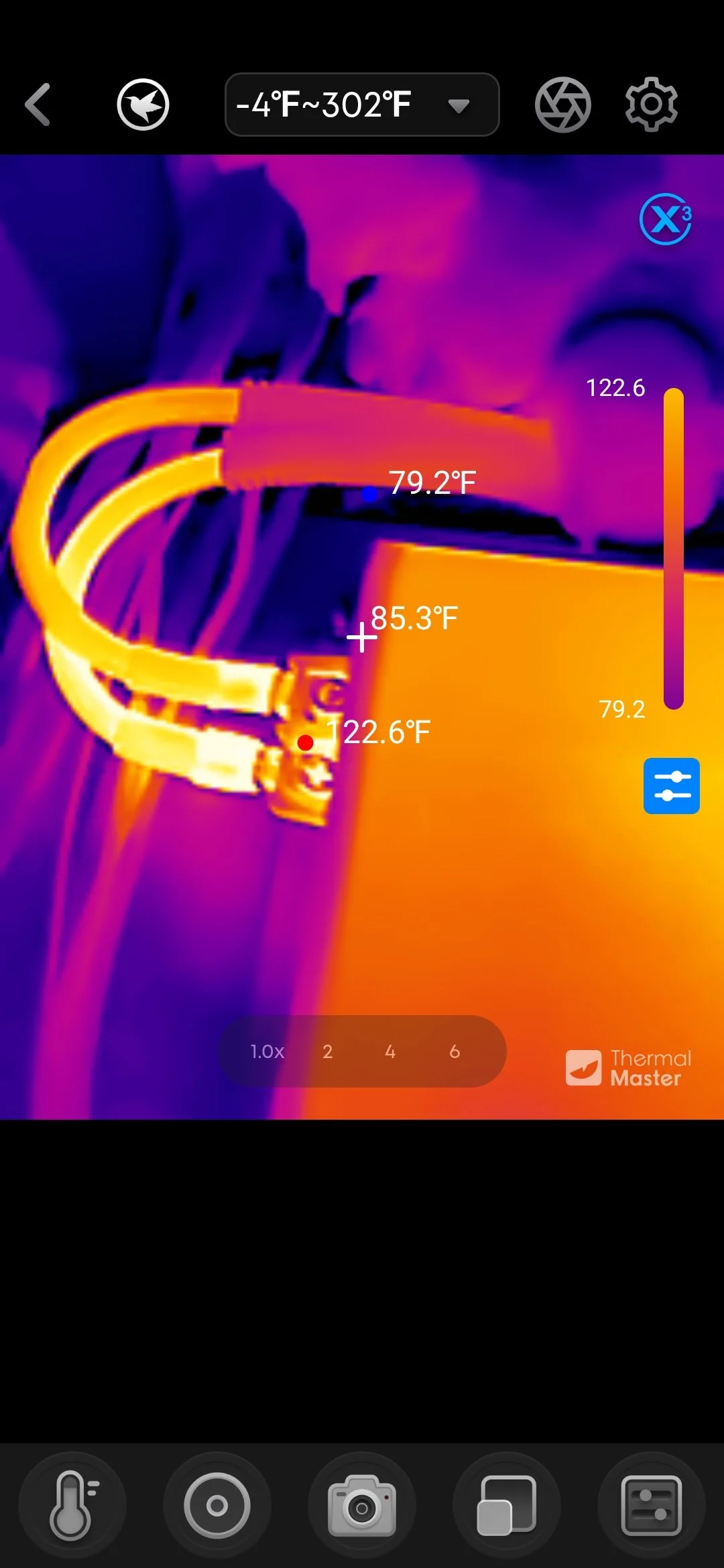
During the regular thermal imaging inspection, it was discovered that the 60A DC-DC charger and positive battery terminal were both generating abnormally high levels of heat. The battery heat was due to a damaged positive terminal, and the DC-DC charger heat was due to poor design. We wrote an article explaining why this model of DC-DC charger has this issue, and how to avoid it.
In the following gallery, you will see hot spots reaching anywhere from 120°F to 180°F. These are high temperatures even for electronics working at high power under high ambient temperatures. Just imagine how hot these may have gotten if the electrical compartments were closed off while on the road in summer!
Gallery: Identifying Hotspots
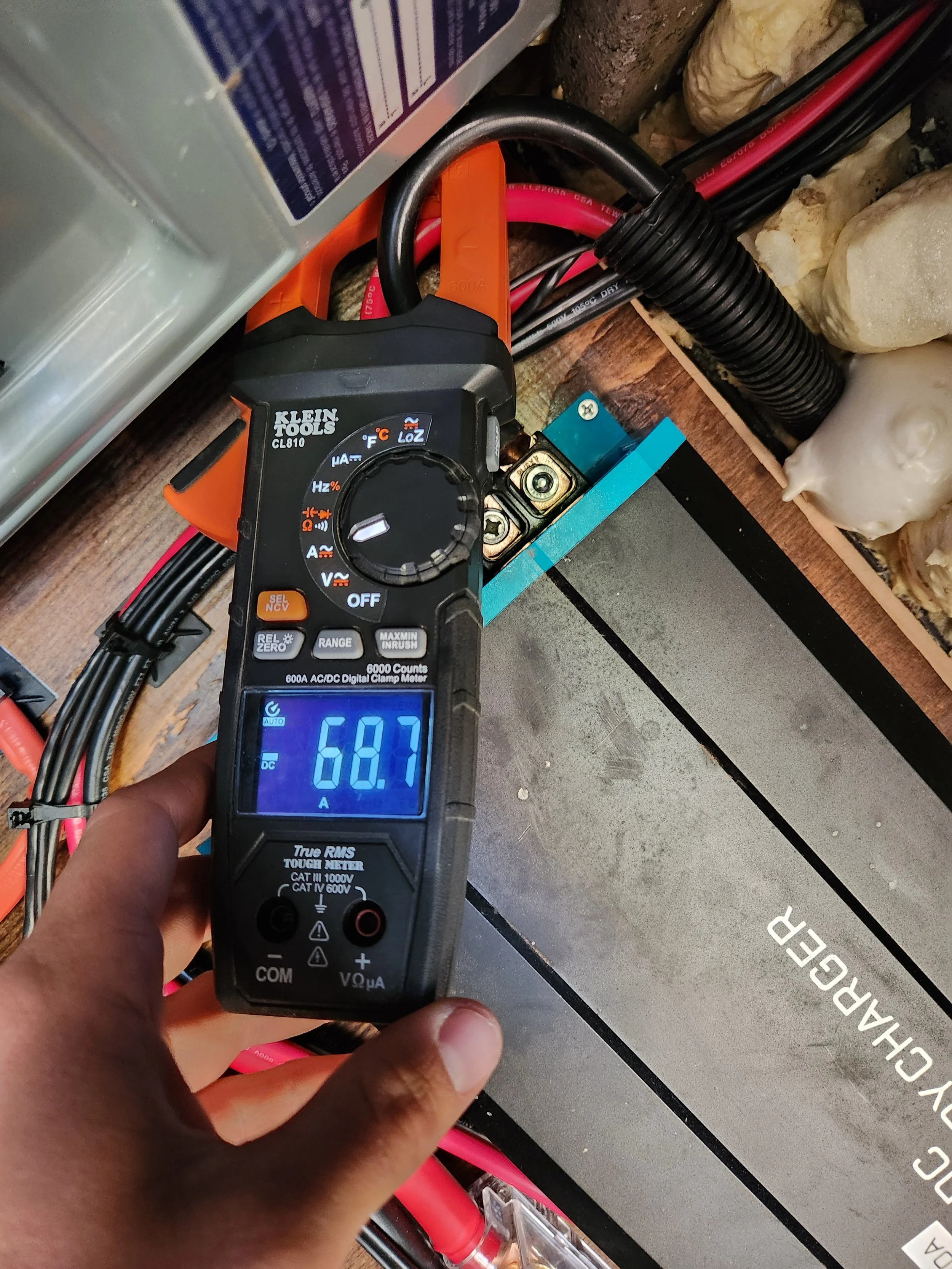
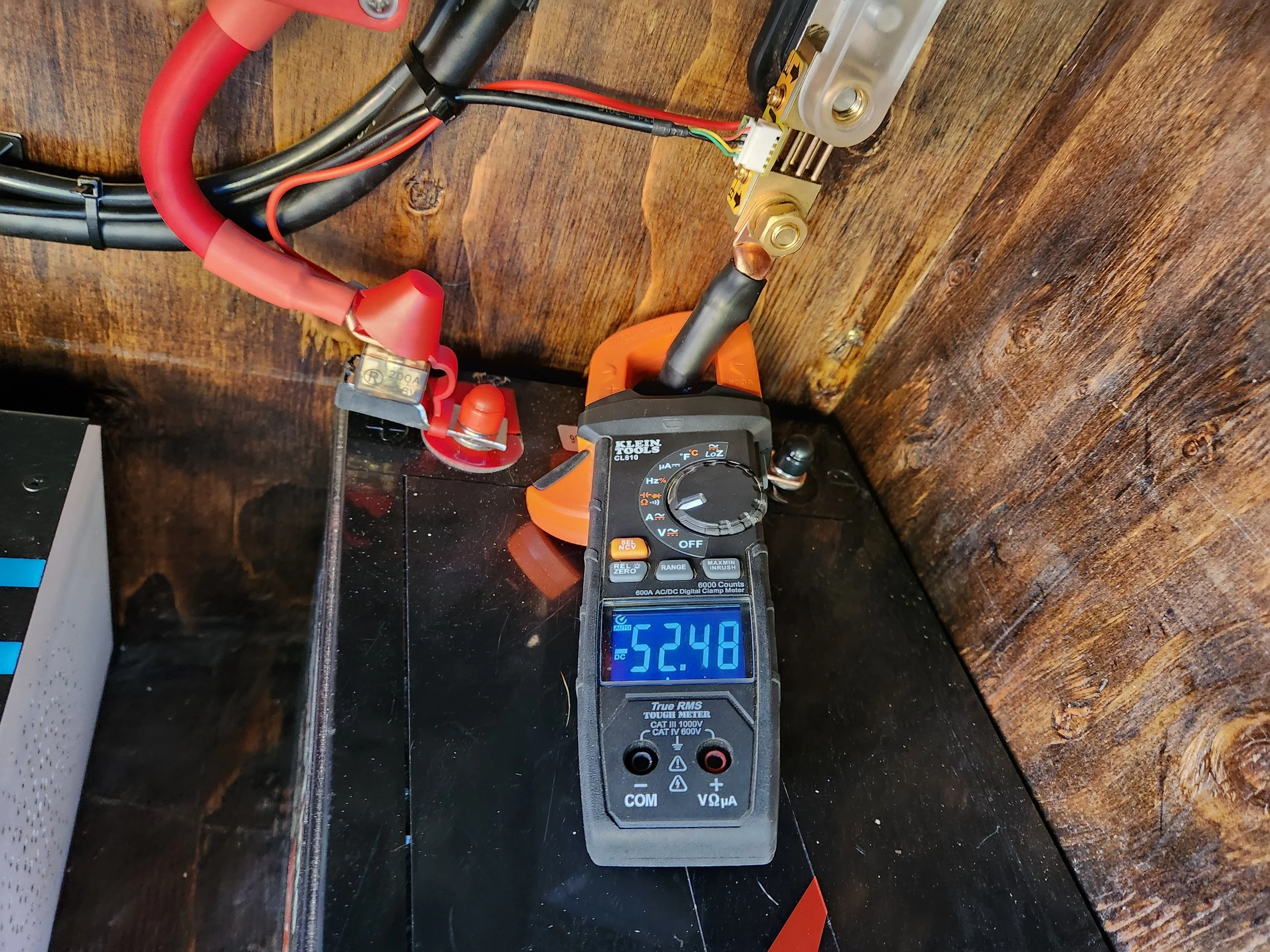
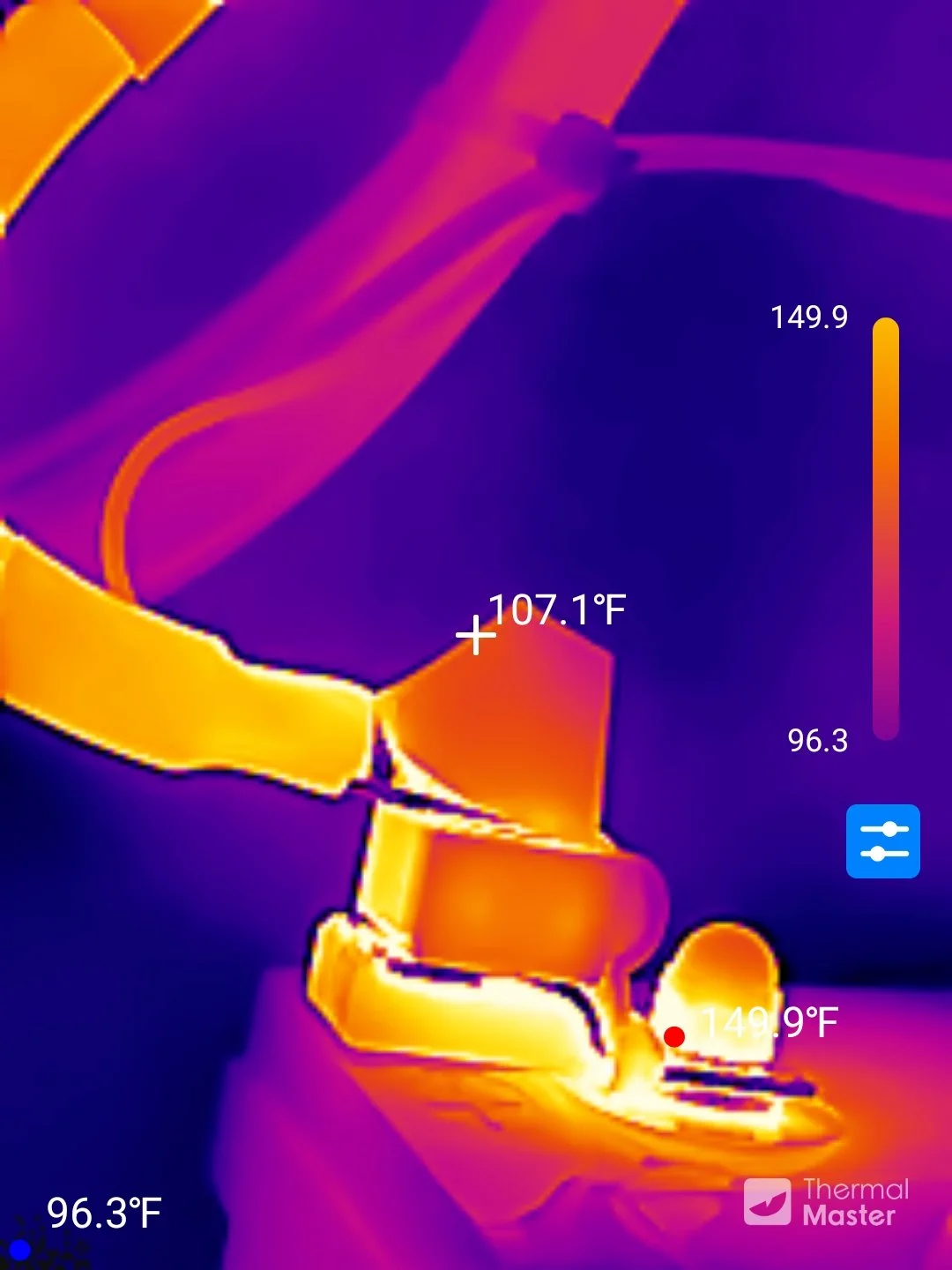
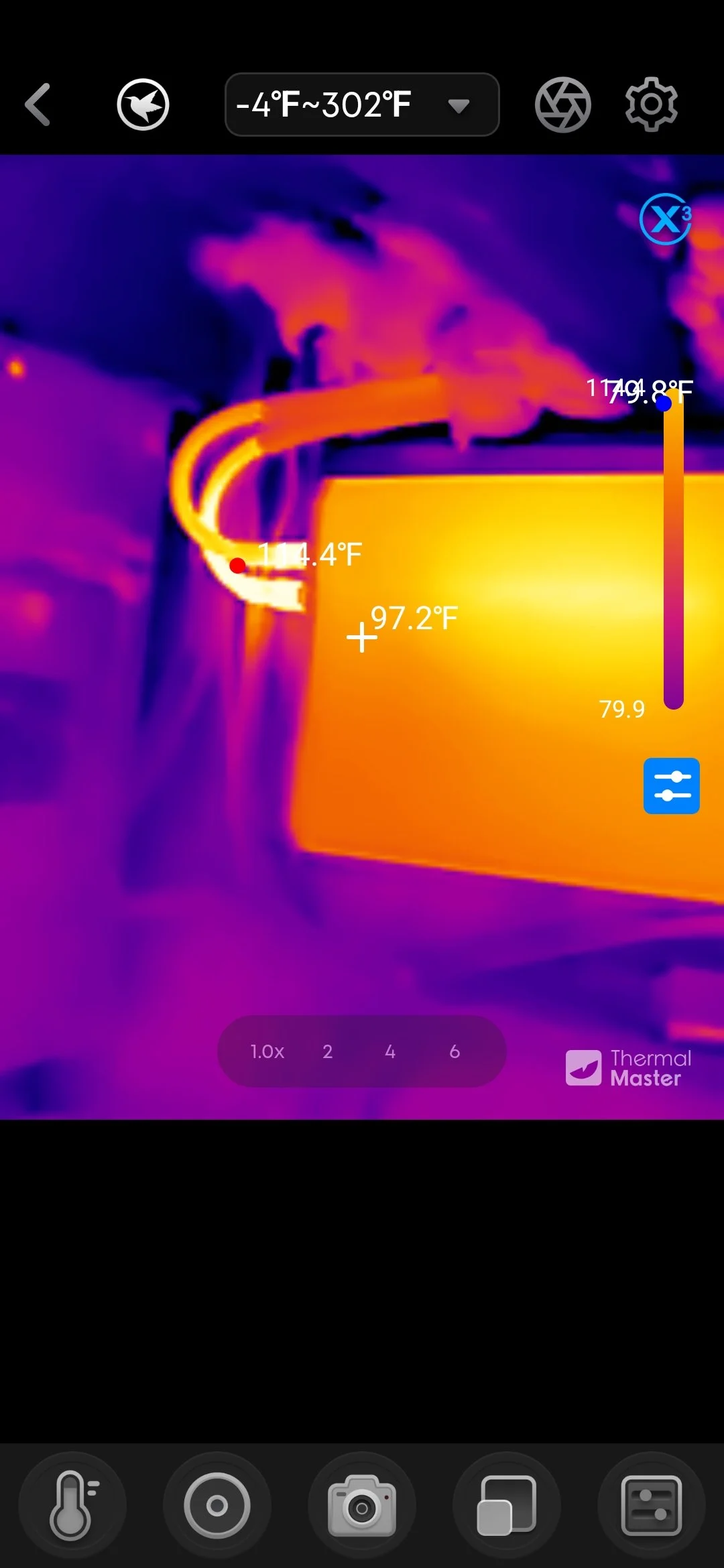

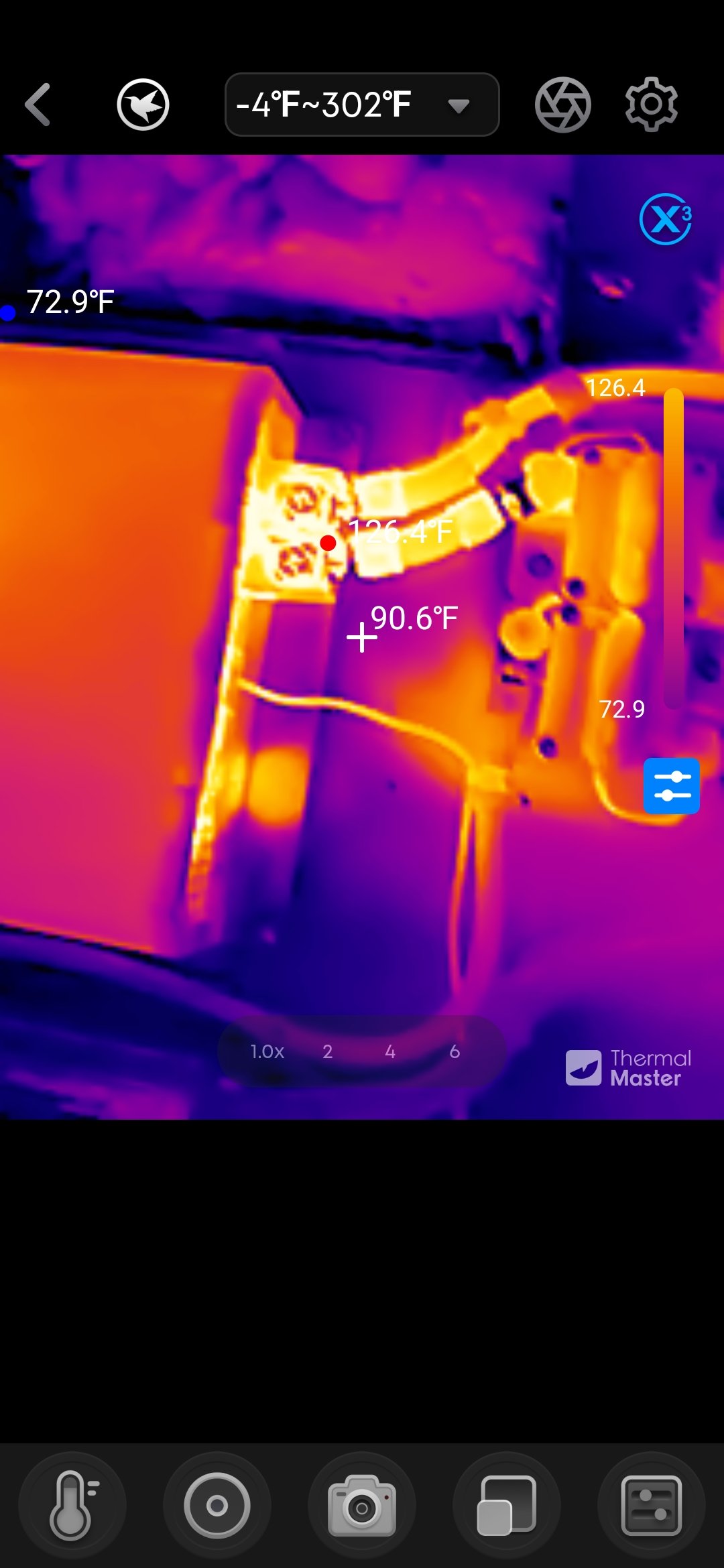
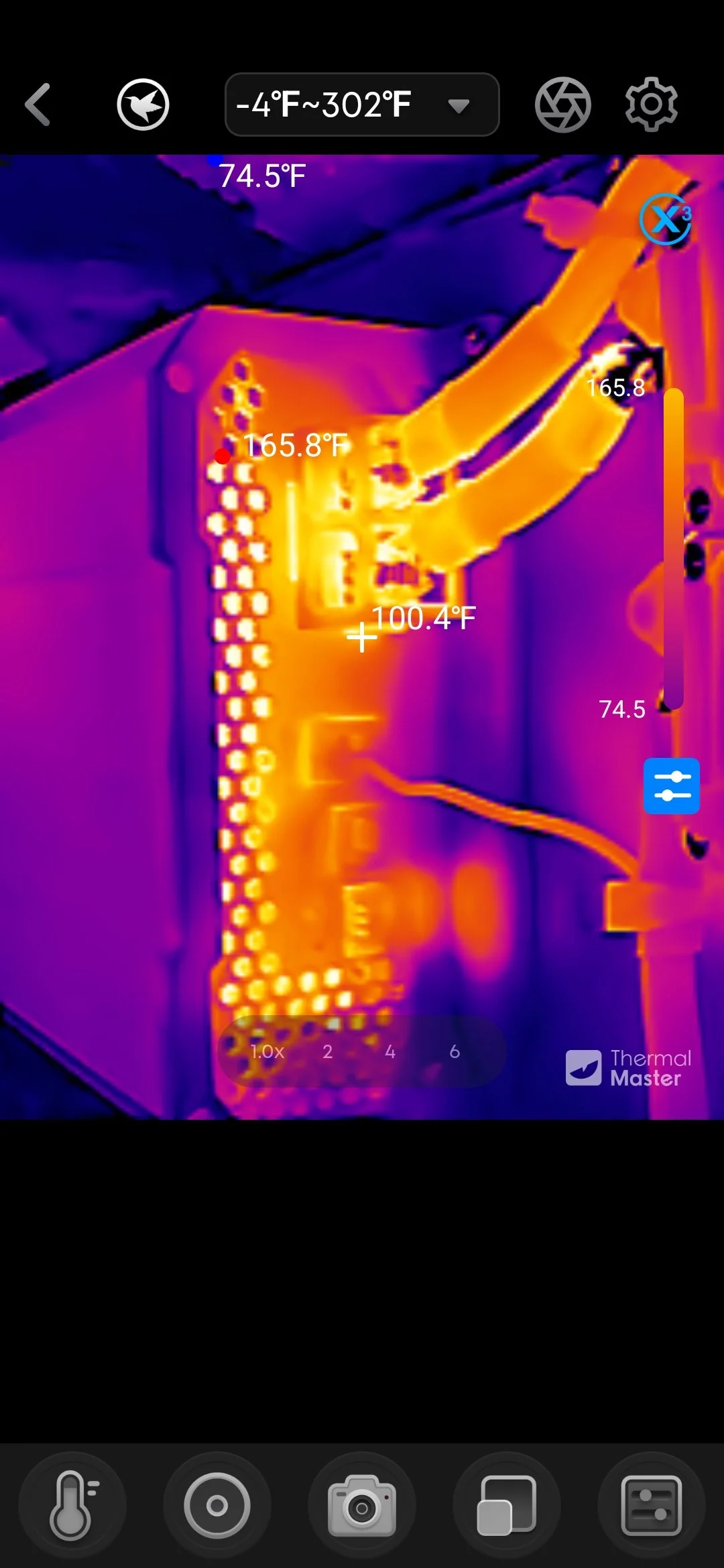

To resolve these issues without replacing expensive components, we reduced the inverter/charger’s charging current to 30A max, and likewise for the DC-DC charger via the LC terminal. While this did increase charging time, it was the safest option to reduce heat buildup and optimize system longevity.
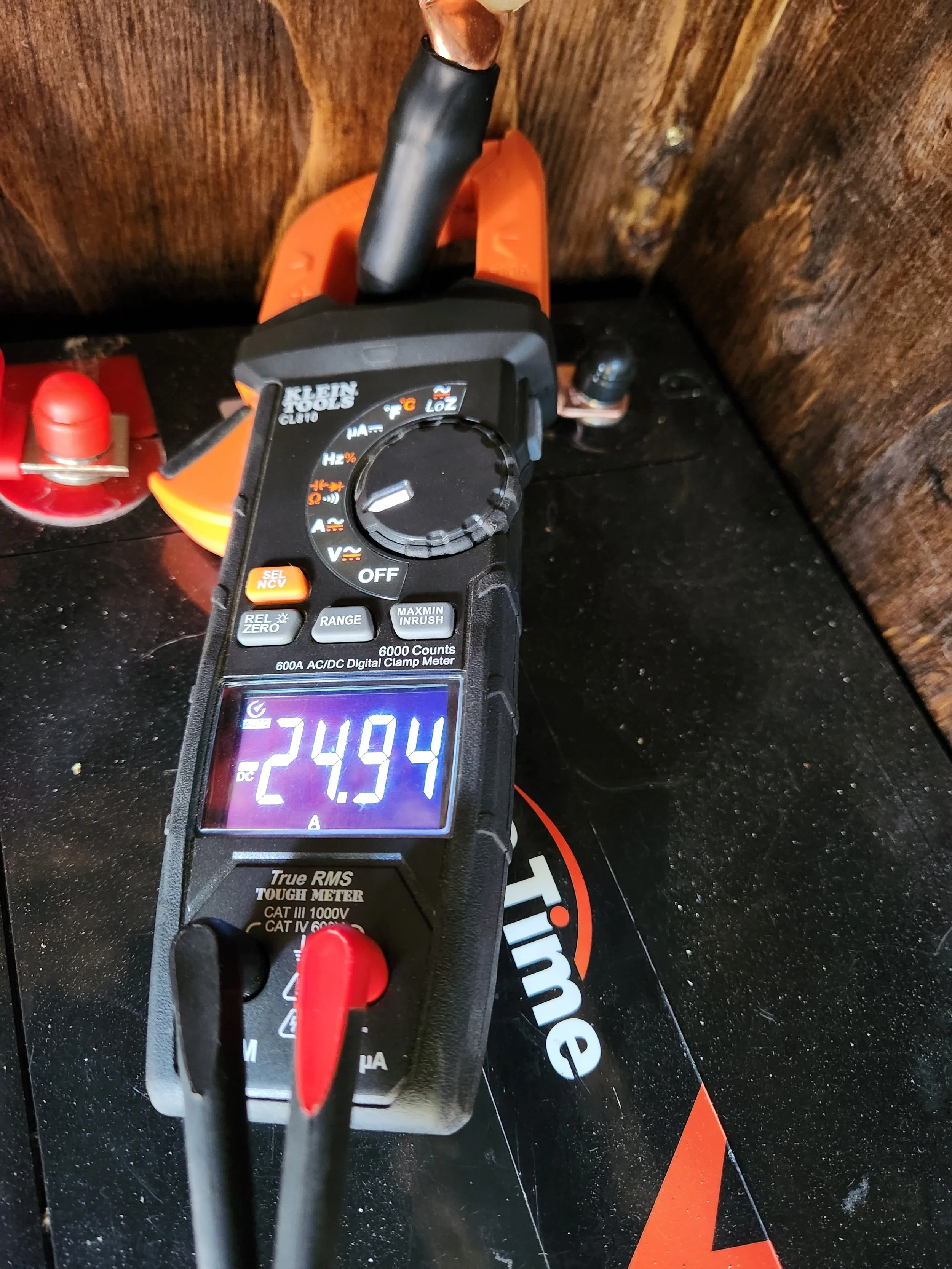
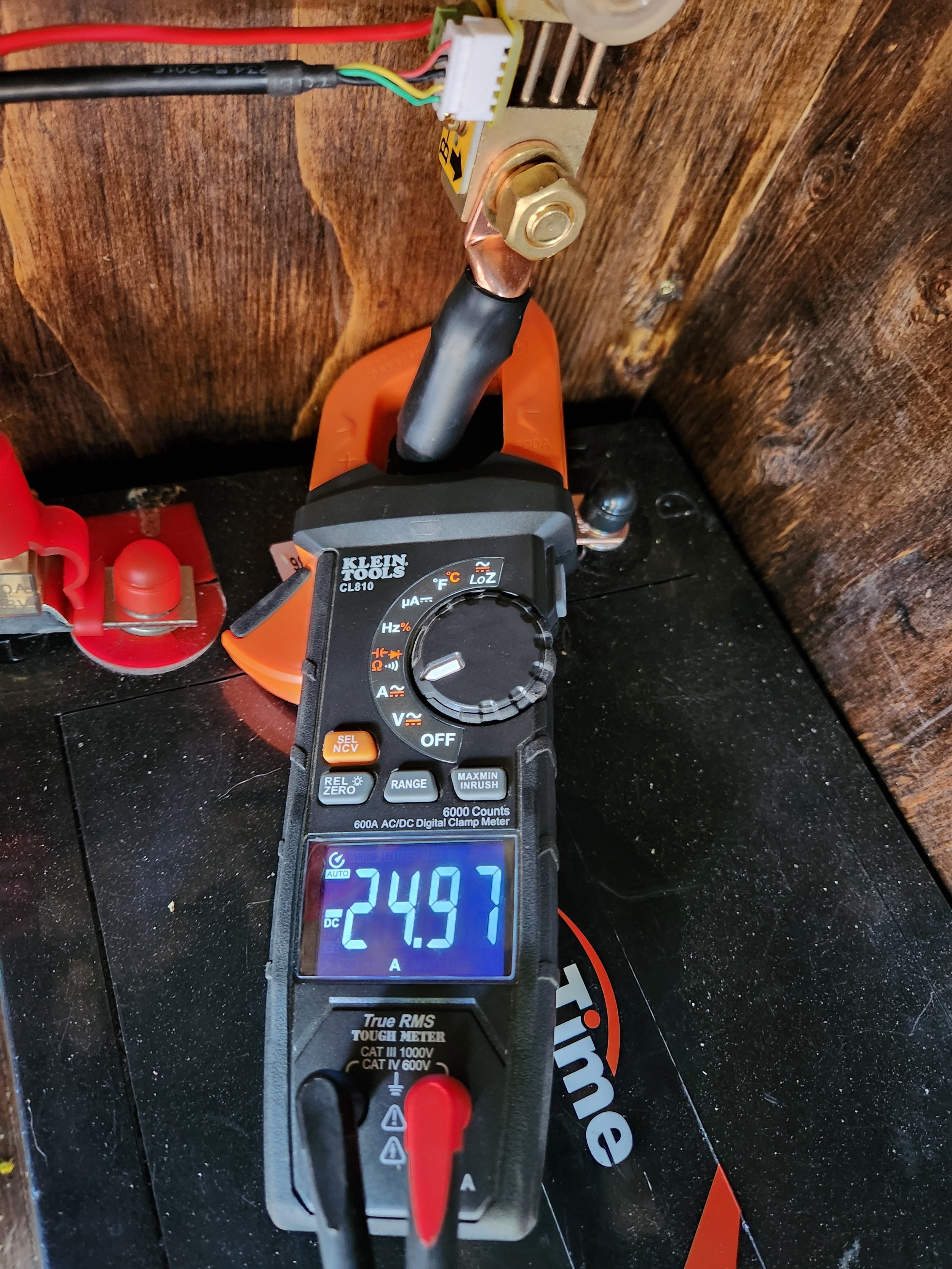
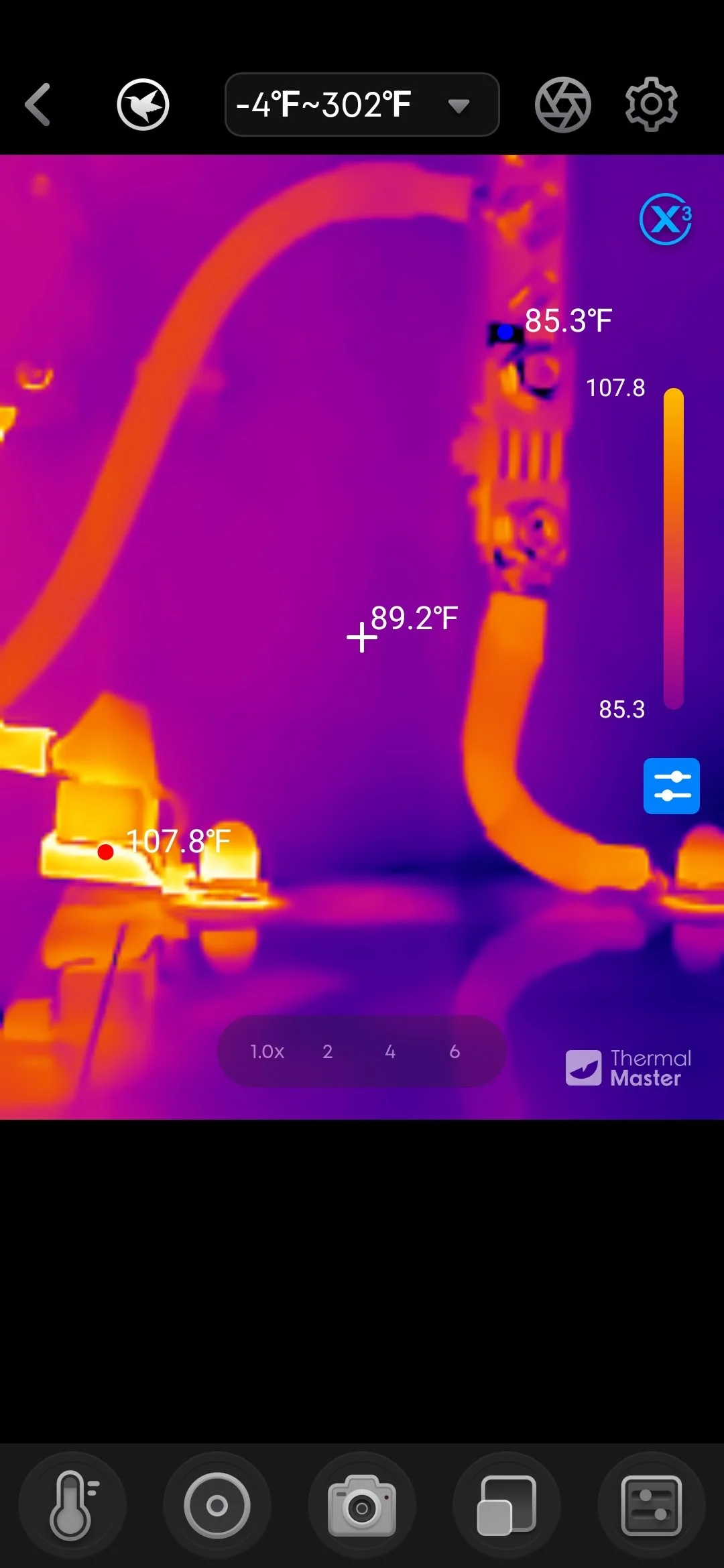
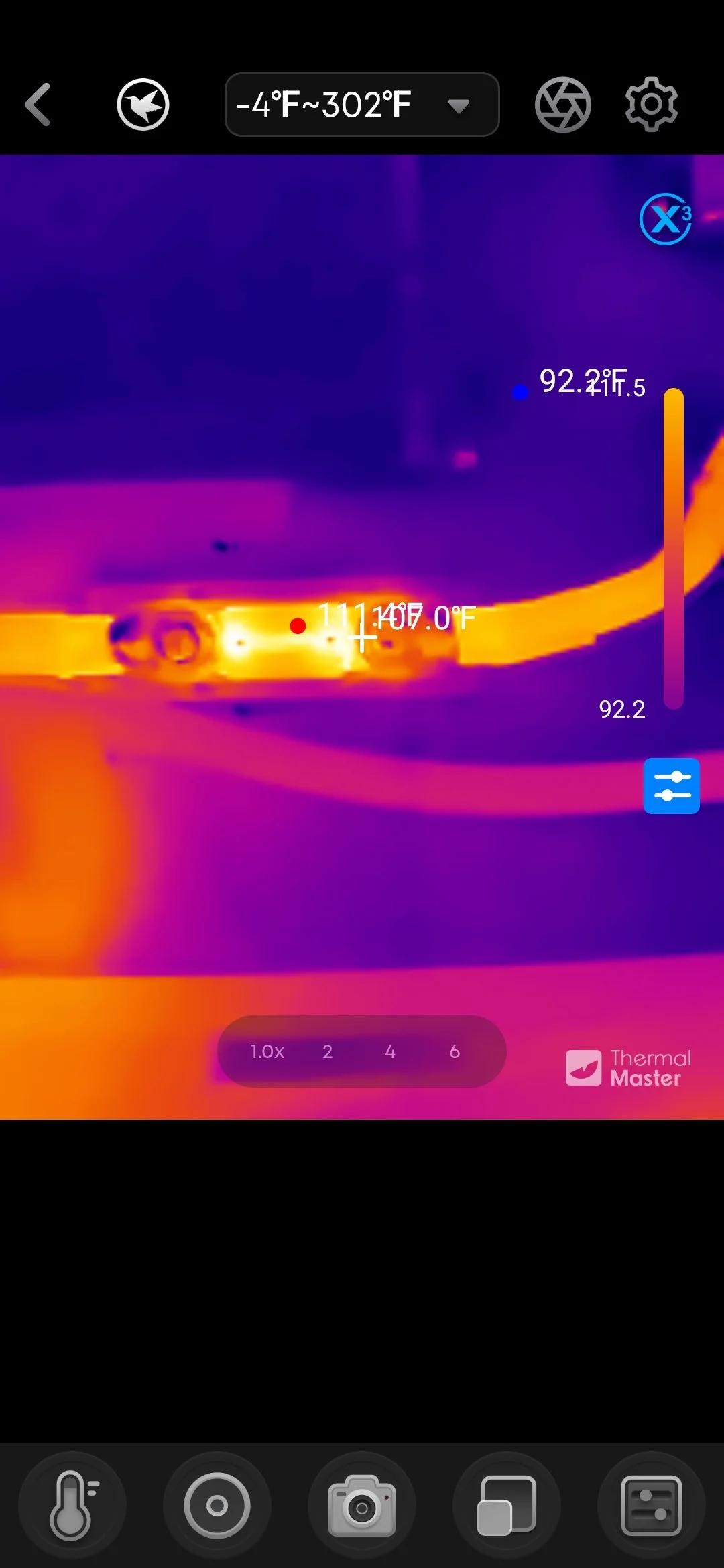
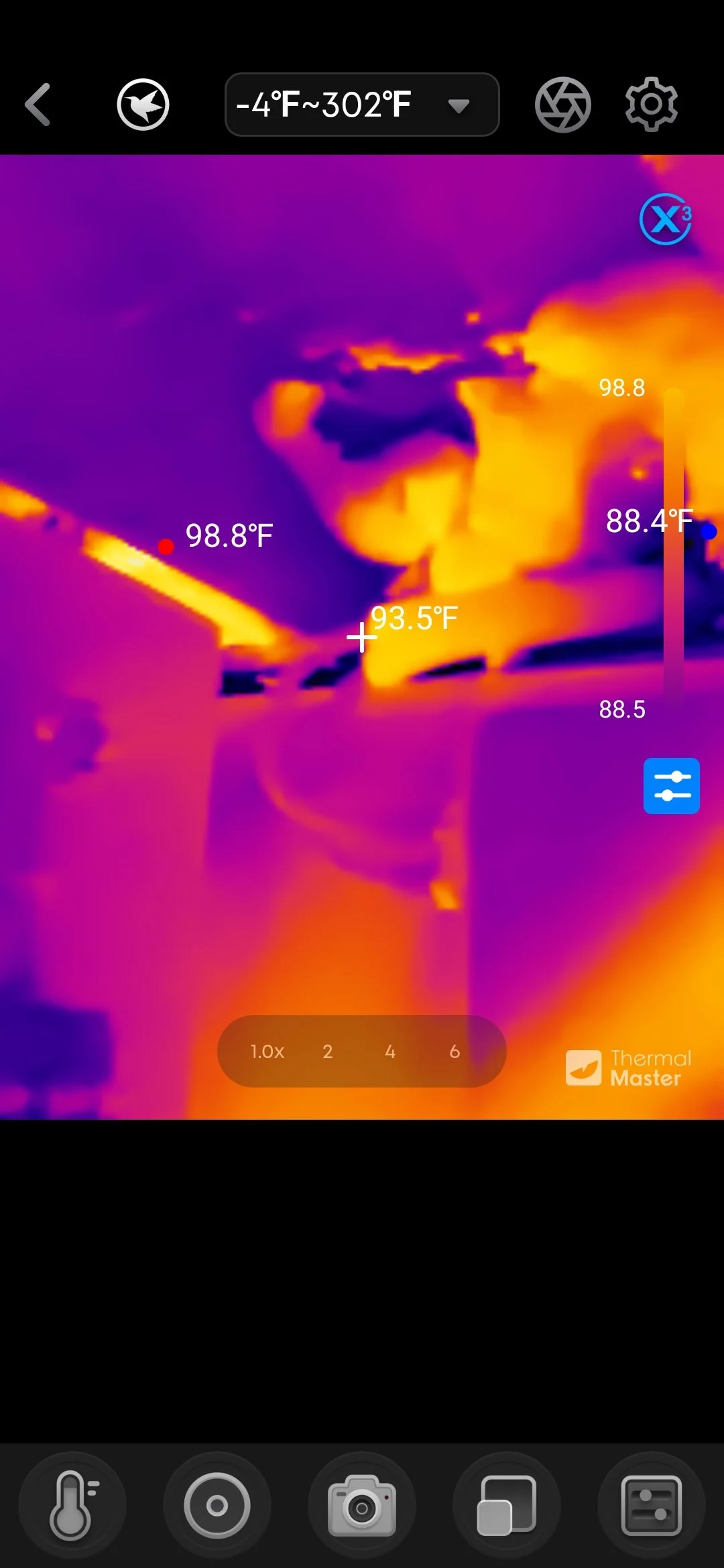
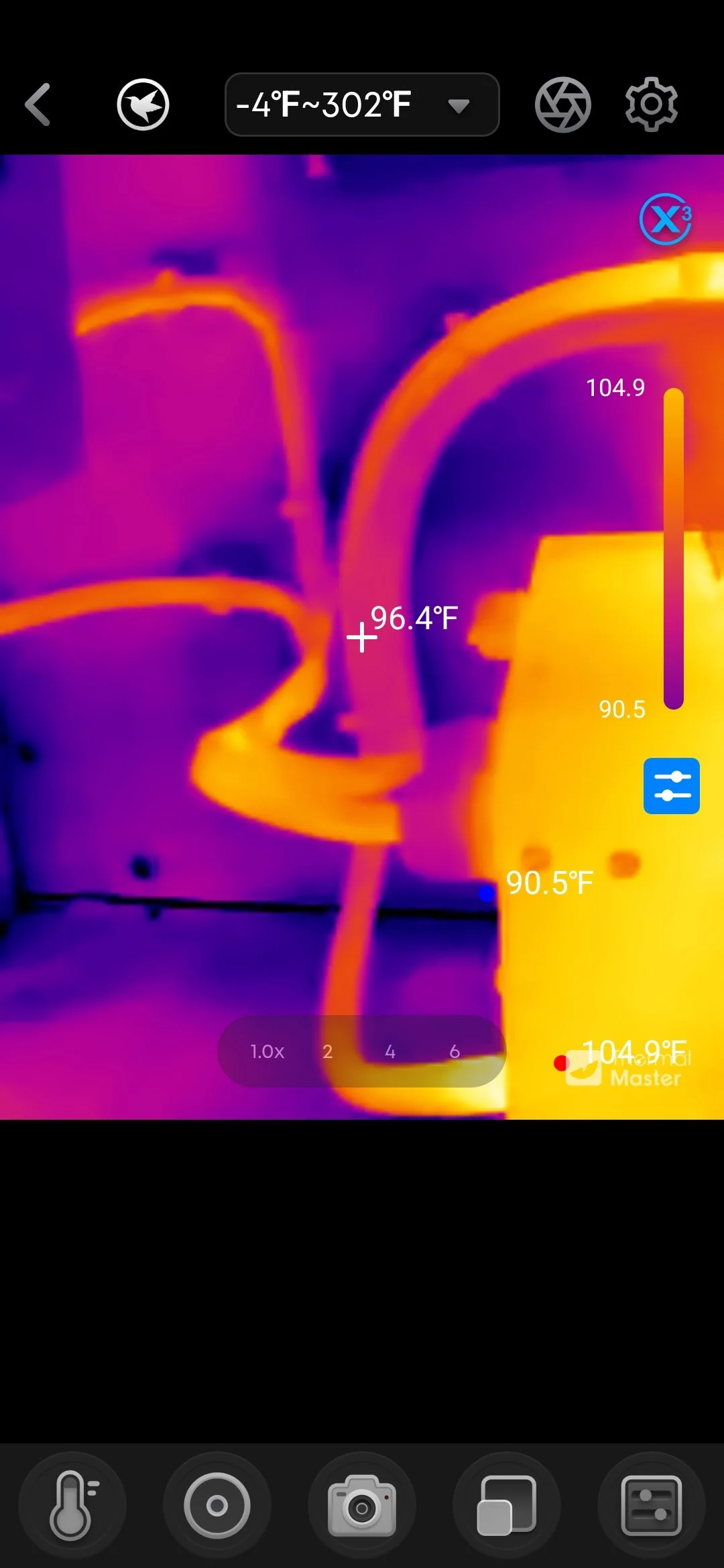
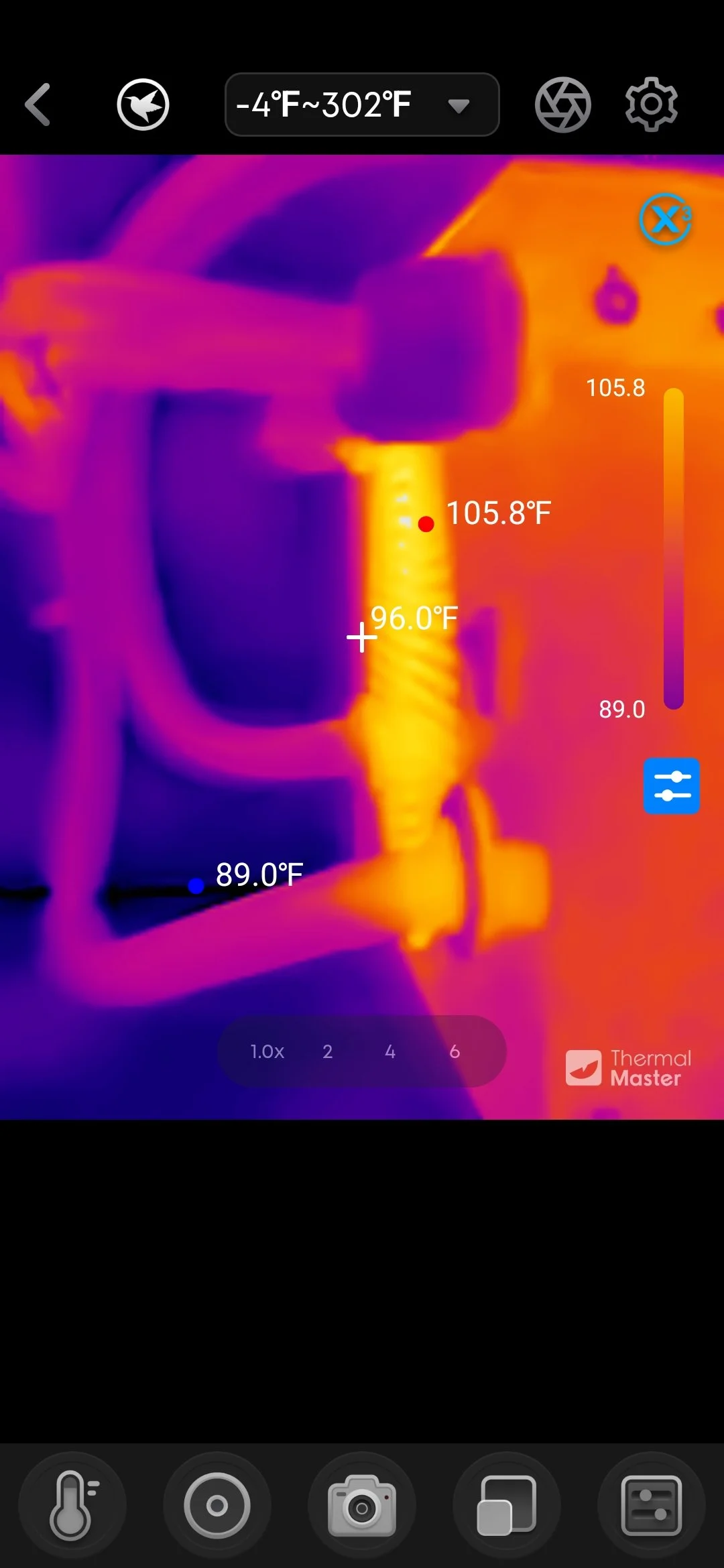
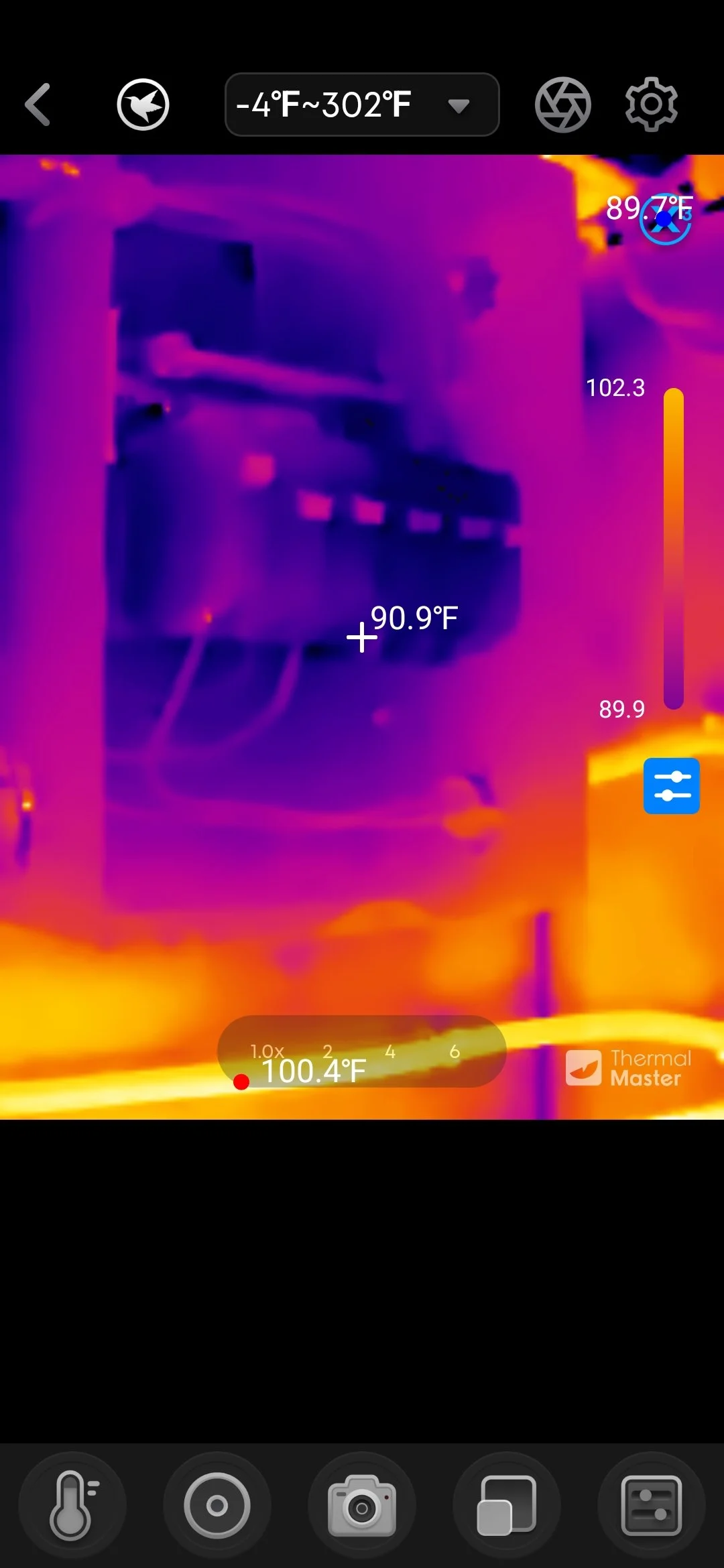
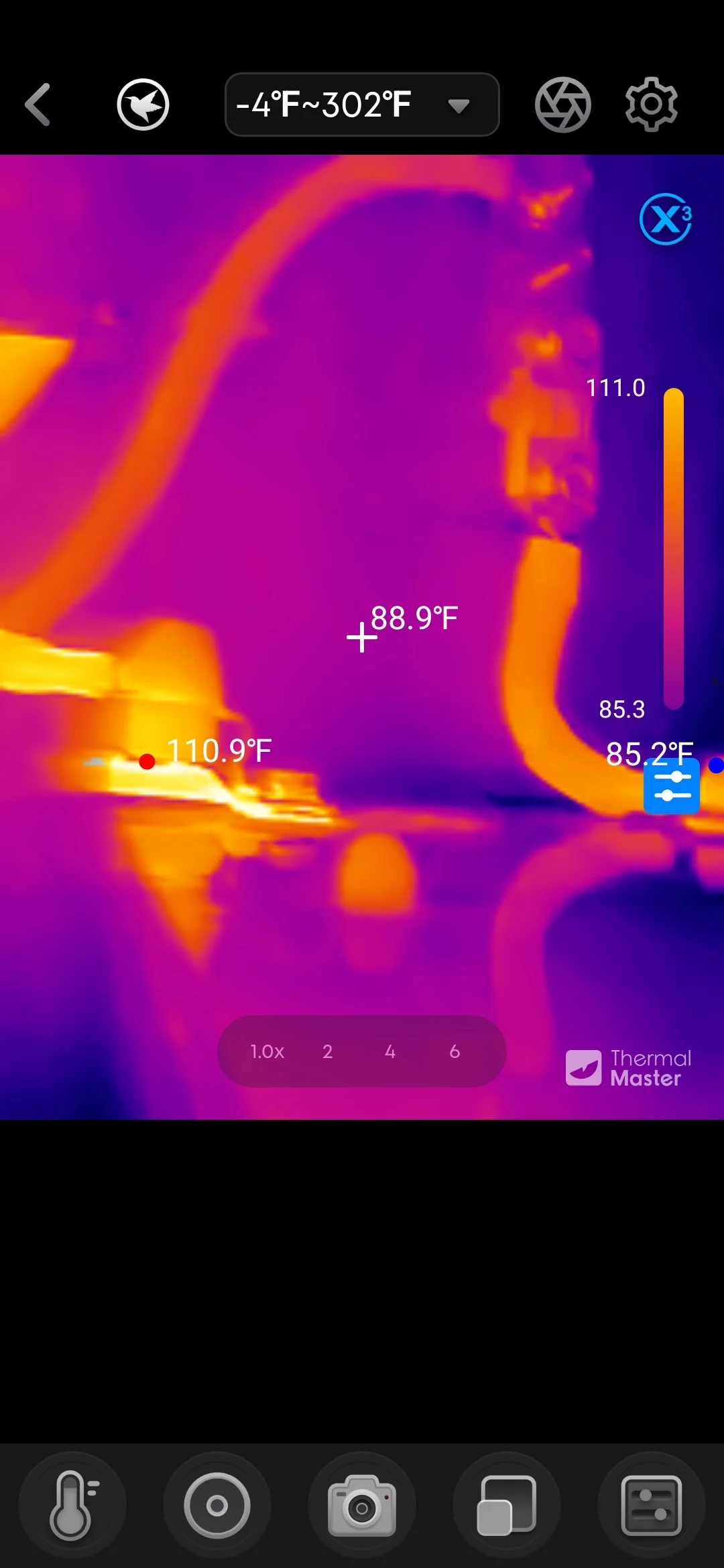
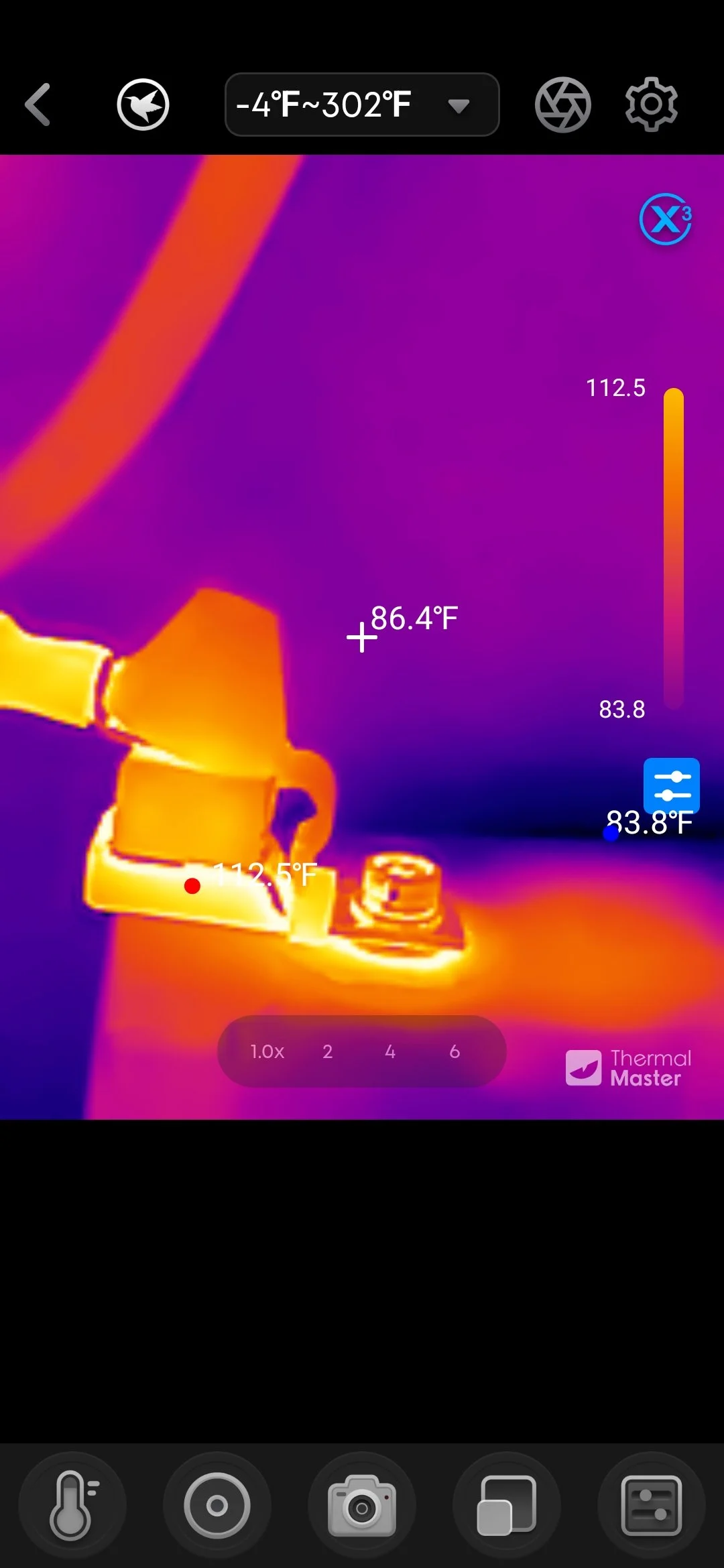
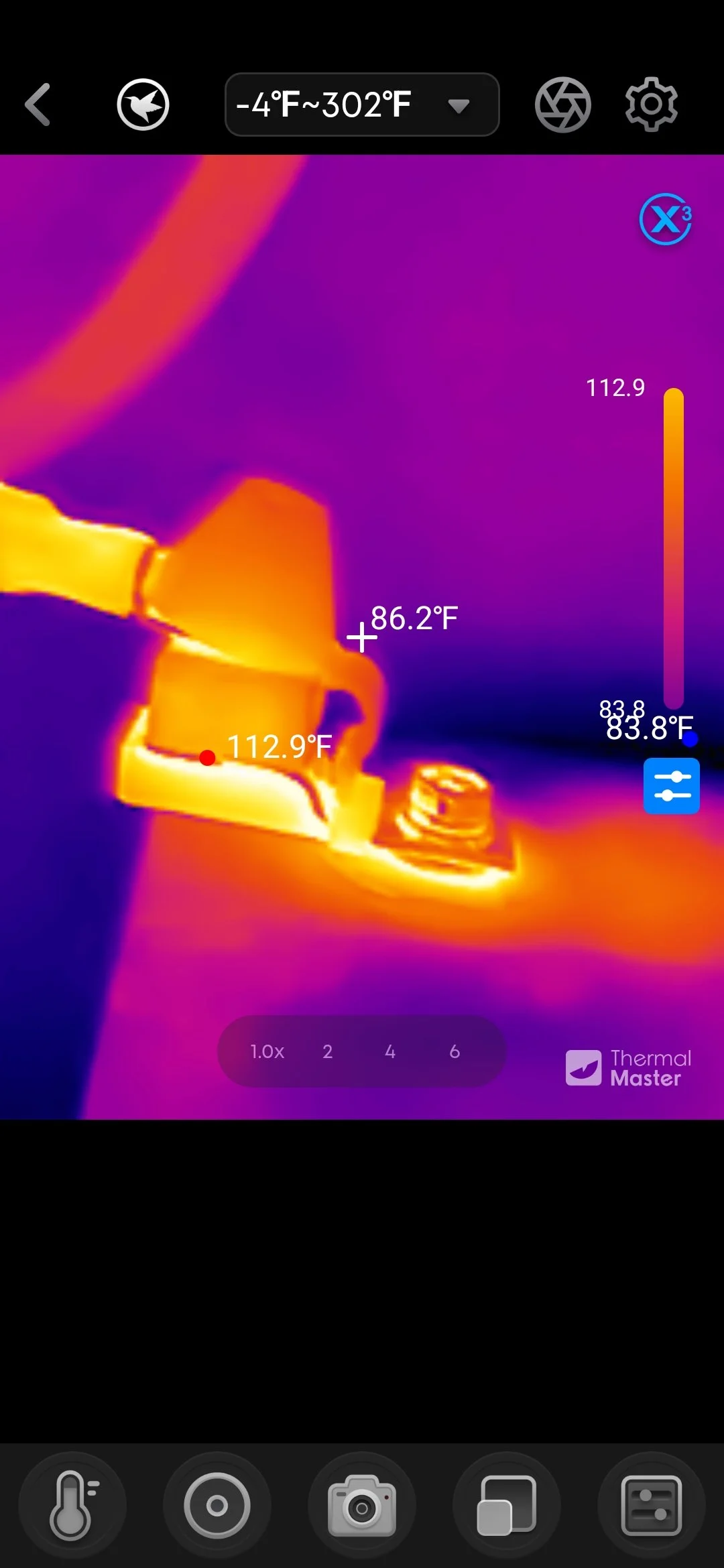
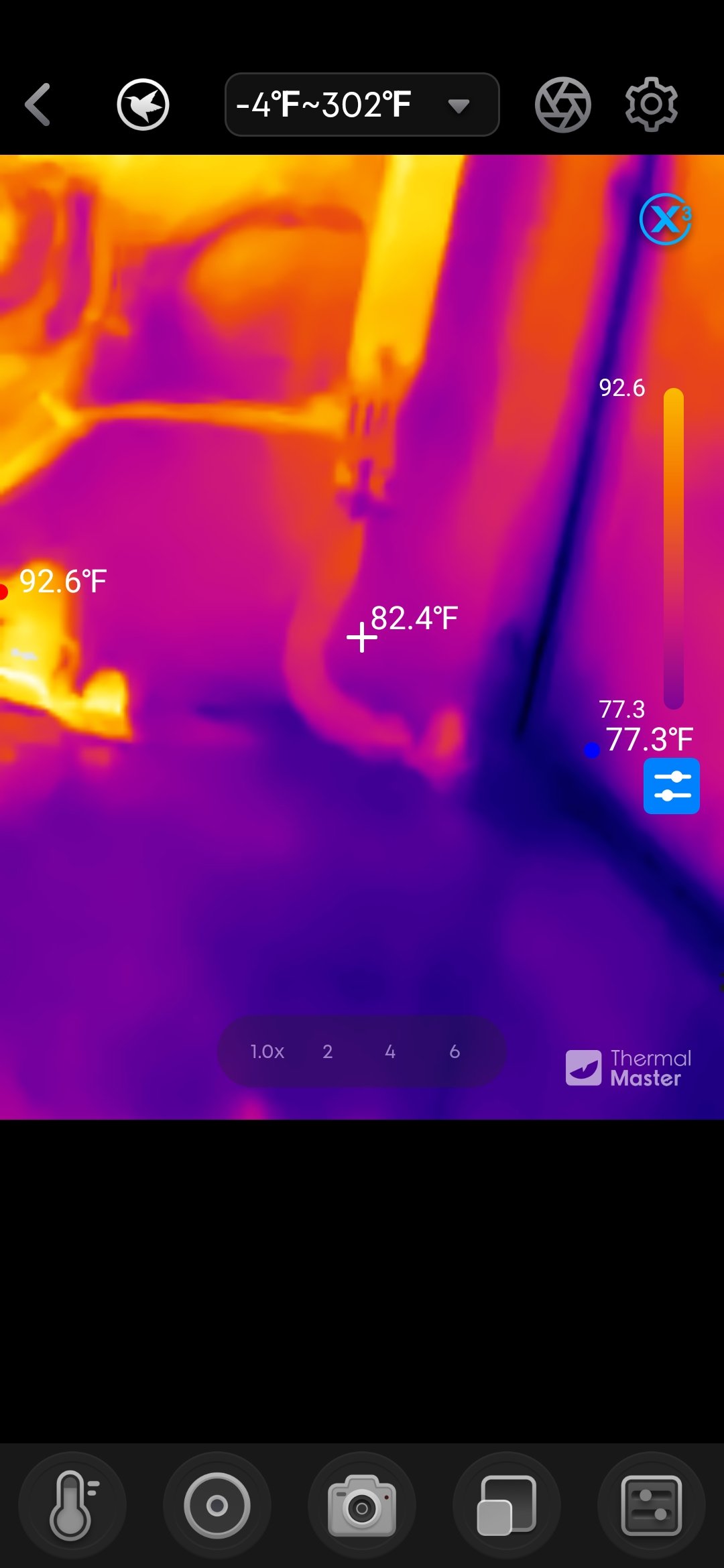
In the following gallery, you will see that the temperatures dropped below 120°F. This is because we reduced the maximum charging current to 30A for the DC-DC charger and inverter, improving the overall safety and efficiency of the system and significantly reducing the risk of fire.
Gallery: Final System Verification