
Fixing a Van-Life Fire Hazard
I get a lot of clients that come to me because their spidey senses tell them something is wrong. They often hear about electrical fires and then question whether their rig could also be susceptible to such a tragedy. This was the case here, where an arcing inverter and undersized wire could have caused serious issues if it was left unaddressed.
Loose Connections - A Common Issue
When I came to talk to this client, she wanted me to check on the inverter. She thought it was going bad because it kept shutting off. It turns out, the inverter itself wasn’t the issue. As soon as she turned on that microwave to show me what she meant, I heard a very alarming sound.
Beyond the typical microwave buzzing was a loud crackling sound coming from inside the inverter case. I quickly got her to turn off the microwave and inspected the terminals as best I could in that cramped space. I realized that the 4/0 cables were able to rotate quite easily on the terminals using just my fingers.
The sound I had heard was electrical arcing, which occurs when current tries to bridge a gap between two conductors through air. Arcing creates a ton of heat in a very short time, and can easily combust nearby materials. Luckily, I had better hardware on hand to provide a more secure connection, and the lugs on either side of the arc were not badly damaged. A quick wire brushing and retorquing, and the arcing problem was solved. But this wasn’t the only issue.
Video: see the loose negative cable moving by hand.
Undersized Battery Cables
This client had done a ton of research before her DIY installation. And honestly, her work was clean and looked professional! I was surprised when she told me she did everything from scratch, but I was even more surprised to see this critical mistake.
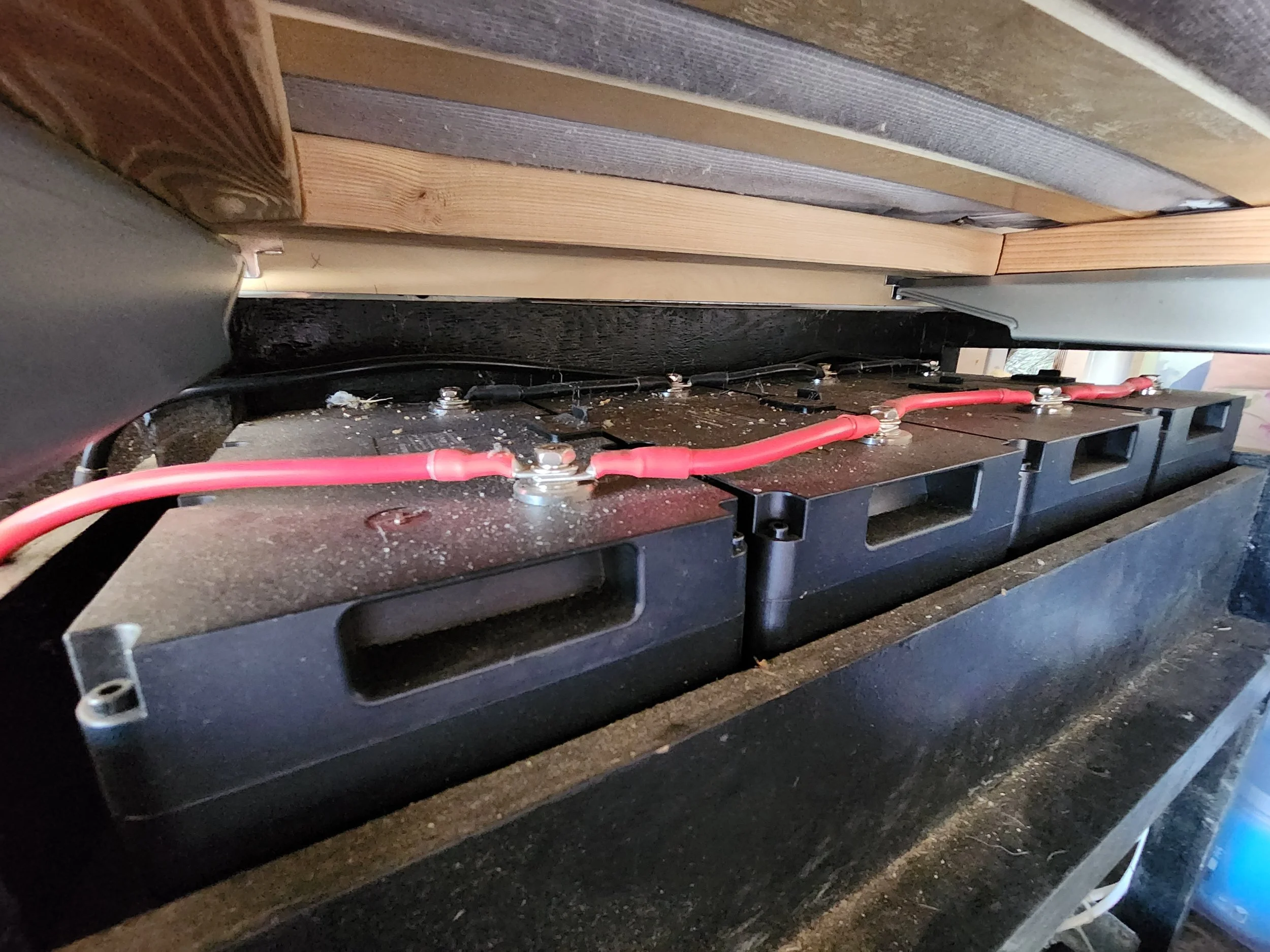
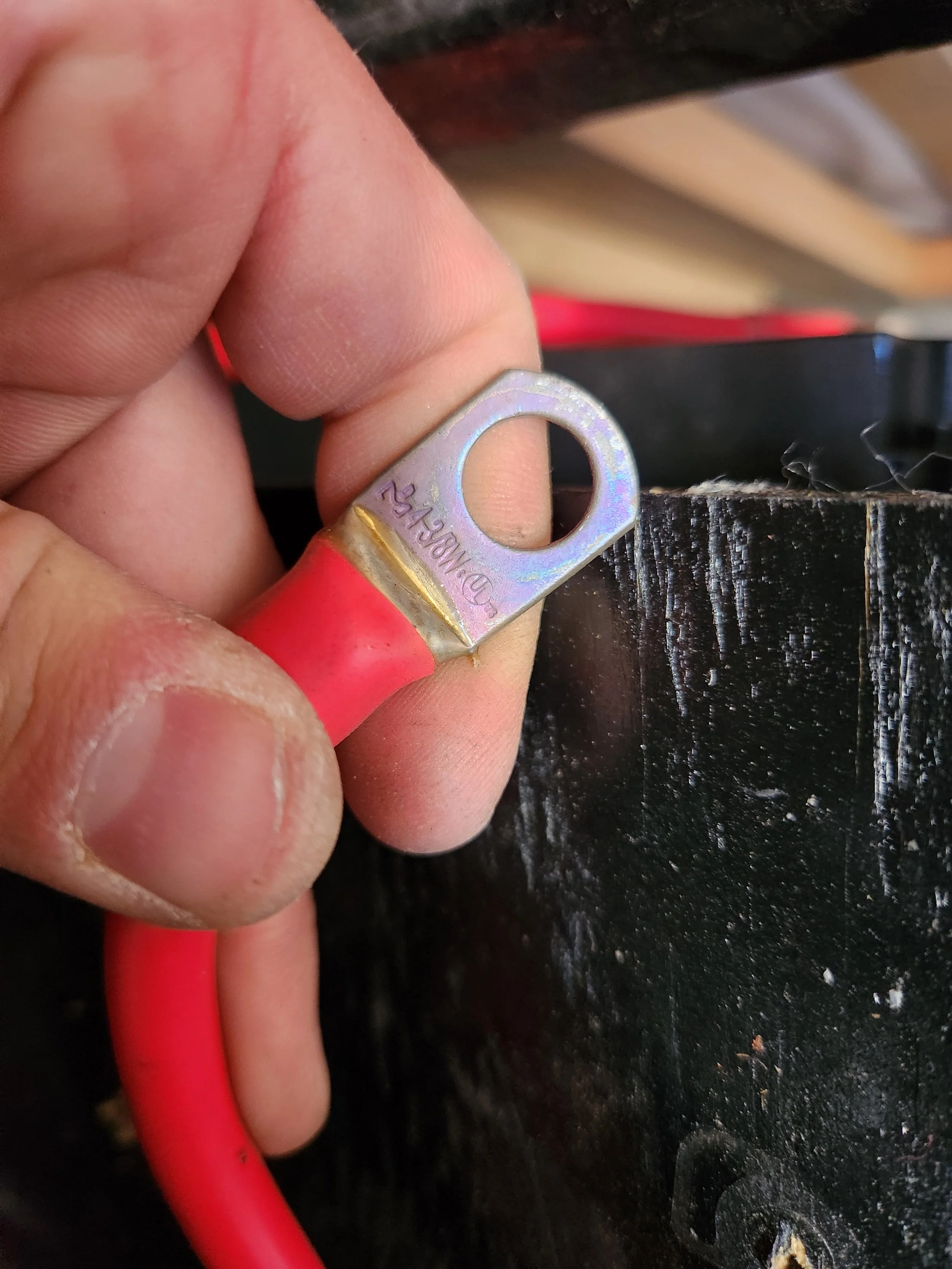
Her 3KW inverter was fed from the bus bars with fused 4/0 cable. While this was sized right, the 4/0 cable run did not extend all the way to her batteries! Beyond the distribution bus bar was 4AWG wire connecting to her batteries. I knew this was a problem, and dissecting it revealed my suspicions.
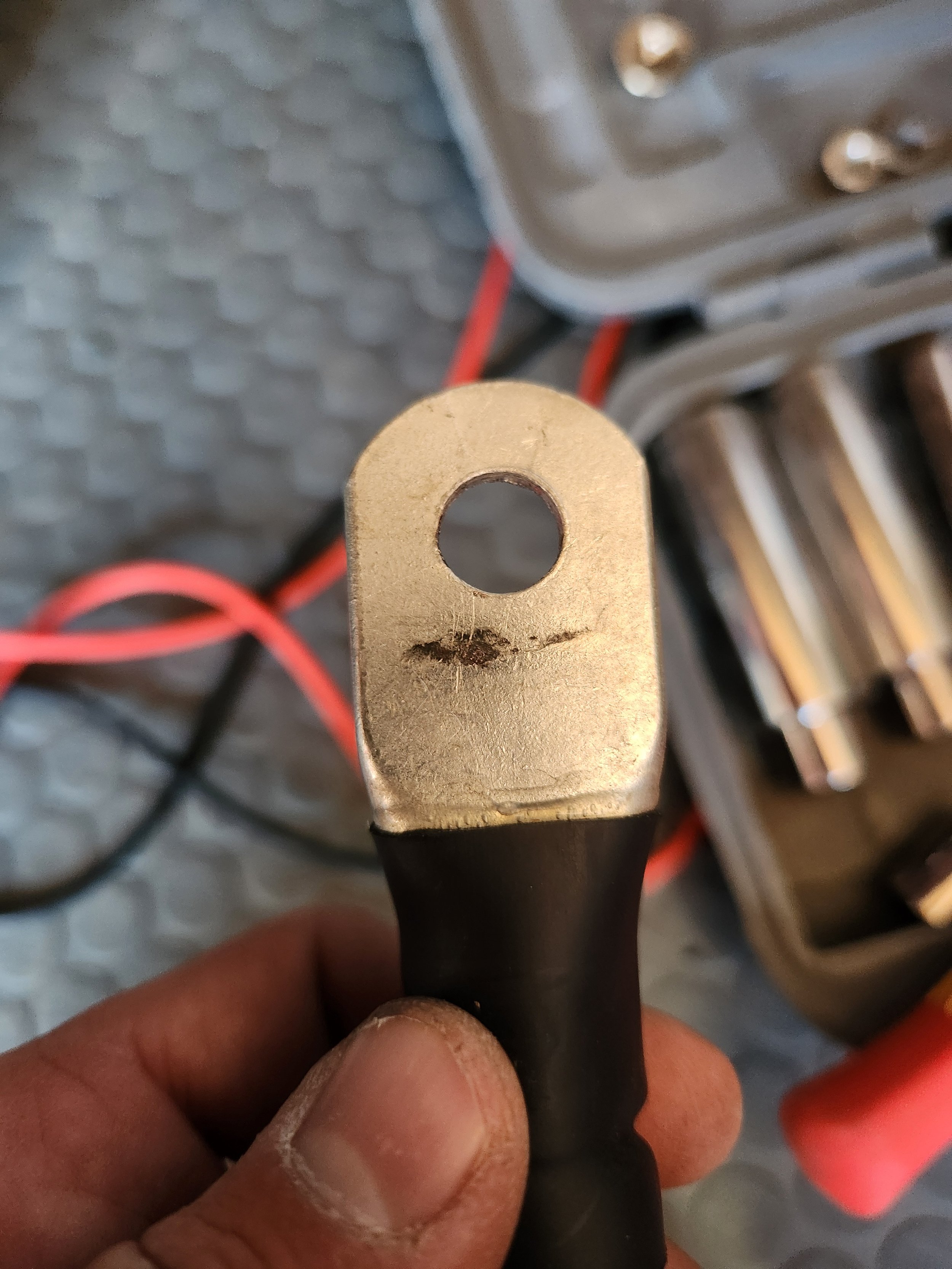
The copper behind that insulation was burned, as it had gotten hot from too much current flow. You can even see the discoloration on the 4AWG lug pictured. While the 4/0 run to the bus bar was okay, this wire should have extended all the way to the batteries, since this is where all current would come from if solar output was null.
DC-DC Charger - Undersized Fuse Wiring
This time, it wasn’t the client’s fault for undersized wire. She had a friend install the fuse and wiring for her DC-DC charger. But just because someone has electrical experience doesn’t mean they know what they’re doing!
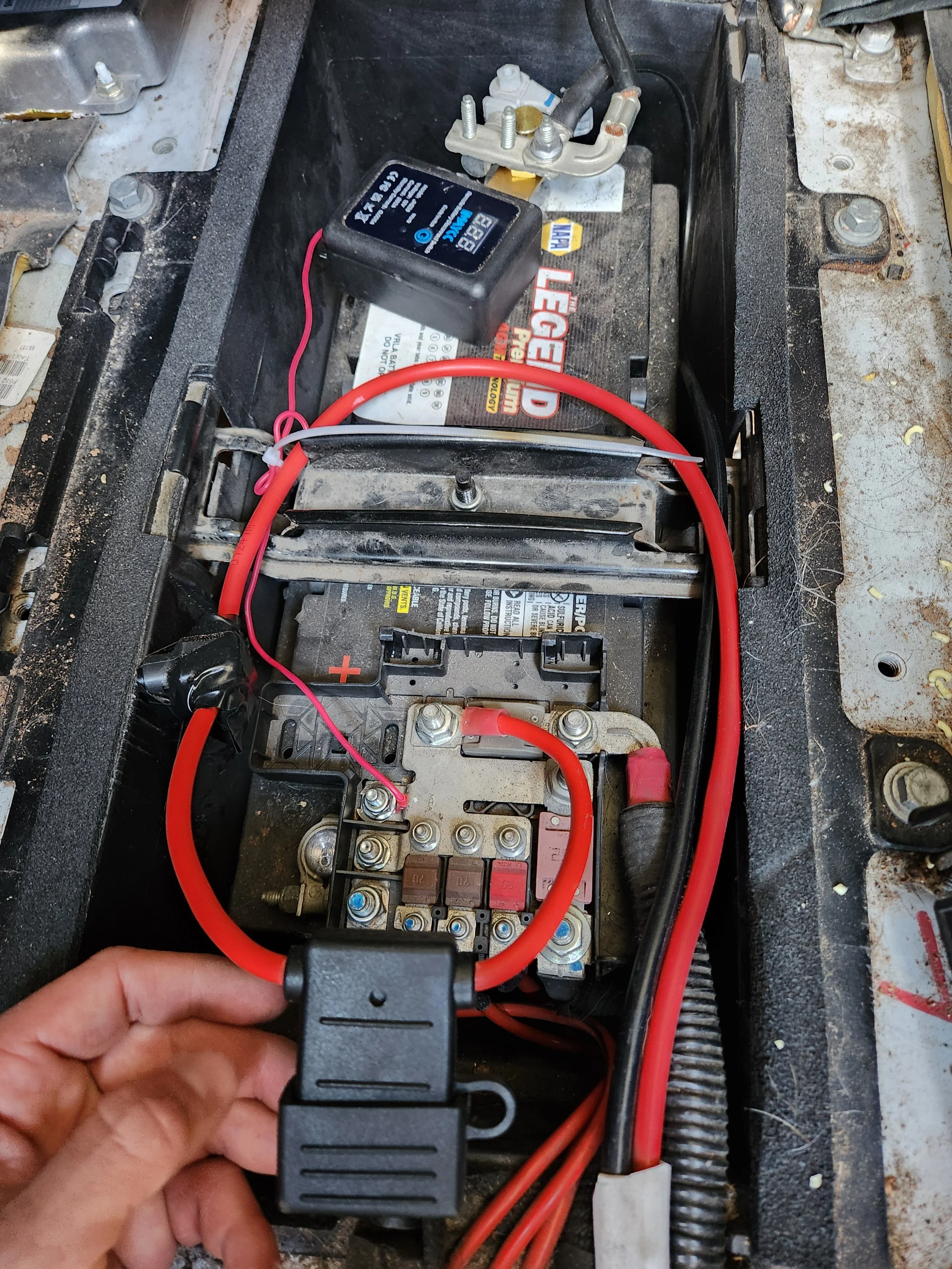
This guy used an 8AWG fuse holder to connect to the starter, and spliced it with a residential-type lug splice to the 6AWG feeder. There was a 70A blade fuse inside, and that fuse kept blowing from getting too hot. The problem wasn’t an undersized fuse - it was the wire itself to which the fuse was attached!
DC-DC chargers often draw more current on the input, so even a 40A DC-DC charger (as was installed here) can pull 60A+ from the starter battery. Higher resistance from undersized 8AWG wire contributes to this as well. Since DC-DC chargers are variable loads, they pull more from the input to supply the same 40A output.
Now hold on, you mean to tell me 20A was being wasted at the input of this charger?? Well, not quite. There are a few factors at play, and we have to remember that DC-DC chargers are power converters. If the voltage at the input is lower (typical for LA batteries), then they must provide more current, as power in = power out + efficiency loss. So that current isn’t getting ‘lost’, its just getting transformed to a higher output voltage.
However, the extra input current is only amplified when there is high resistance on the feeder. 8AWG for a 6AWG run causes significant heat when 55A+ are being pushed through it. This heat is the result of voltage drop, but the DC-DC charger varies its input current to compensate. More current = more voltage drop, so you get a sort of runaway thermal effect that causes power loss and heat buildup. Too much heat, and the fuse will blow before a fire starts!
How We Fixed It
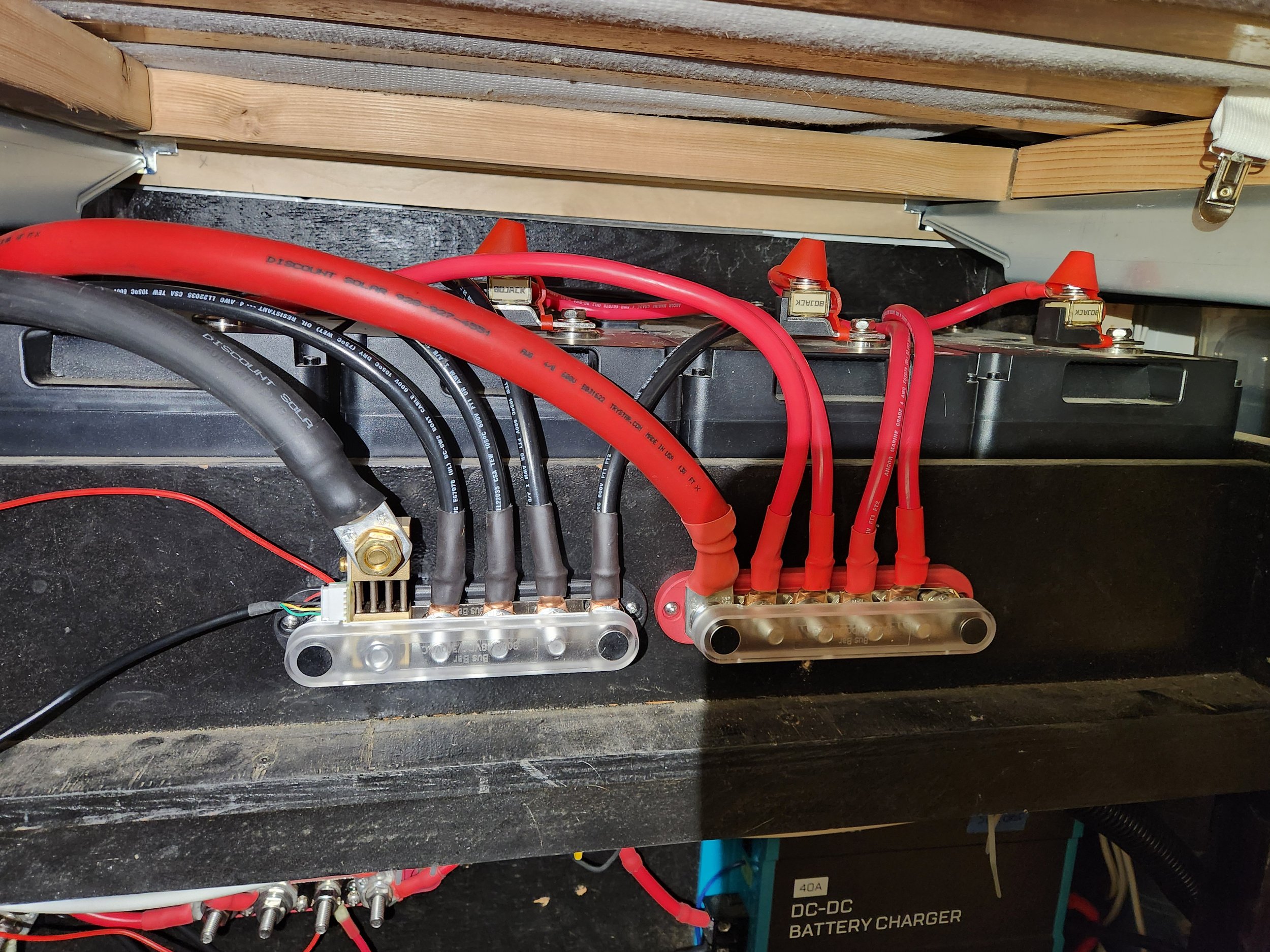
So with these 3 issues now identified, here’s what we did. We extended 4/0 cable from the distribution bus bars to some new battery bus bars. We used 4AWG wire from these bus bars to each individual battery, as this allows equal current-sharing from each battery. We also removed a few washers that had previously been installed between the bus bars and the copper lugs, as this was another source of heat and power loss.
We also retorqued the lugs on the inverter’s battery input terminals, this time using locking hardware to ensure a tight fit even while travelling down rough terrain. Before doing so, we removed, inspected, and cleaned both cables and terminals to ensure good conductivity.
Finally, we removed the 70A blade fuse all together, tied the 6AWG wire directly to the starter battery, and added a 60A ANL fuse right next to the DC-DC charger input terminal for better conductivity and protection. We even threw in a D+ line switch so that the driver could turn the charger on and off while on the road! A valuable upgrade for when the engine is running but the van is sitting in the heat for a long period of time.