Beyond a DC-DC Charger Upgrade
DC-DC chargers are valuable devices for topping off batteries while on the road. This client wanted to add one to his new truck camper which he just bought. It had a preinstalled electrical system, but as we would discover, there were a few unexpected issues with it despite having been ‘professionally installed’.
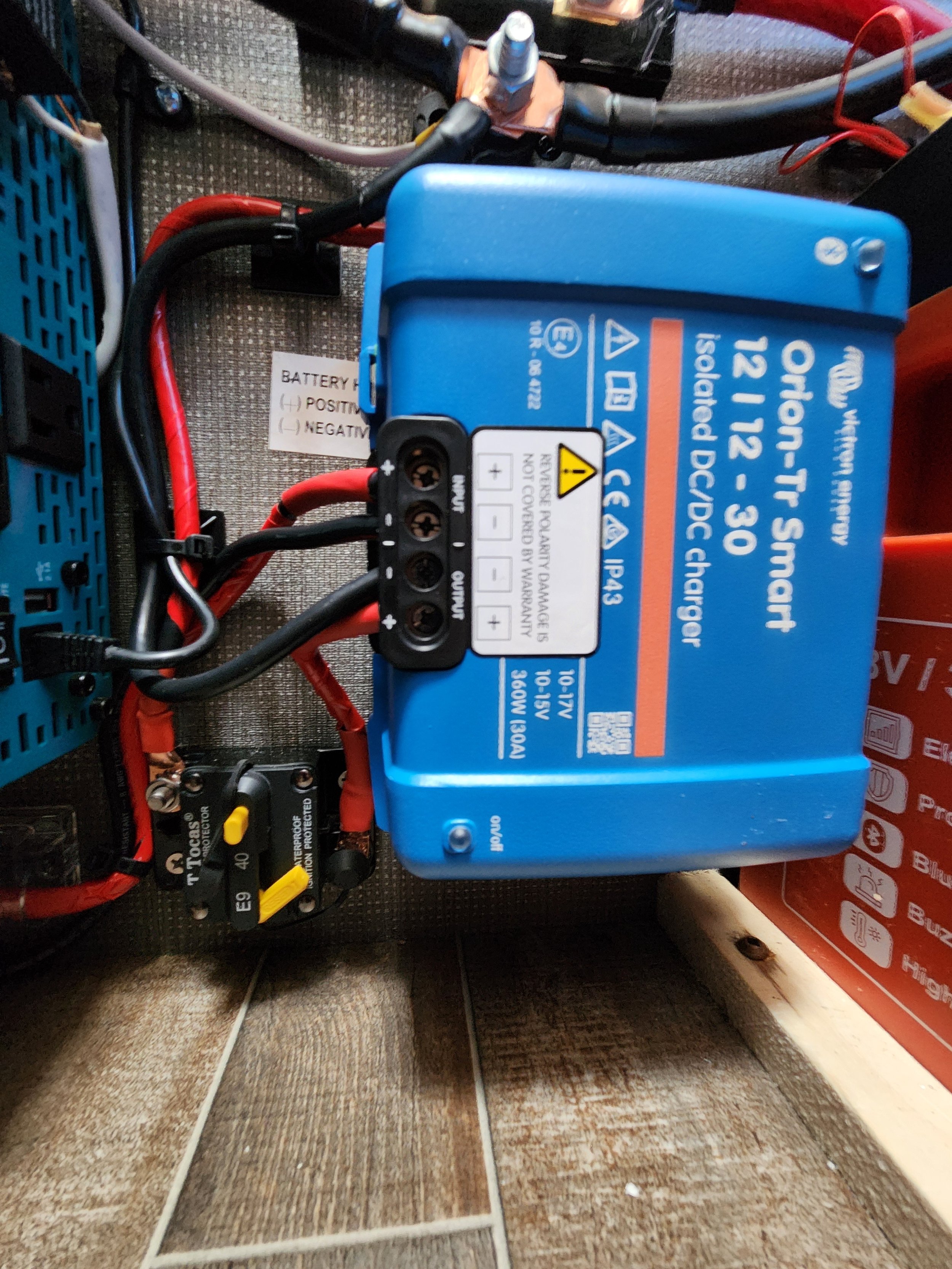
The DC-DC Charger
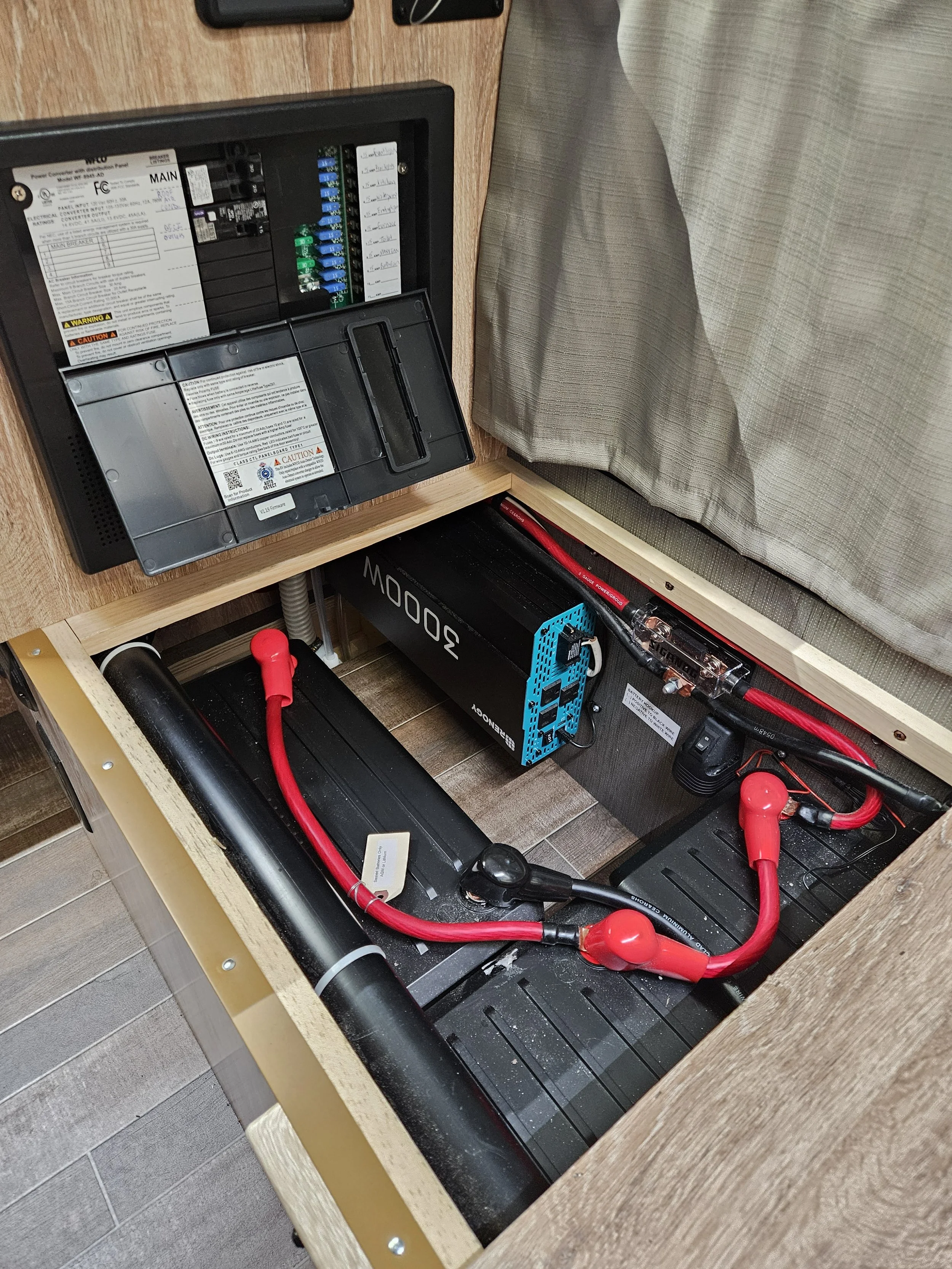
It’s almost always the case in these mobile setups that I have a tiny space to work with. This was no exception. He had a small electrical compartment already packed with 900Ah of batteries, a 3KW inverter, fuses and wiring. After examining every possible space for installation of the charger, the most feasible spot was right between the inverter and batteries.
The space was tight, but luckily we could fit the charger in sideways with room for wiring. If I had any bigger of hands, I probably wouldn’t have been able to wire it all together! But with a bit of patience, I was able to fit an input fuse, output circuit breaker, and all wiring in place without it looking like a mess! Its always a humble reminder that those picture-perfect van-build electrical systems don’t consider space constraints when modifying an existing system.
The Real Problem - Fuses and Wiring
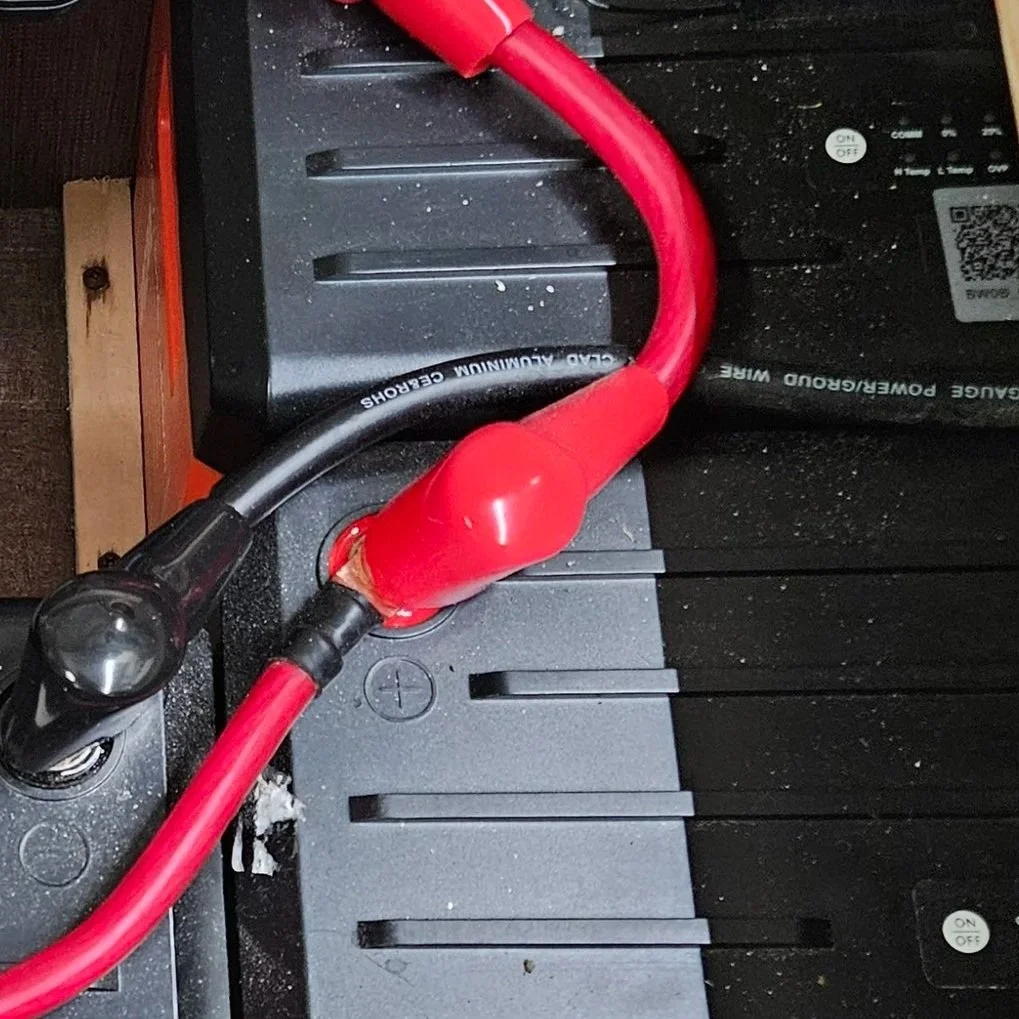
Its worth mentioning that with this upgrade, I didn’t get the chance to do my typical feasibility inspection. Rather, this client sent me 12 photos, and from the tiny details in those photos I was able to identify these issues. Out of the box, they had given this client 1/0 battery cable. But there were a few extra details that screamed “DANGER”.
First? Copper-Clad Aluminum Cable. Typical 1/0 Solid Copper wire can handle up to 150A of current, which would be sufficient for a 2KW inverter (he had 3KW). But Copper-Clad Aluminum is cheaper - its copper on the outside, but aluminum on the inside. It can only handle up to 130A - so it isn’t even enough for a 2KW inverter.
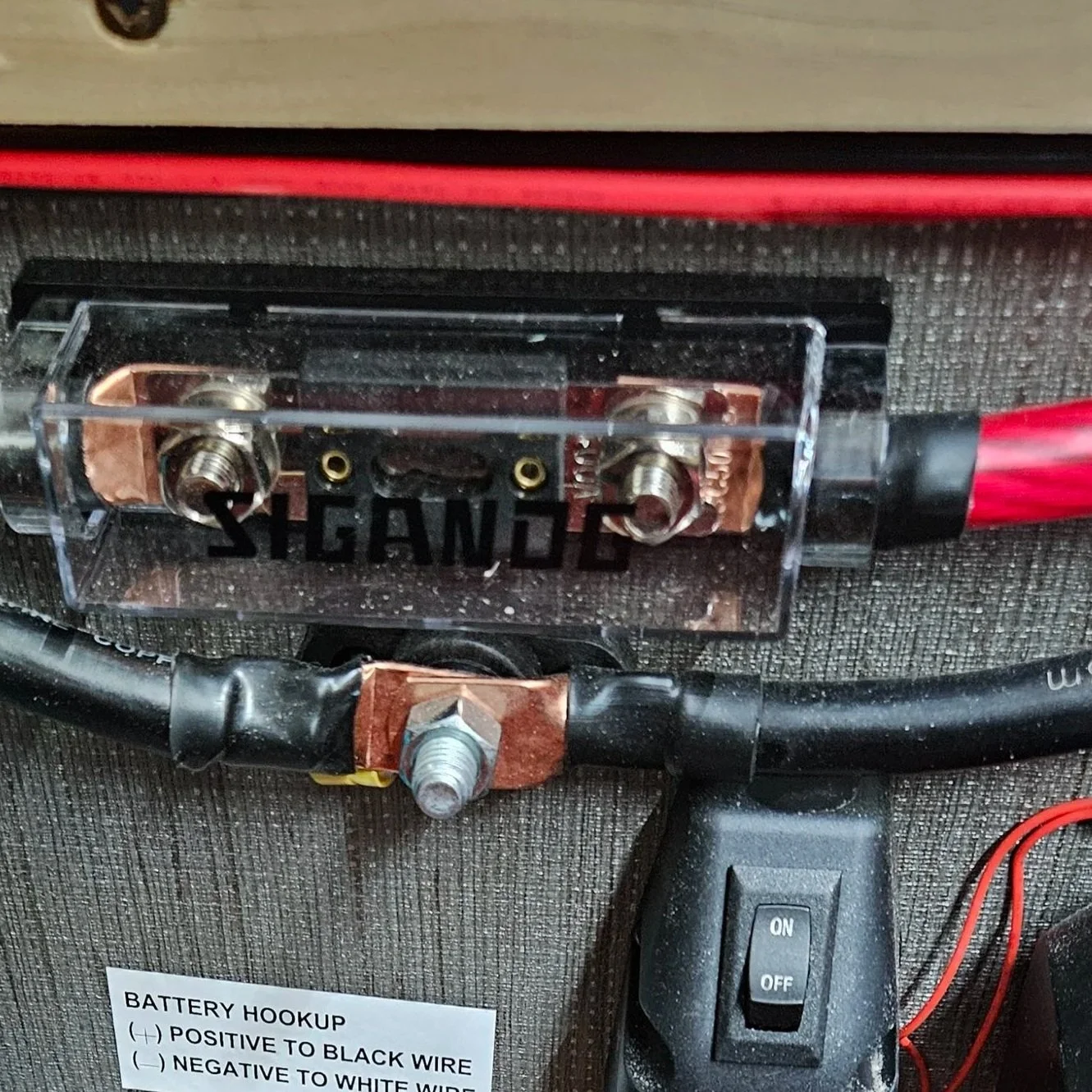
Second? An oversized fuse. Its hard to tell from the picture but that is a 400A ANL fuse. While it might stop a short circuit, this fuse is far too big to prevent an overload from user-error. Push 2000W continuously through a 3KW inverter with a space heater, and nothing would stop the wire from melting or causing a fire!
That’s why our upgrade included a non-negotiable 150A fuse to protect this wiring. One day, we agreed we’d upgrade to 4/0 Solid Copper for the true 3KW inverter rating. But for now, a properly-sized fuse was essential.
One More Wiring Issue
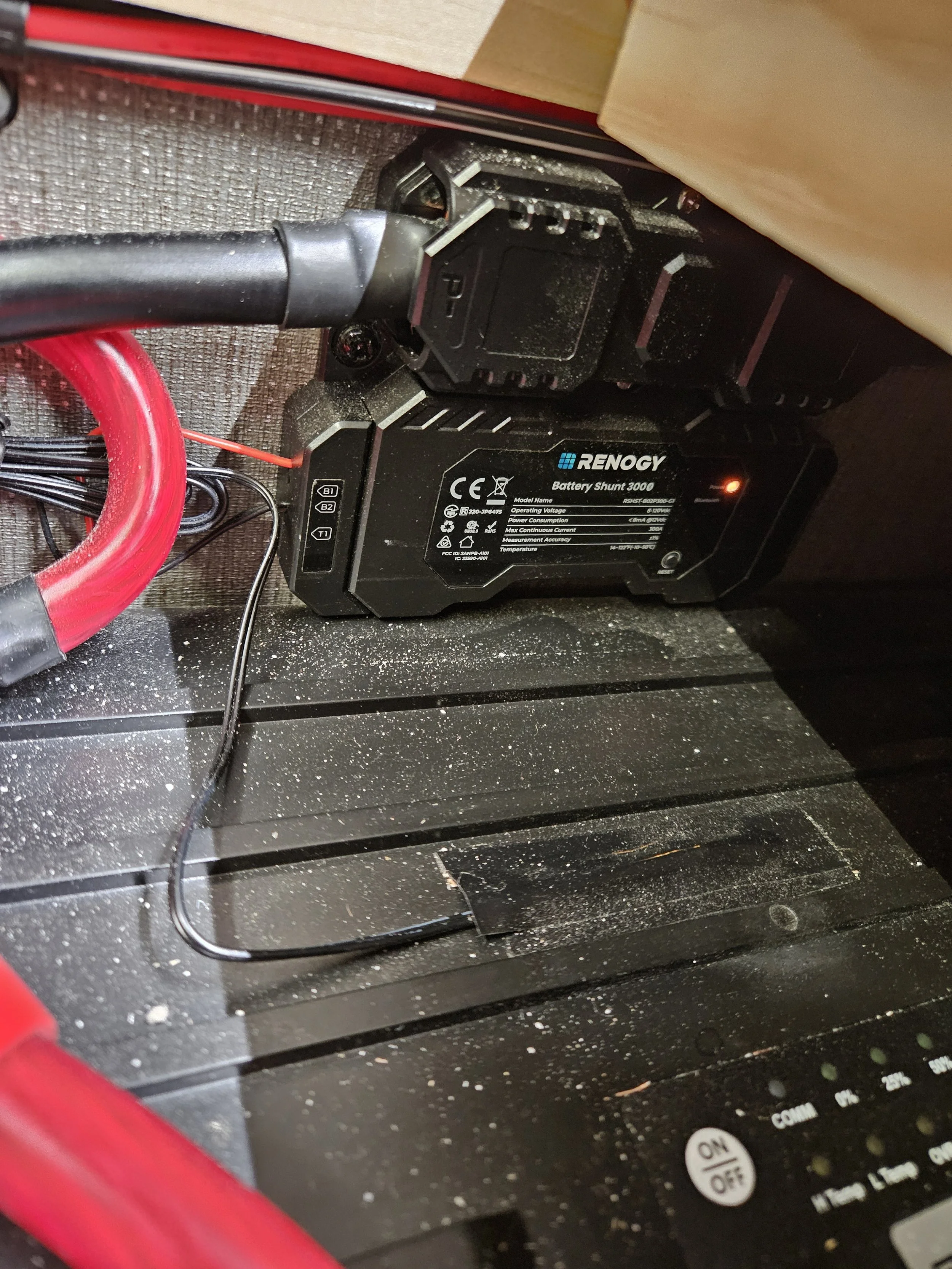
There was another issue that, while not a fire hazard, it did give my client a hard time. He mentioned that his phone app kept saying current was going into his batteries when they were discharging and vice versa. So I took a look, and at first glance, the cover indicated that his shunt was hooked up right. But as it turns out, that top cover can be put on backwards!
The last guys had actually installed the shunt backwards, but put the cover on to make it look like it was right. I didn’t have time that day to rewire the shunt, but I informed my client on how to do it himself for free! He flipped the shunt around himself the next day, and the problem was solved.