
Renogy DC-DC Charger Safety Hazard
Renogy is a large company known for its quality RV solar panels at a reasonable price. They offer solar panels, inverters, MPPTs, batteries, and even Z-brackets to name a few. But in this article, I want to focus on their DC-DC chargers; specifically, their 60A DC-DC Charger.
I have installed two of these chargers now in a van and a skoolie. Both times, I noticed alarming results on my thermal imaging inspection, and after oversizing the external wiring and torquing the terminals properly, I am convinced this is a component design flaw. I did some research after the second installation, and found several similar complaints to my observations.
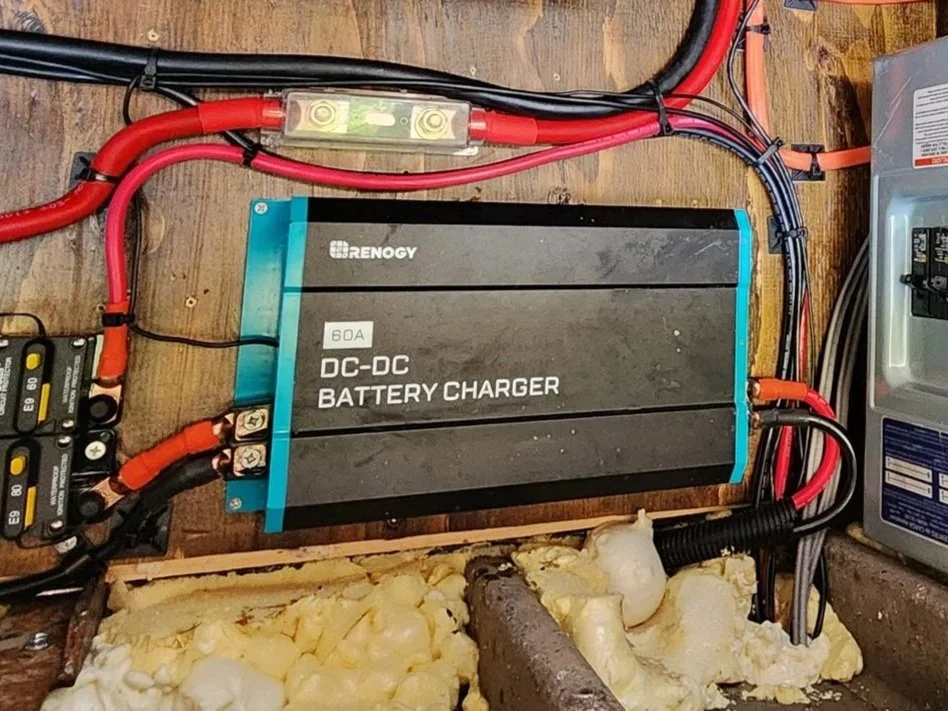
Figure 1: Renogy 60A DC-DC Charger, installed by Solar Ark. In this skoolie, 4 AWG was used for the input and output cabling.
The primary issue with these converters is thermal in nature. The inside of the charger gets very hot when running at rated power - even beyond 180°F. Typical electronic components like inverters may get hot internally while under heavy load, up to around 160°F. But they are designed to dissipate that heat with heat sinks and plenty of airflow.
This Renogy charger likely has internal undersized wiring and other design flaws that cause more heat buildup than normal. And because it does not have adequate ventilation with a compact case, the heat builds up faster than it can dissipate. With a small case and fans that blow the hot air right onto the external wire lugs, we get results like shown in the images below.
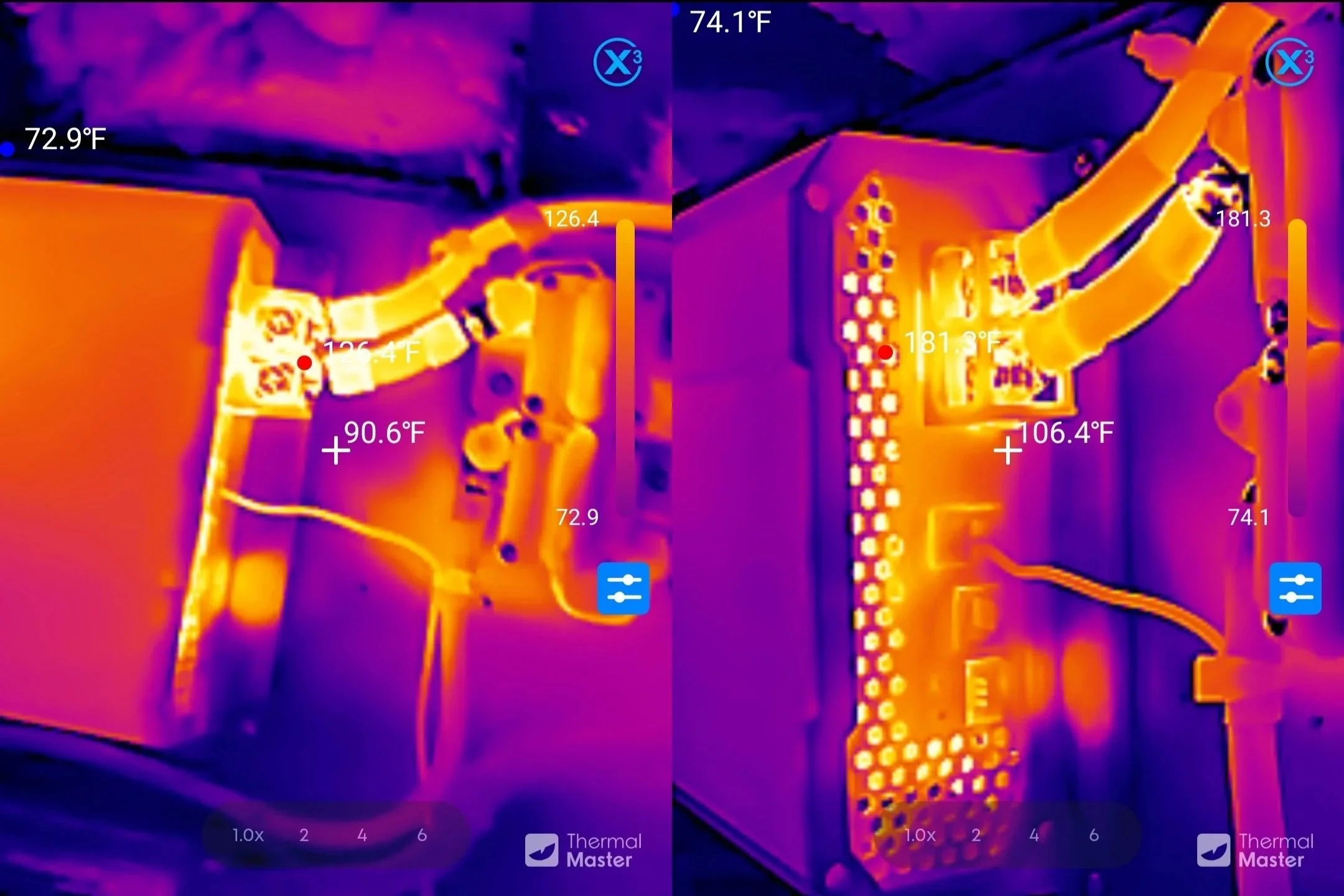
Figure 2: Renogy 60A DC-DC Charger output terminals. (Left) Notice that all wires are cooler the farther they are from the output fans. This supports the fact that the wires are not undersized nor are the terminals loose, but that all of this heat is coming from inside of the charger. (Right) An internal image shows that the charger is reaching over 180°F internally after just 15 minutes of running at the rated 60A output.
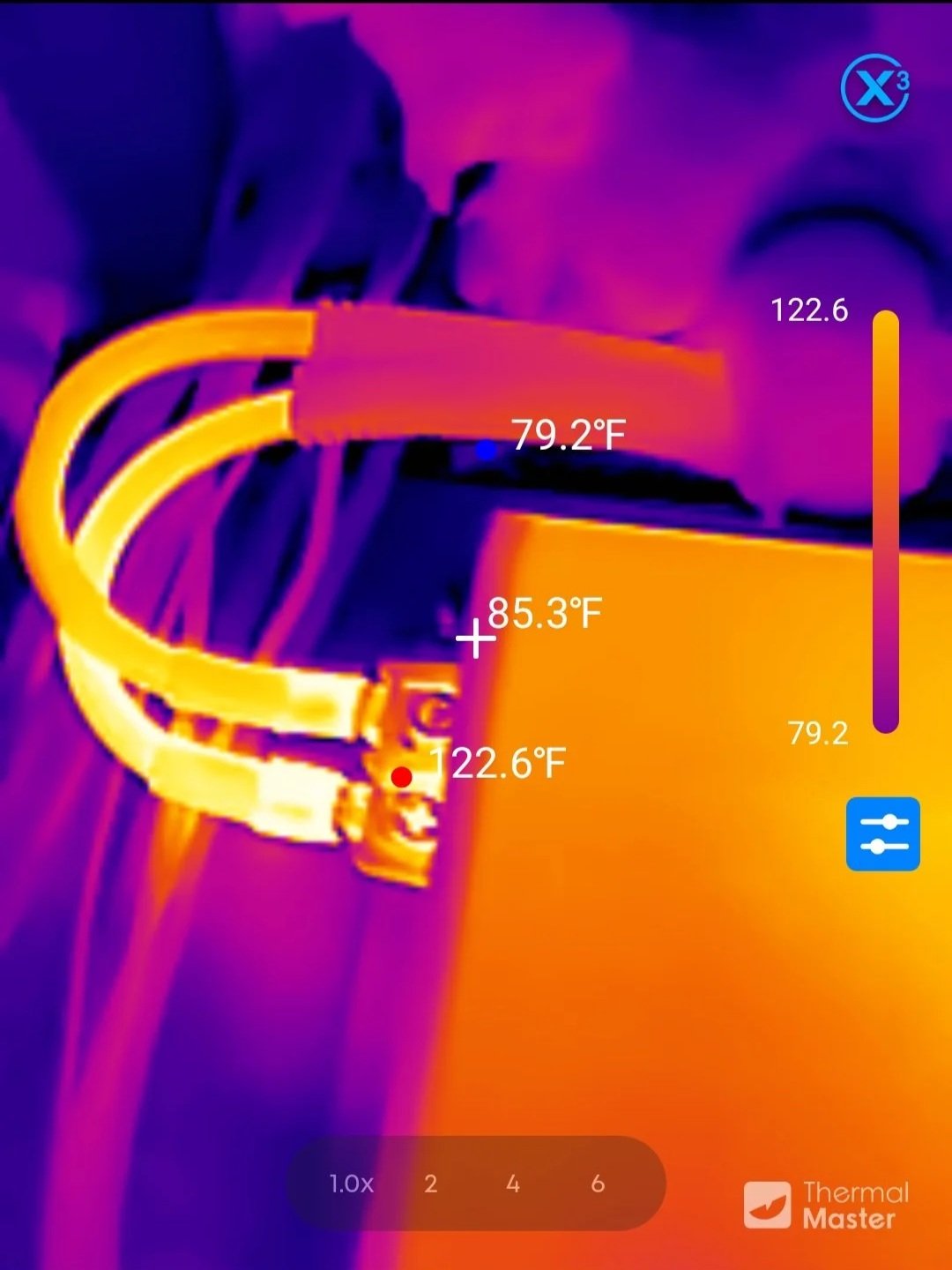
Figure 3: Renogy 60A DC-DC Charger input terminals. The input side’s ventilation exposes the wires to the 180°F interior, heating the terminals and nearby wiring.
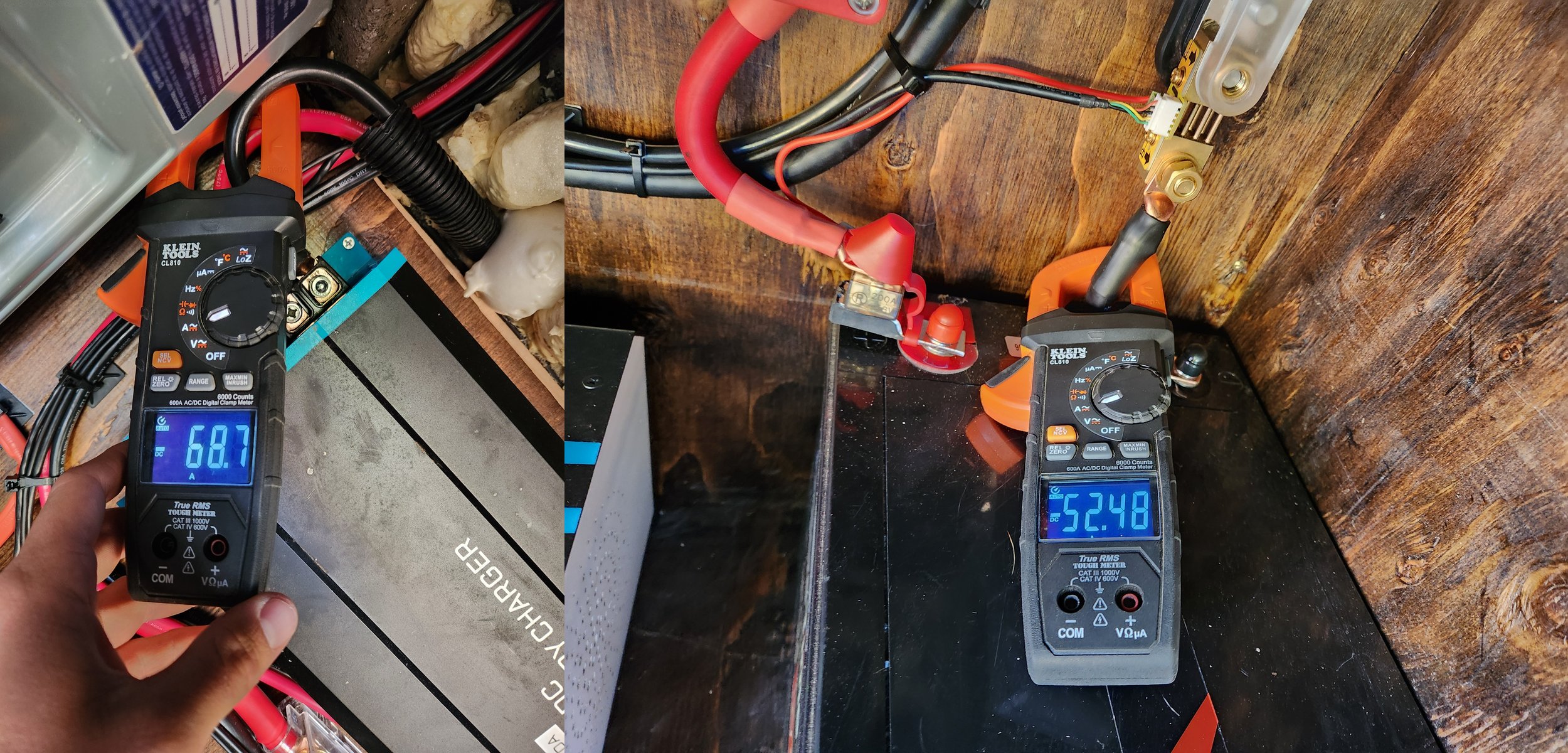
Figure 4: (Left) 68.7A input from 12V starter battery. (Right) 52.48A output to LiFePO4 battery. Notice that despite being rated for 60A output, the charger could not provide the full current yet was still overheating. No loads were connected and it was verified that the output current from the charger was in fact ~53A. The resulting efficiency of the charger is about 80%.
Normally, if I see wire temperatures reaching >100°F, I double check for loose connections or related issues. But this time it was obvious that the thermal problem was not due to poor installation. I estimated an efficiency of 80% based on the voltage and current readings I had taken on either side of the charger. This means 20% of the power going through this charger was being emitted as heat - which supports my theory that the component has internal design flaws.
Temperatures above 200°F should be taken seriously, as this is where fuses start to blow and fire becomes a big risk. For reference, 212°F is the boiling point of water. We should not be seeing temperature readings of 180°F inside the case, being blown right onto the wire terminals.
So what can we do to fix this problem? The first solution is to avoid this product, as it is not designed to safely output 60A without overheating. But if you already own this charger, Renogy did provide a way to reduce the output current to 30A. This is done by applying 12V to the LC terminal of the charger.
The LC terminal is right next to the D+ terminal, which requires 12V in order for the charger to run. An easy modification then is to splice a 16-18AWG wire to the D+ line, and connect that to the LC terminal. This will ensure that when the charger is running, it won’t output more than 30A. This significantly reduces the thermal stress on the unit and brings temperatures to safe levels.
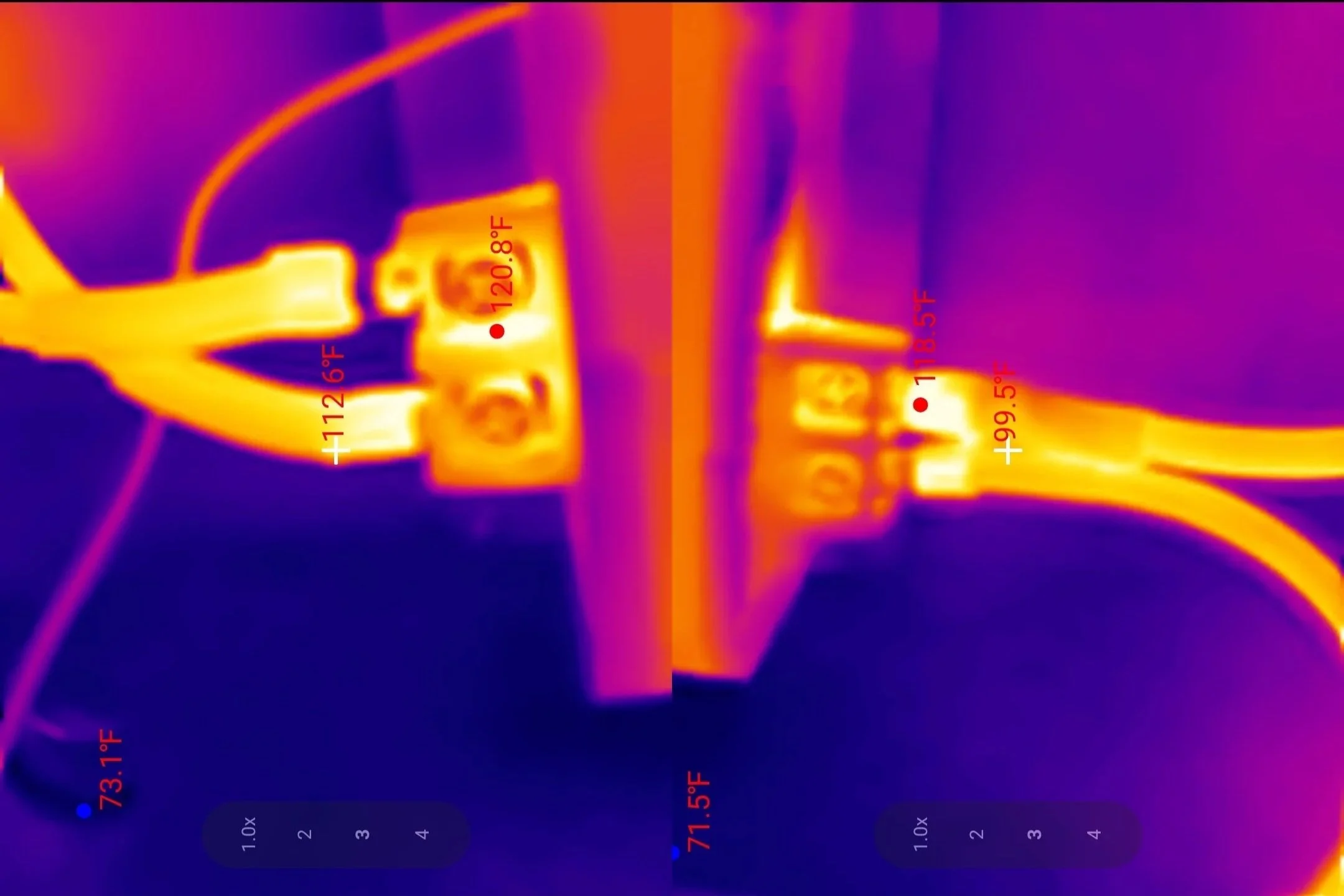
Figure 6: Another Renogy 60A DC-DC Charger, also installed by Solar Ark. In this van, the same thermal issue was occurring at the terminals as shown, which is why we later applied 12V to the LC (low-current) terminal to cut output current in half.
Not all of Renogy’s products are bad. I have heard complaints about their inverters failing prematurely, and I am not a fan of their customer service. But otherwise, their solar products have been reliable for myself and my clients. I never trust every single product of any company, and this is a great example of why. Thermal imaging and post-installation stress testing are a critical part of any electrical project, because you just never know when a good company will send you a bad part.