
The Problems with Victron Products
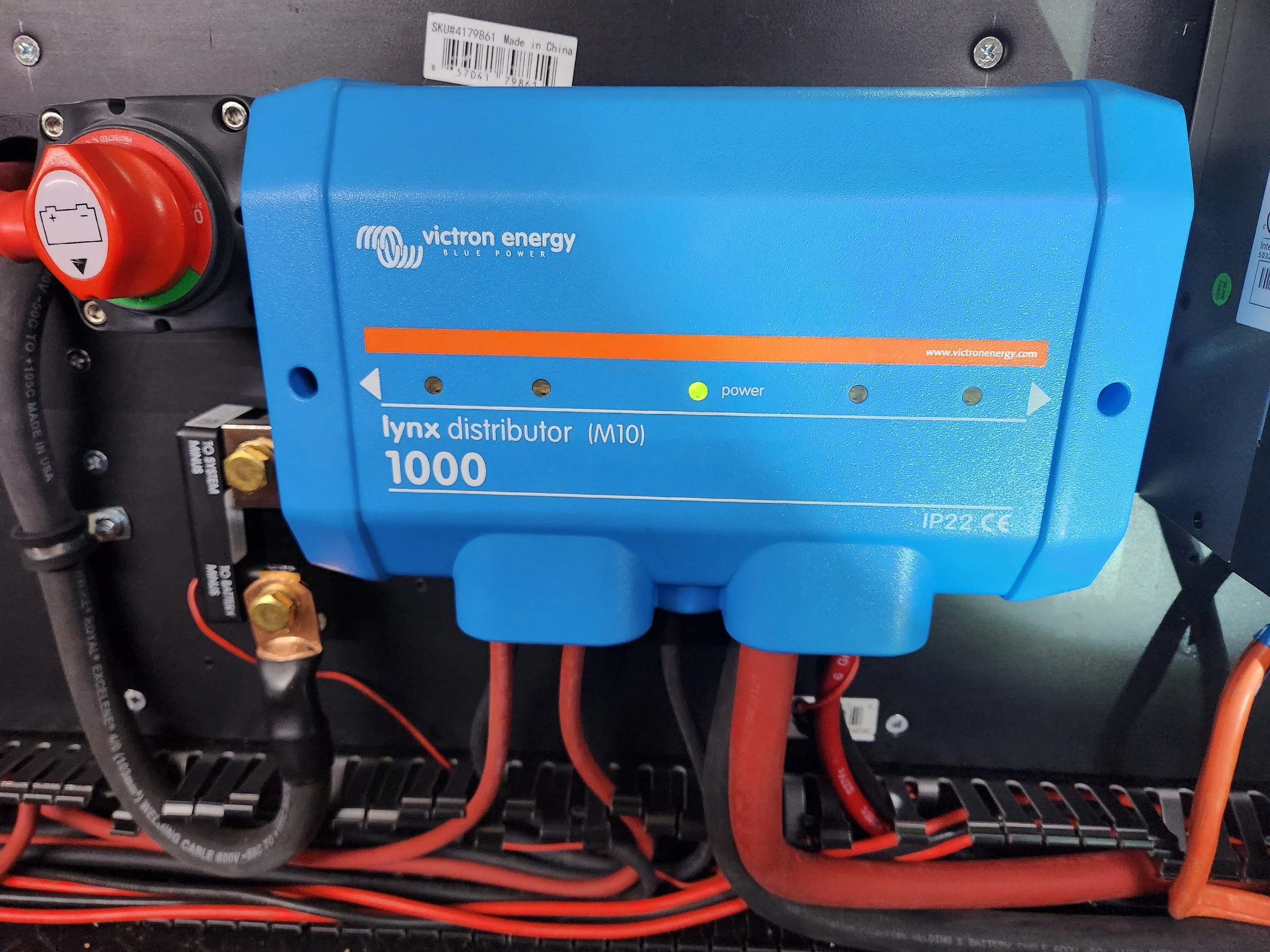
Figure 1: Victron’s Lynx Distributor, to which we struggled to add 4/0 cable due to component design issues.
TL;DR: Victron’s products are overhyped and overpriced for what they deliver. Their MPPTs have quality inconsistencies, their inverters use deceptive VA ratings, and their Lynx Distributor is a pain to install. Here are the better (and cheaper) alternatives I recommend.
Introduction
There is no question about it - Victron products are incredibly popular in the RV solar community. Many professional and DIY installers alike use their products religiously. But are their products really the best for your needs?
Through my diagnostics, troubleshooting, upgrade, and repair services, I get to work with products from all kinds of different companies. I’ve worked with products from Vevor, RedODO, LiTime, Renogy, Rich Solar, Victron, Epoch, Battleborn, Lion Energy, Vatrer, Magnum, Xantrex, and many others. So I get to see firsthand who makes the good stuff, and who has the best customer service. And I’m here to tell you, Victron is one of my least favorites. So in this article, I’m going to expose every issue I’ve had with their products, and the alternatives that I recommend.
Victron’s Good Stuff
To be fair, there are some products that I do genuinely recommend in some cases. So to show that I am not trying to be biased here, I figured we should talk about those first.
First, I do like Victron’s DC-DC chargers. They are compact, easy to wire and configure, and have good protection features like low-voltage shutoff to protect a starter battery. DC-DC chargers are fundamentally simple electronic devices (I learned how to make them in college). So they are kind of hard to mess up. But, many companies do take shortcuts. Renogy, for example, has decent DC-DC chargers. But their terminal design is not the best, and thus they are subject to more heat stress at those terminals. Some other companies like LiTime are known to undersize the wiring internal to their components, creating more heat and shortening lifespan. I haven’t noticed undersized wiring issues from any of Victron’s products, so that is a +1 to Victron!
Second (but to a lesser degree), I also like Victron’s wide range of MPPT charge controllers. The fact that they offer several 150VDC input ratings and even a 250V input for large solar arrays is a big perk. They also typically are compatible with 12, 24, and 48V batteries, offering greater flexibility versus the options that may only be compatible with 2 of those 3 nominal voltages. And for the price, they really aren’t a bad option in some cases. Some. Cases.
Third, I should give their Multiplus inverter/chargers a bit of love. These products have robust internals, with a large transformer and great transfer switch performance. So far from what I’ve seen, their safety features work well, displaying sensitivity to grid voltage instability, fast transfer time from charging to inverting, and overload protection. I also like that they give a Volt-Amp (VA) rating instead of just a wattage (W) rating, as this allows designers to account for inductive loads like A/C units that have a lower power factor. But this is beyond the mind of most users, especially for RV use where large motor loads are less common. Hint Hint.
But yeah, really that’s all the good things I have to say about their products. Because genuinely, I have been disappointed by them on multiple occasions. Here’s why.
Victron’s Ugly Side
Solar Charge Controllers
Even though Victron’s MPPTs are versatile and generally affordable, that doesn’t mean they don’t have issues. The primary issues with their controllers are inconsistent quality and poor software compatibility. I have installed and worked on several of their MPPTs of various sizes for RVs and vans alike. And of those projects, few have been without issue.
Case 1: Victron MPPTs with inconsistent quality
I had installed a 1760W solar array for a client’s motorhome with two MPPTs. All of the wiring and components for each string was identical. One string had 960W of solar, and the other had 800W. Per my calculations for these flat-mounted panels, the maximum output current for each MPPT should be 60A and 50A, respectively. Given that both MPPTs were rated for 70A, I was well within their specifications.
And yet, the ‘PV1’ MPPT was visibly hotter around 85-90F, while ‘PV2’ was sitting somewhere from 75-80F. And the strange thing? The 960W array was connected to ‘PV2’, which means that the ‘PV1’ MPPT was pushing out less current, yet was getting noticeably hotter internally. Partial shading was not a part of the equation here, as all solar panels were exposed to open California sunlight. So was this just due to solar input variability, or was this proof that their ‘identical’ products were not so equal from the factory?
One hint comes from the printed text on the controllers themselves. You can see that the white electrical tape I used to label the controllers only covers up the text on the ‘PV2’ controller, even though they are basically in the same spot. So if the lettering was printed differently for two products purchased at the same exact time, then what else was inconsistent internally? I’ll let you decide whether this was just a fluke, or an indicator of Victron’s quality control issues.
By the way, neither of these temperatures are of concern from a thermal perspective. So this was no fire hazard - just a visible discrepancy in product quality.
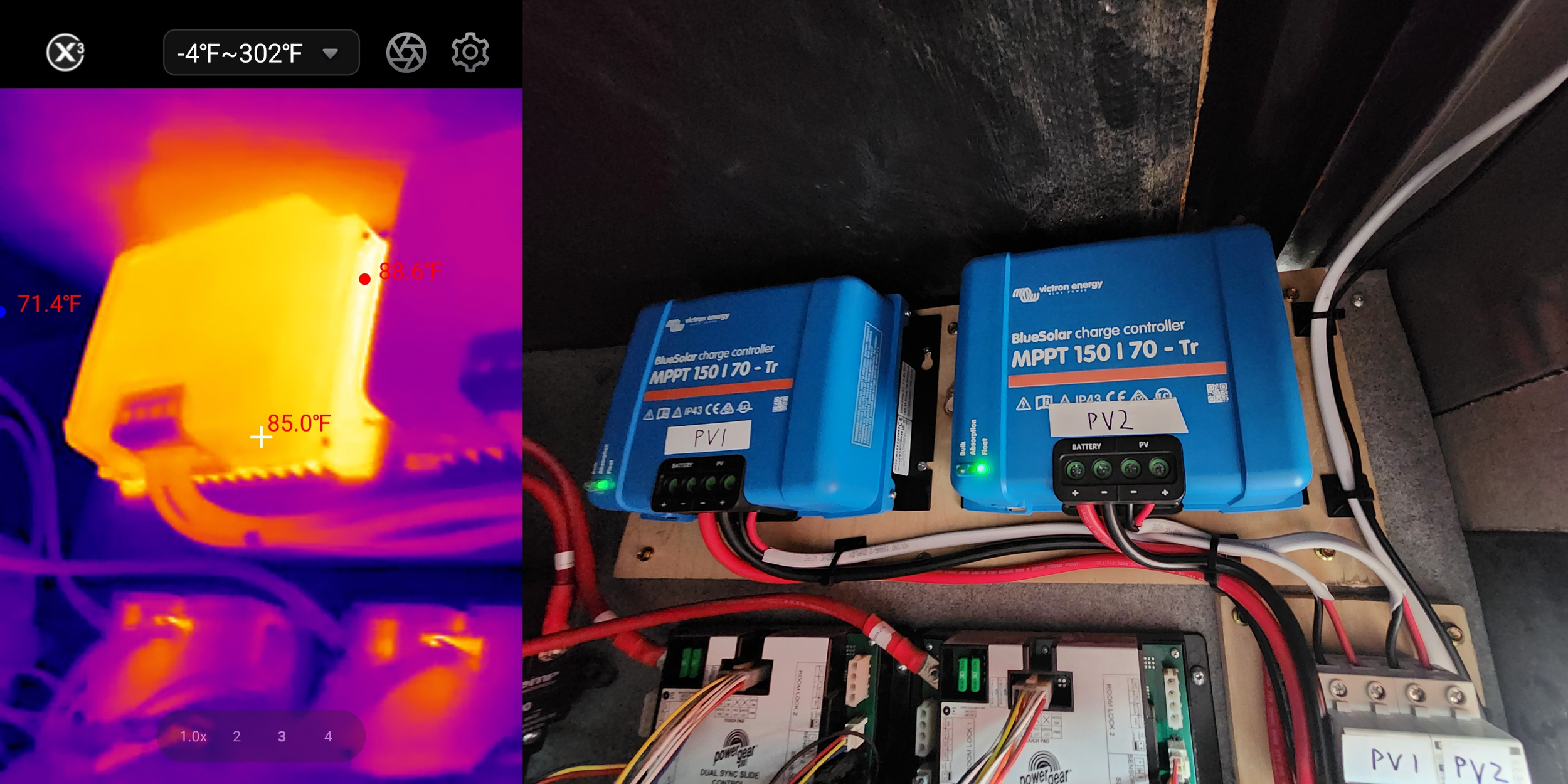
Figure 3: Identical Victron MPPTs with different thermal performance. PV1 loaded at 800W of solar, PV2 loaded at 960W.
Case 2: Victron MPPT software incompatibility
A client of mine had a camper that he wanted 4× 400W solar panels installed on. He already had a Victron MPPT installed, with some smaller panels to be removed. He purchased an identical solar charger later on so that we could hook 2 400W panels to each of the controllers.
After hooking everything up and testing, we realized we needed a new VE.direct cable for his Cerbo GX to recognize that the extra 800W from the new MPPT was in fact solar charging and not just a negative load current. So, no problem, we added in the cable and let the Cerbo adjust. Everything now appeared correctly on the system control monitor, so we shook hands and parted ways.
Months later, an error code #66 showed up on his monitor, as shown in Figure 2. We did some research and looked for any way to resolve the error. We double checked that the VE.direct cable was hooked up correctly and looked for any other wiring discrepancies, even force-updating all firmware and reviewing all controller settings to make sure there were no programming discrepancies. With no luck, we contacted customer support only to find that the steps we took were the right approach. The only answer left was that the MPPTs were simply incompatible, being purchased at different times and thus having different charge algorithms that could not be aligned through the app.
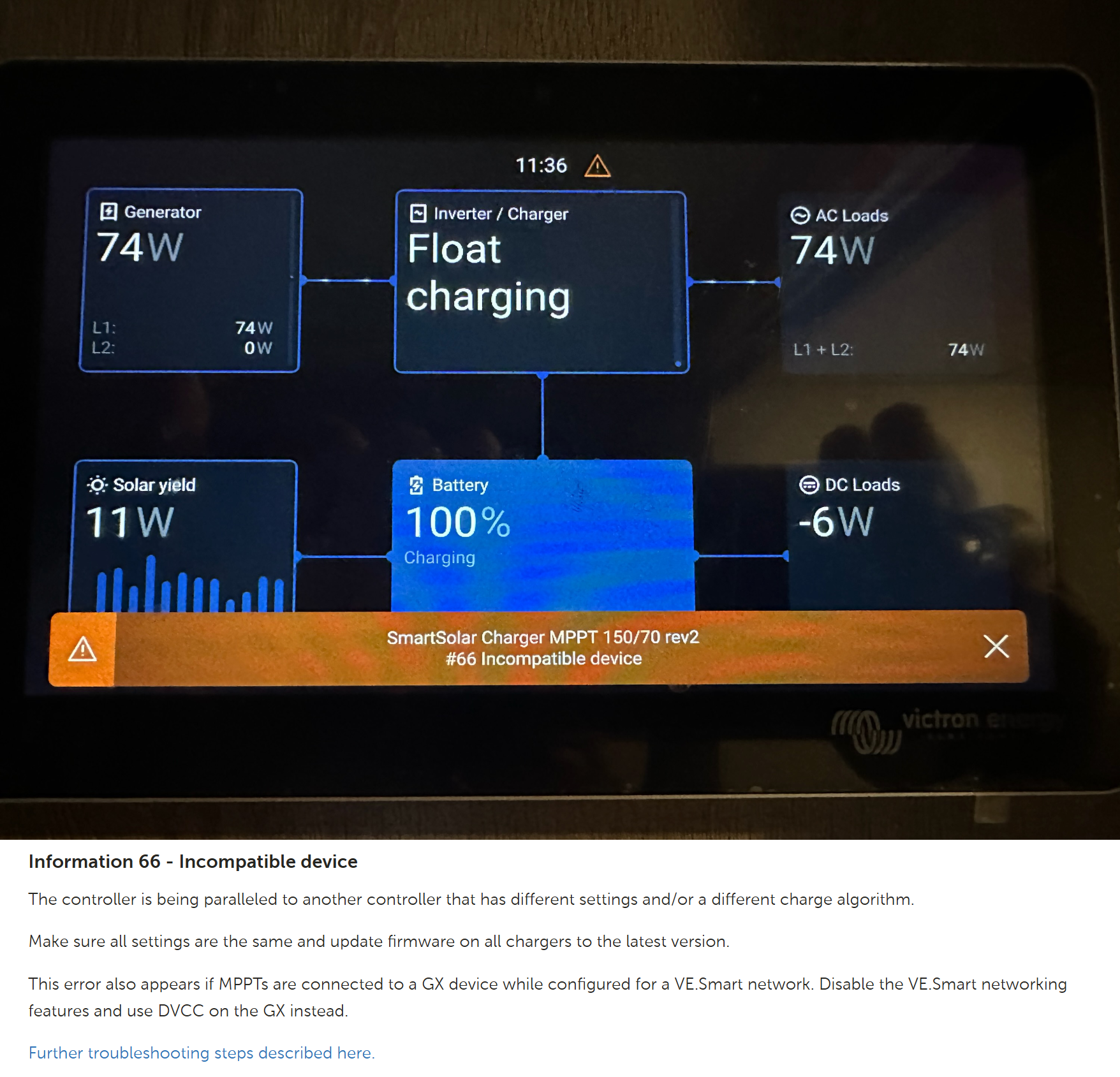
Figure 2: Victron Cerbo GX Error #66 and corresponding Victron Customer Support response.
Case 3: Victron MPPT overvoltage failure in a van
For one of my clients who has quickly become a good friend of mine, she had a critical issue with her MPPT. She came to her van one day while in Mexico only to find that the MPPT’s lights were flashing. On top of this, her inverter was flashing and beeping, indicating a systemic issue. It turns out, her Victron MPPT had failed to stop charging, causing a system overvoltage before crashing all PV charging. Somehow, her Victron app had uninstalled itself from her phone, so she had to wait for it to download for 30 minutes just to see what was wrong. You would think that there should be some visual indicator on the MPPT to show exactly what was wrong, but you would be mistaken. The flashing lights on the charge controller do not correspond to a specific error code, so you have to download the app just to see what is wrong.
When she did finally download the app, it gave an error #21, ‘Current sensor issue’.
“Disconnect all wires, and then reconnect all wires. Also, make sure the minus on the MPPT charge controller (PV minus/Battery minus) is not bypassing the charge controller. If the error remains, please contact the dealer, there might be a hardware defect. This error will not auto-reset.”
A couple months ago we had just redone and retorqued all connections to the charge controller, but for confirmation I had her do that again. Sure enough, the error remained, which means that there was an internal defect with the controller itself. Most likely, the current sensor failed, allowing the controller to keep charging the batteries past 14.4V. This eventually caused an overvoltage situation and forced other components in the system to shut down for protection. And this controller was only 1.5 years old, so it should have lasted much longer.
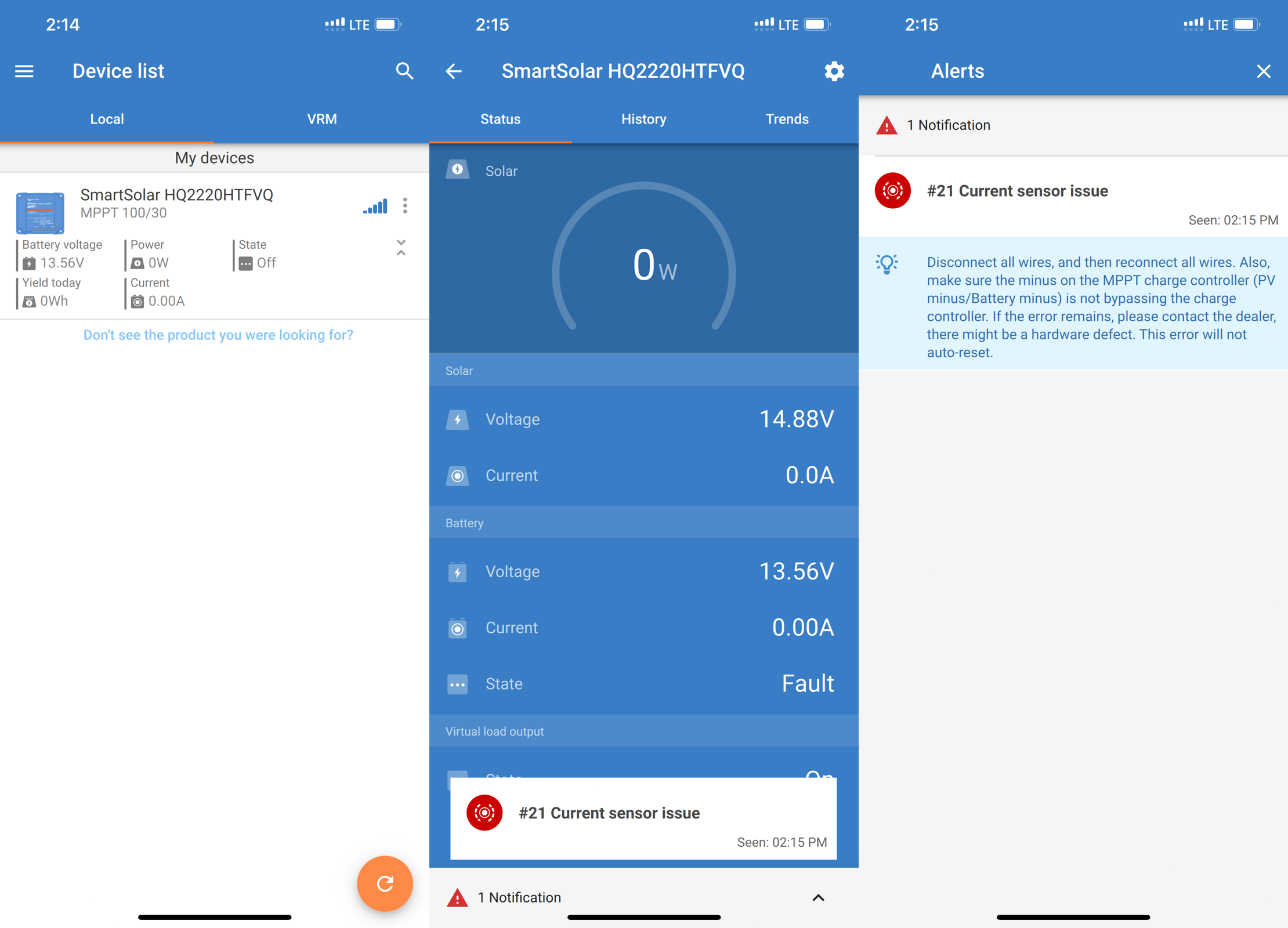
Figure 4: Victron MPPT with error code #21 due to failed internal electronics.
Alternative Options
Link 1: https://richsolar.com/collections/charge-controllers
I don’t have one single preference for solar charge controllers. It really depends on the system voltage and how big of a solar array we are dealing with. For smaller 12/24V systems, I prefer Rich Solar’s Bravo series. Their charge controllers are compact and simple, with auto-voltage detection and built-in Bluetooth monitoring. But when PV voltage exceeds 100V, I start looking at Renogy’s product offerings and beyond. Their rover lite is extremely flexible but does come at a hefty price.
Multiplus Inverter/Chargers
Victron’s multiplus inverters are well-known and used by many, but they certainly aren’t perfect. In this section I want to highlight two concerns - wire compatibility and power rating.
Case 1: Power Rating
Most RV inverters are rated in Watts (W). But Victron? They do something different that deceives people without a power systems background. Victron rates their Multiplus inverters with something called Volt-Amperes (VA). The inverter in Figure 5 is rated at 3000VA, which might lead you to believe that it can handle 3000W. But this is actually not true!
If you look at their product specifications in Figure 6, you’ll see that their inverter is actually only rated for 2400W, not 3000W. So how does their trick work? To keep this as simple as possible, a Volt-Amp is like a Watt, but it also accounts for magnetic energy. Some loads like A/C units and fridges require extra magnetic energy to operate. So if a fridge is rated for 1000W, it may draw something like 1250VA, where that extra 250VA is magnetic energy that allows the motor inside it to spin. Other loads, like heaters, don’t need magnetic energy to operate. So for them, 1000W is the same as 1000VA.
If you plug a 3000W heater into a typical 3000W inverter, it will work. On the other hand, a Victron 3000VA inverter will not power that same heater, because its only rated for 2400W, not 3000W. Their inverter can only reach a true 3000VA if it is running large motorized loads. Otherwise, you can only squeeze 2400W out of it. 600VA of its 3000VA rating is reserved for magnetic energy only, so if you’re not using large motors, you can never utilize its full rating! Don’t be deceived - 3000VA is NOT the same as 3000W for Victron’s inverters. They would be more accurately advertised as 2400W inverters.
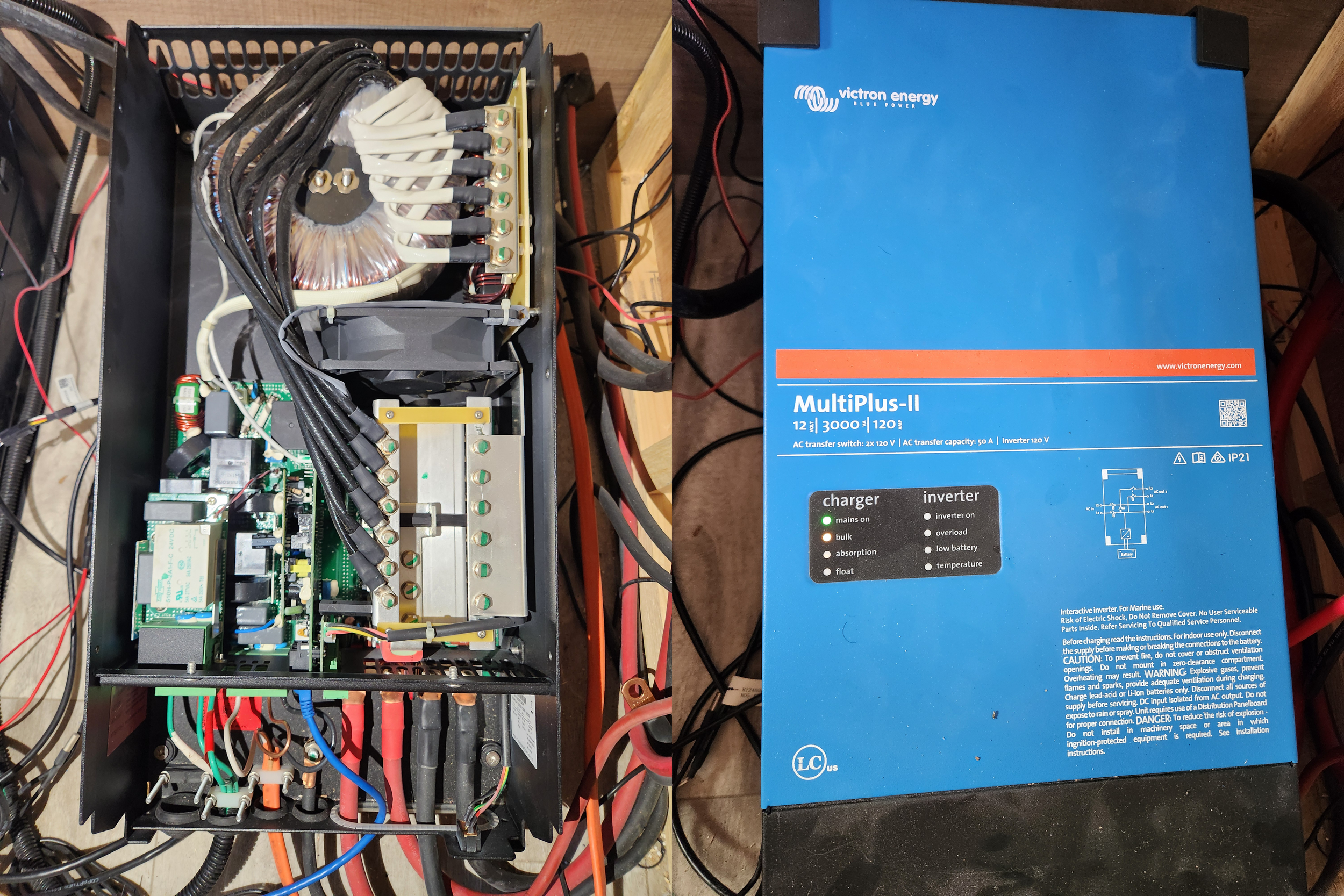
Figure 5: Victron Multiplus 3000 and internals. Installed by a different technician.
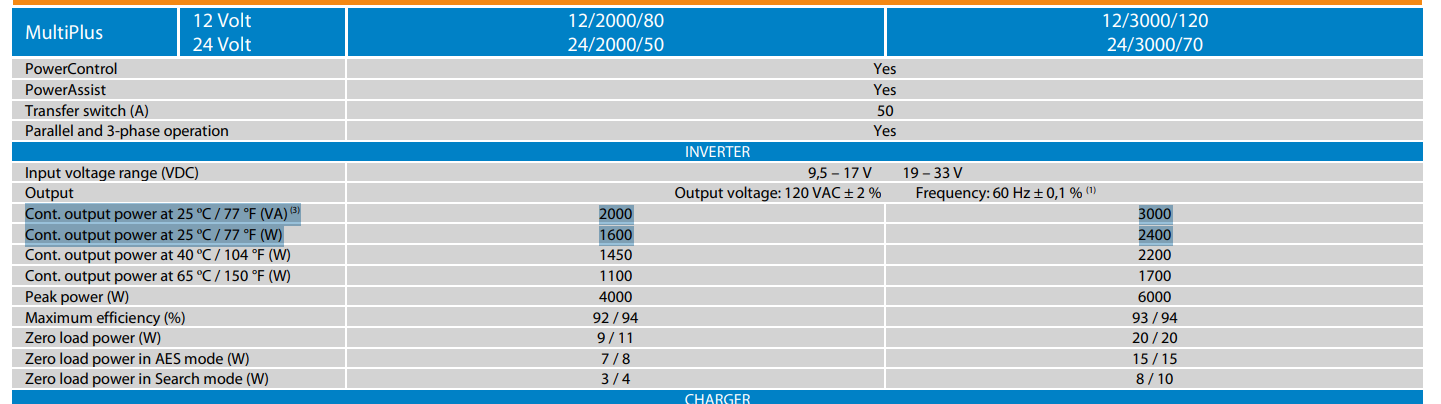
Figure 6: Victron Multiplus 3000, rated for 3000VA but only 2400W, listed only in their tech specs as part of their deceptive marketing tactics.
Case 2: Wire Compatibility
The other thing I really don’t like about the Victron Multiplus it its lug size. You can see from Figure 5 that the 3KVA inverter was designed to take two positive and two negative battery cables instead of one. However, those inverter lugs are mechanically incompatible with 4/0 or 3/0 cable. Being rated at 2400W, the inverter should have a minimum of 3/0 cable or two sets of 2AWG wire. But because of the lug design, the installer is forced to use 2 sets of 2AWG conductors.
This introduces an unnecessary problem with fusing the conductors. The installer must decide to either install a separate fuse for each of the 2 conductors, or to combine both conductors under one single fuse. The former is dangerous because it complicates fuse sizing and can cause safety issues if the fuses don’t blow at the same time. The latter is dangerous because you cannot fit both conductors on a single ANL fuse without removing the protective cover on said fuse. This leaves exposed, energized conductors in the open, increasing the risk of a short circuit.
Overall, Victron’s seemingly-innocent 2-conductor design actually creates installation safety hazards. And the only cure would be an expensive 2-pole breaker that can handle two 2AWG cables or larger.
Alternative Option
Rich Solar is an amazing company, and their inverters are the real deal. They have great customer support, their inverters are quiet, and they don’t overcomplicate their ratings or connection points. This 3KW inverter/charger does everything Victron’s Multiplus can, but with a true 3KW rating and at $200 less!
Renogy, LiTime, and Victron alike - I’ve worked with their products, but Rich Solar is the only inverter manufacturer I recommend.
The Lynx Distributor
The Lynx Distributor is Victron’s heavy duty bus bar solution with built-in fuse holders. The distributor is designed to be modular, with the ability to cascade multiple distributors and sensors for larger, more complex systems. Its primary conductors can handle 1000A (way more than you’d ever need for 99% of RV power systems). It has a total of 6 positive and 6 negative lugs, but only 4 slots for fuses. The other two lugs were designed for battery connections and cascaded devices (or a large inverter connection). It’s pretty easy to attach a Smartshunt battery monitor to this device as well, which can be helpful for compact systems.
While the idea of an all-in-one DC distribution panel sounds great, this one just isn’t what it should’ve been. Its bulky, costly, and even introduces safety concerns similar to the Multiplus.
Issue 1: Price
The distributor comes at a hefty price. A single Lynx Distributor costs about $200 on amazon, and won’t come with properly-sized fuses. A simpler 6-lug 300A bus bar is more than enough for most RV systems, and costs $30 for the positive and negative pair. Combine that with 4 ANL fuses with holders (roughly $70), and you’ll be beating the price with a smaller, more-compact system that is easier to install. And, with the right 3/8” lugged bus bars, you can still add on a battery shunt directly to the bus bars without complications.
Issue 2: Wiring Concerns
My #1 complaint about these distributors is wire compatibility. You cannot fit 4/0 cable onto one of the four fused slots without modifying the distributor and/or the copper lugs. So if you want to feed a 3KW inverter from this device, you have to use the terminals made for cascading devices. But the problem is, these don’t have fuse attachment points on them. So you have to treat them like regular bus bars with external fuses at a premium price. And if you have two sets of 4/0 conductors for multi-inverter systems? Forget it - it will be easier to just buy 3/8” lug bus bars at the proper ampacity.
But let’s say we wanted to use the Multiplus inverter with one of these distributors. Since you have two positive conductors, you can’t just use the cascading terminal without trimming the case to make the wires fit. And if you use the fused terminals, then you’re using two of your precious terminals for a single device, requiring you to buy another $200 distributor for even a small system.
Issue 3: Hardware and Tiny Fingers
These distributors do not come easy to install. They have multiple nuts and lock/flat washers, and if you lose one, you need to buy another. And you have to install your wires in a specific order, because the negative wire must go underneath the positive one for the 4 fused terminals. Getting your fingers in there to install the hardware on top of the copper lugs is also a pain, even for me with my small fingers. I frequently find myself dropping and searching for the washers, cursing at the designers of these components.
Alternative Option
Link: https://a.co/d/06QTOIWv
I much prefer the DaierTek 300A Bus Bars with 6 3/8” lugs. They have a single locking nut and ample space for 2AWG and 4/0 conductors alike. I can attach a battery shunt to them easily while still fitting the cover on top. I also get more flexibility on fuse types, as I’m not locked into using only MEGA fuses. I can mix and match circuit breakers, ANL fuses, or Class-T fuses depending on what I am protecting for maximum safety.
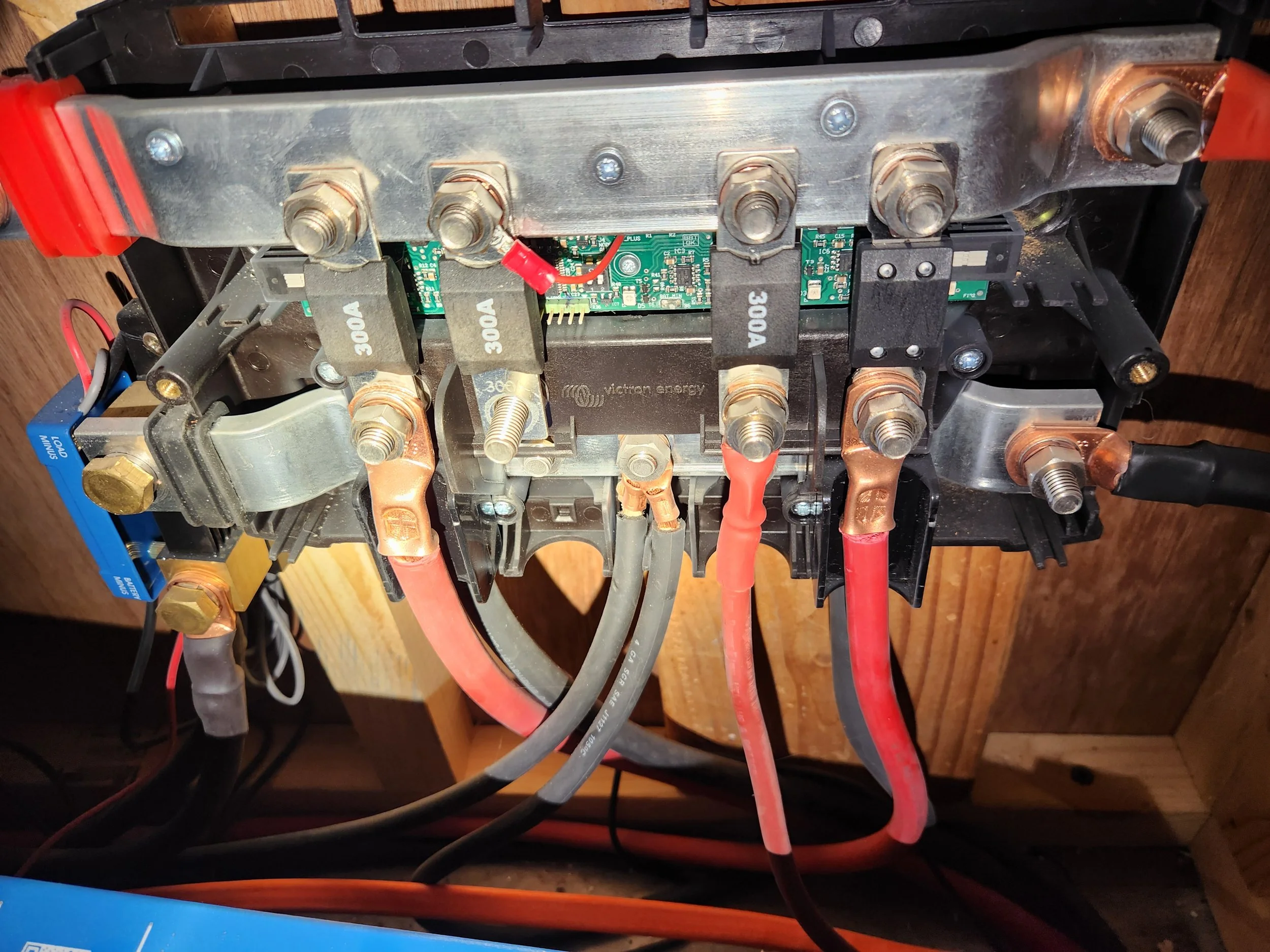
Figure 7: Victron Lynx Distributor internals. Installed by a different technician.
SmartShunt Battery Monitor
When it comes to battery monitoring systems, I have a mantra. The simpler the better. Batteries are variable devices that degrade over time, and the only foolproof way to know what they are doing is through their voltage and current readings. But that being said, not everyone knows how to correlate battery voltage to state-of-charge (SOC), so a battery shunt and monitor can be valuable.
Most battery shunts are hardwired to a physical battery display monitor with a few push buttons to select different options. You have to configure them manually in the beginning to set the current SOC, and every so often they may need to be reset. You also have to make sure that there is no possible way for current to bypass the shunt so that all battery activity is accounted for. But if set up correctly, they are pretty much hassle-free.
But Victron wanted to be fancy, so they created a SmartShunt with Bluetooth capability. The nice thing is, you don’t need a physical monitor since all the details can be shown on your phone. But the problem is, now there’s an app to deal with. Apps are more prone to failure due to faulty firmware, glitches, and frequent updates. And Victron? well, they like to update firmware quite frequently. This means things are frequently moving locations, settings become buried in code, and hardware modifications now come with a side of software updates and glitches.

Figure 8: Victron Connect App Glitch due to Battery and SmartShunt Reconfiguration
This Client wanted to increase battery capacity from 200Ah to 460Ah. I completed the installation, but when we attempted to reconfigure the battery shunt settings in her app, we realized we had to wait for the batteries to fully charge. So I told her to call me a couple days later in case the app did not automatically reset capacity at full charge, as it was set to do so.
Instead, I was met a couple days later with an upset Client. Her app had completely glitched out and showed what you see in Figure 8 - a broken app screen with no battery details shown. And unfortunately, the only thing I could tell her was to reinstall the app and call Victron Support. Because while I would love to be able to help out more, I can’t possibly troubleshoot Victron’s faulty software. That is beyond my scope of work and can’t be known without one of their software technicians.
The issue was resolved after she reinstalled the app, thankfully.
Alternative Option
Link 1: https://www.renogy.com/products/500a-battery-monitor-with-shunt
Link 2: https://a.co/d/0caVAhJv
Renogy and many other companies sell a simple 500A battery monitor that comes with a mounting case and a hardwired monitor. These monitors are relatively simple and easy to connect. With no app, there is little room for error unless it is wired wrong from the start.
I prefer the much simpler Bayite volt/amp meter because its simple, small, and cheap. I never need to set or reset it, and it can’t cause voltage drop due to loose connections. But if you don’t know how to correlate voltage and current to approximate capacity, it might not be right for you.
CerboGX System Control Module and Software
Victron’s CerboGX is the holy grail of overcomplicated things. If you’ve got a complete Victron system, this gives you an option to monitor and even control all of those things from a physical control monitor or the VictronConnect App on your phone. Personally, as someone who likes to keep things simple and manually controllable, I would never want to install such a control module in my system - even if it weren’t Victron’s product. But that being said, some people like the idea of an all-in-one control system. And this is one way to do it.
The Cerbo is a complex monitoring device with more communication ports and options than I could possibly understand from the single time I’ve worked with it. That being said, I can’t speak a whole lot for this device except through that one experience. The one part I did mess with was the VE.direct connections for implementing a solar charge controller. While this connection did cause the monitor to display the correct solar power input, it came with a glitch due to “incompatibility” of the two charge controllers. So even though everything was functioning properly, there was still a software issue that we could not resolve even with customer support. Long story short, if you want to overcomplicate things with a Cerbo GX, be ready to deal with overcomplicated software issues.
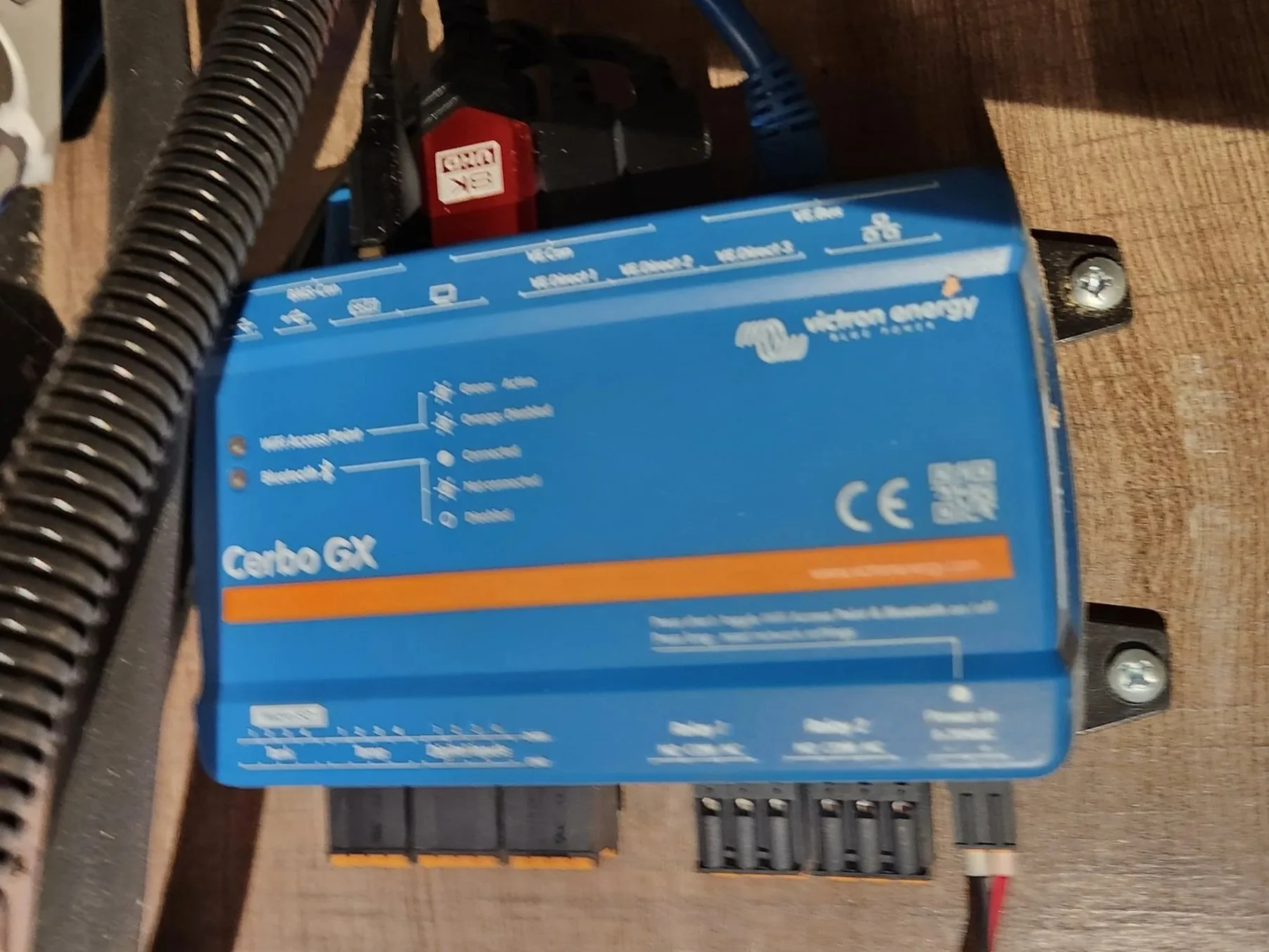
Figure 9: A Victron Cerbo GX. Installed by a different technician.
Alternative Option
Link: https://www.bluettipower.com/products/rv5-rv-solar-system
My preferred alternative to the CerboGX is not a single item, but a different power platform entirely. Bluetti’s RV5 all-in-one power system is a beautiful, compact, and powerful solution for those seeking a modular and fully-controllable power system. the kit linked above comes with everything you need including modular batteries, the power distribution hub, all the wires and components you need, and its own dedicated control module and monitoring system. It is a fantastic option for RV systems and can accept alternator and solar charging, as well as 50A 240V shore power hookup plus battery backup. It can output 120VAC and 12VDC for all your power needs, and the monitor is really sleek and easy to use.
Just do yourself a favor - use a 100W 10ohm pre-charge resistor to hook up the batteries to the RV5 before closing the battery switch. Otherwise it will spark, detect a short circuit, and shut itself off before you can even set a single thing up. They should’ve built a pre-charge circuit into the system, but this seems to be uncommon in these systems despite the simplicity of such an upgrade.
Customer Service and Reputation
Almost every solar product company I have worked with has a way to put me into direct contact with one of their representatives. Victron though? Forget about it. Victron does not have a direct customer support number to contact one of their representatives. Instead, they redirect you to one of their distributors across the US, meaning you can’t actually get support from their company experts at all.
You instead have to hope that the distributor they connect you to knows just as much about their products as the technicians at Victron do, and I can assure you that most of them do not have such knowledge. On top of that, you can’t just call those people - you have to wait for Victron to redirect your email to that company before they reach out to you. Talk about a game of telephone - this increases the risk of losing connection before a conversation even began.
Additionally, their product support on their webpage is often too high-level given the complexity of their firmware and niche system requirements. MPPT error codes? Contact customer support. Inverter specifications? Only the most basic information that they want you to know is listed on their main product webpage. You have to dig through their complicated multi-product spec sheets to find the exact specs for your part. Pricing? They won’t openly advertise it on their website, and require you to get a quote from one of their distributors instead. They’re the only ones that are this complicated, and its really unnecessary in my opinion.
I have heard some people say that Victron (like most solar technicians in general) has a bit of an ego problem. Now, I can’t confirm or deny that because I’ve only ever interacted with one of their representatives before. But in that one experience, I think I learned all I personally care to know. Take what you will from this, but this is my story that I experienced firsthand:
I was at the Quartzsite RV show in January of 2026. As I entered, the first booth I bumped into was for BattleBorn batteries. I had been following Will Prowse’s newest videos which exposed their batteries as a fire hazard with sketchy internal design and quality control. So, I was curious to know what the two representatives at the booth had to say. After all, they were advertising a documented fire hazard to the general public, most of which did not hear the news about their products yet. They refused to answer any of my questions, as I should have expected.
But then a Victron representative walked up and confronted me about my questions. He said to me (paraphrasing) ‘Just because one guy on YouTube made a video about their batteries, you think that these are an unsafe fire hazard? He is not an engineer, so how can you trust anything he says?’ I looked at the Victron rep in bewilderment, because the “one guy” happened to be one of the biggest solar gurus on YouTube. Will Prowse is arguably the reason that Battleborn grew so big in the first place, and as a degreed electrical engineer myself, I knew that Will wasn’t just making things up. He physically opened several of Battleborn’s batteries to expose a serious concern with their products, yet this random Victron representative gave him zero credit for sake of defending a company that was selling documented fire hazards! I left visibly flustered, and swore that I would do my part to inform others about this scam.
So that’s my story. Take from it what you will, understand that it does personally bother me, and draw your own conclusions for yourself. Me personally, I can’t support a company whose representative openly defended a fire hazard, let alone all the other issues I’ve had with them.
Conclusion
So there you have it. From all of my experiences with my own knowledge and expertise, I have many reasons to avoid Victron’s line of products. Will I still install their products? It depends, honestly. If its what the customer wants or its what makes the most sense, then yeah, I probably will. Will I willingly install a full Victron system for a Client if left up to me? Absolutely not. Beyond my personal feelings towards Victron, we’ve discussed many reasons why their products just aren’t the best option out there from a practical, financial, and safety perspective.
I hope this article has helped to reveal to you why the Victron bandwagon isn’t what it seems. You should now be better educated on the practical design considerations which should be taken for creating a safe and effective solar power system. Have questions or want a specific product recommendation? Give me a call at 623-276-2413!