Design Review - Proofreading Your Power
When an Engineer Critiques a “High-End” Design
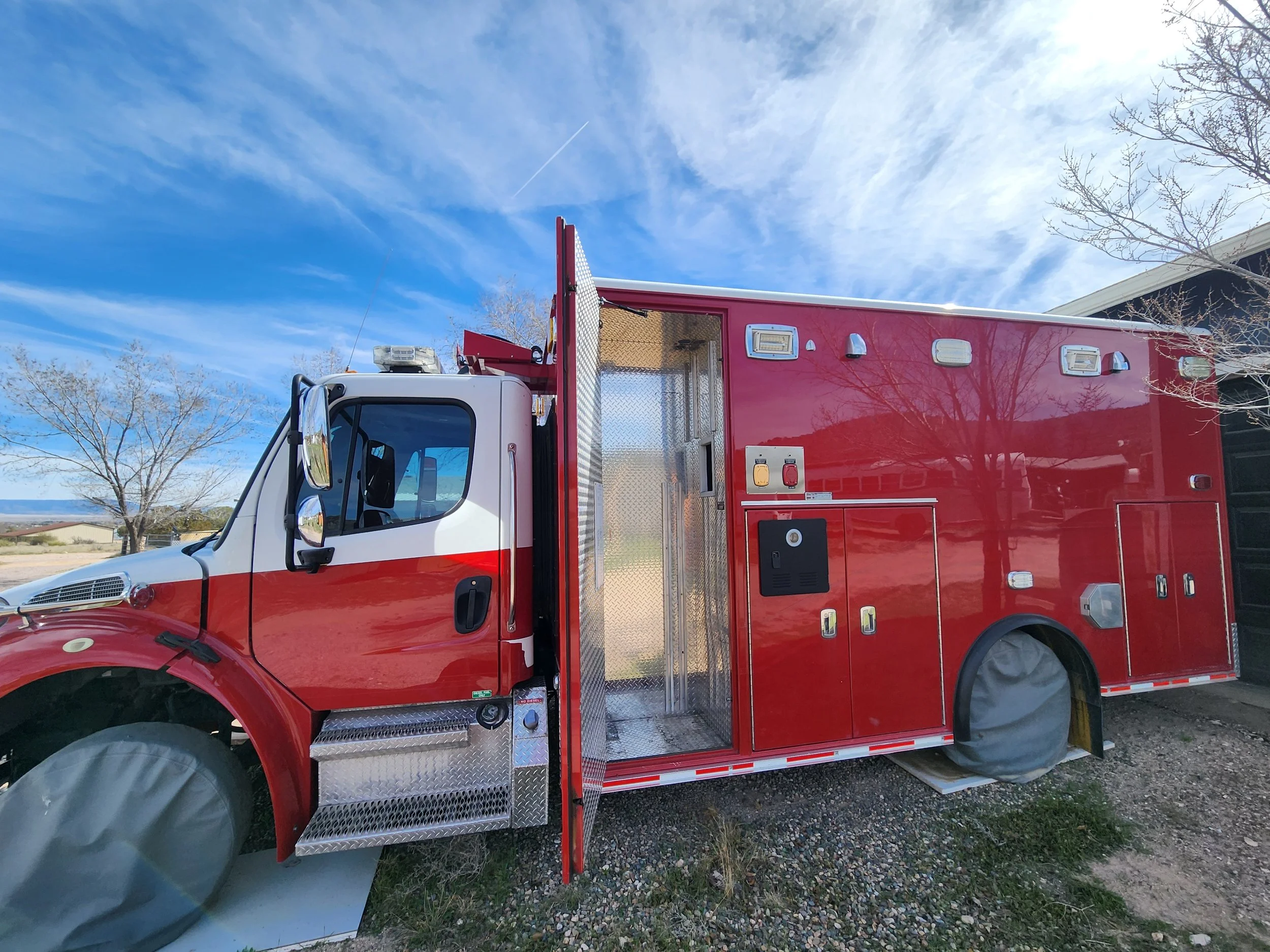
This client had purchased an ambulance for his vision of becoming a nomad. It was a very nice rig - armored like a tank, meticulously maintained, all stripped and ready for transformation into a little home on wheels. He had gone to a well-known vanlife company that ‘specialized’ in solar power systems for vans and similar rigs. However, his instinct kicked in, and he reached out to me to check things out before he installed a thing. Later I arrived at his property ready to dig in. He wanted to get me involved in the installation, but the first step was to make sure his design was ready to go. Sure enough, it wasn’t.
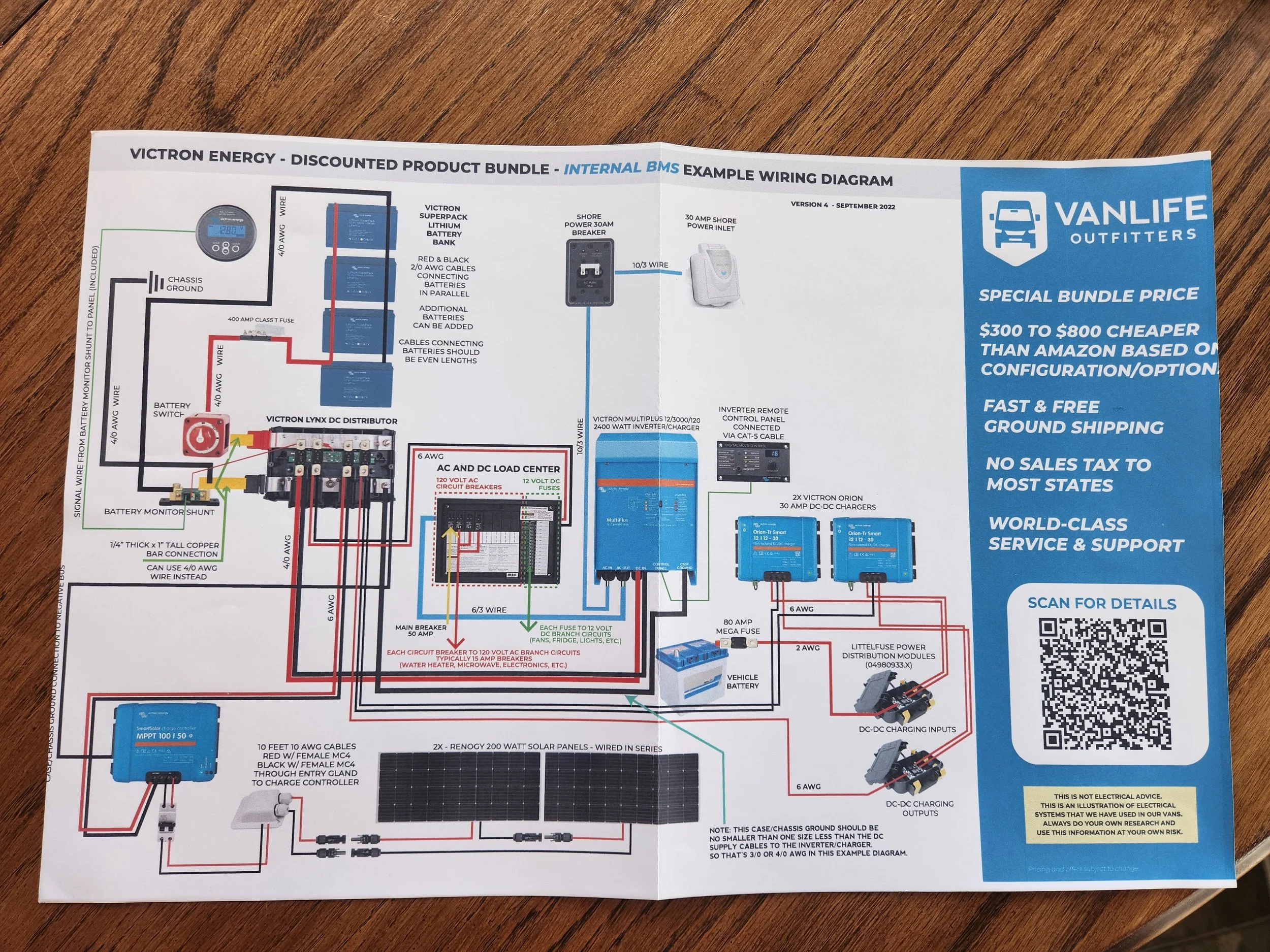
Covering It In Red Ink
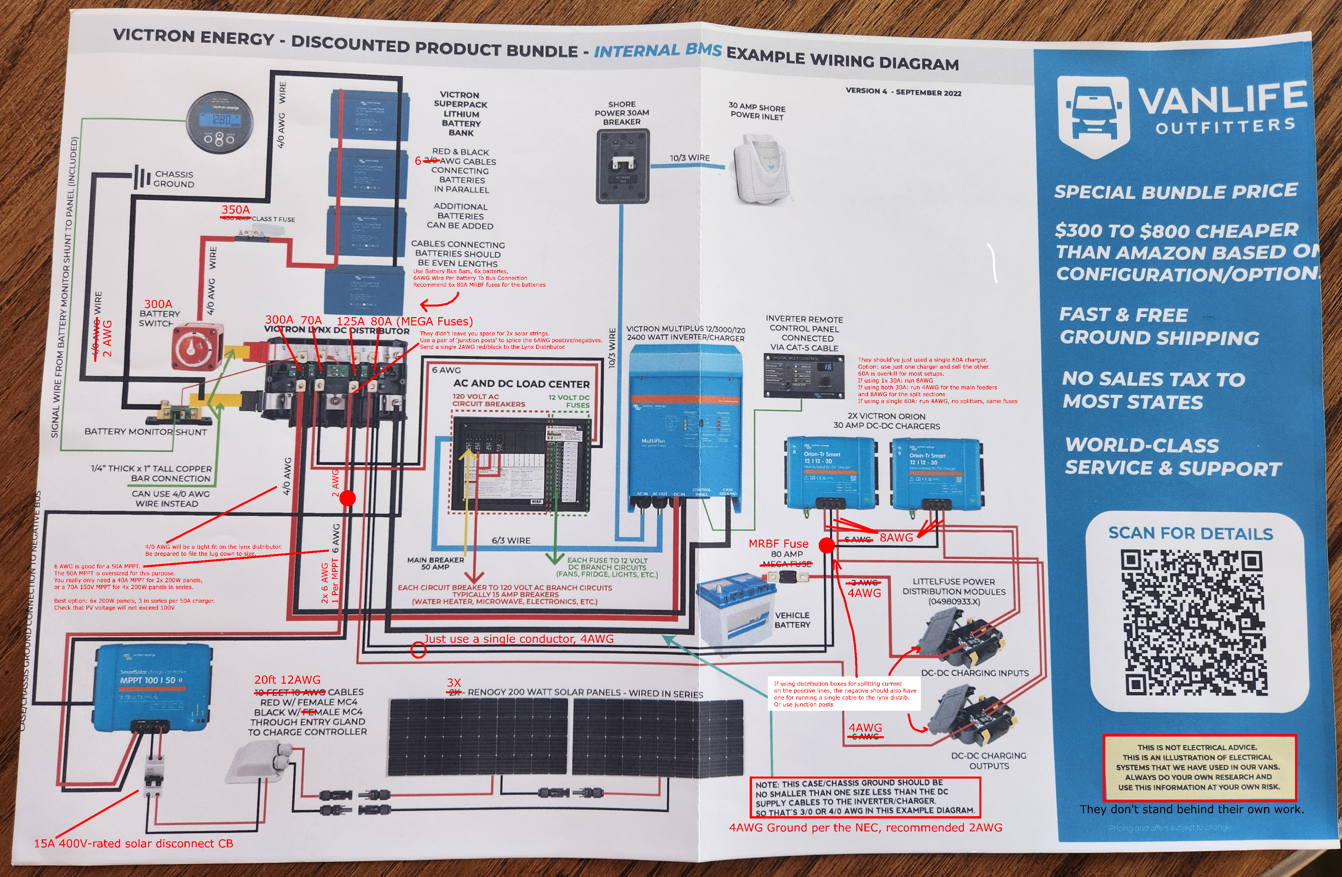
The first thing that stood out to me when reviewing this diagram was the line “…ALWAYS DO YOUR OWN RESEARCH AND USE THIS INFORMATION AT YOUR OWN RISK.” This company wouldn’t stand behind their own work, and I quickly learned why.
Now, to preface, not all of the markings on here are explicit design errors. Some of it was just because my client planned to make a few modifications - such as adding two more batteries and using 2x solar strings. But still, that doesn’t excuse the poor planning that went into this design. They used 2 30A dc-dc chargers connected in parallel through some bulky distribution modules. Because they split the wiring, they should have fused the smaller-gauge wires in the event of a fault on those lines. Really, they should have just used a single 60A charger. They didn’t even mention how to connect the 80A MEGA fuse to the starter battery. They just drew it tapped right onto the terminal, which isn’t possible. They used a splitter to recombine the positive wires from the 2 chargers, but they didn’t do the same for the negative.
Probably the funniest thing to me was their call for 4/0 wire as a vehicle chassis ground. The ground in these systems does not normally carry current except in fault conditions, and is only there to ensure the fuses see the full fault current and can trip on time. Per the NEC, a 4/0 conductor can be paired with a 4AWG ground, but upsizing to a 2AWG ground is ideal. This saves money and headache, as 4/0 AWG wire is not easy to work with.
Their use of a lynx distributor instead of 6-lug bus bars did not make sense in this situation. The lynx distributor only has 4 distribution terminals, and they don’t even fit 4/0AWG lugs without trimming the lug. I could go on a whole ramble on the various reasons I generally don’t like Victron’s overengineered products, but this is definitely one of them. In order to properly connect everything to the batteries, this client would need to use junction posts or additional bus bars to combine the solar panel strings (and the dc-dc charger outputs) before connecting to the few lugs available. Could he just buy another lynx distributor? sure, but they’re also overpriced and overbuilt at a 1000A rating, which just isn’t necessary for 99% of RV setups.
There were some other issues as well that I expected from a typical installer. Oversized fuses that won’t blow in case of overload situations, improper wire sizes, unmarked device specifications, and batteries that should have been connected via their own independent battery bus for optimal current sharing. Long story short, just because someone says they provide ‘world-class service’ doesn’t mean you can trust them. Always check their reviews, word-of-mouth testimonials, and photos of their work to verify if they’re a good fit for you. Nobody is perfect, but its about time they raise their standards.